Why I Start Bringing Warm Foods Back in September
September is when I gradually bring warm bowls, roasted vegetables, and cooked breakfasts back without giving up fresh produce.

By September, I usually start wanting something different from the kitchen.
Not heavy food. Not an entire menu of soup. Just a little more warmth.
That might mean roasted vegetables instead of a cold chopped salad. Warm oatmeal instead of overnight oats. A skillet meal instead of a chilled bowl.
I think this is one of the most natural parts of seasonal eating.
I do not make a hard switch
There is no rule that says summer food ends on Labor Day.
Grapes, figs, plums, tomatoes, cucumbers, and other fresh foods may still be wonderful.
At the same time, winter squash, cauliflower, kale, apples, and pears start making warm meals sound good again.
So I mix the two.
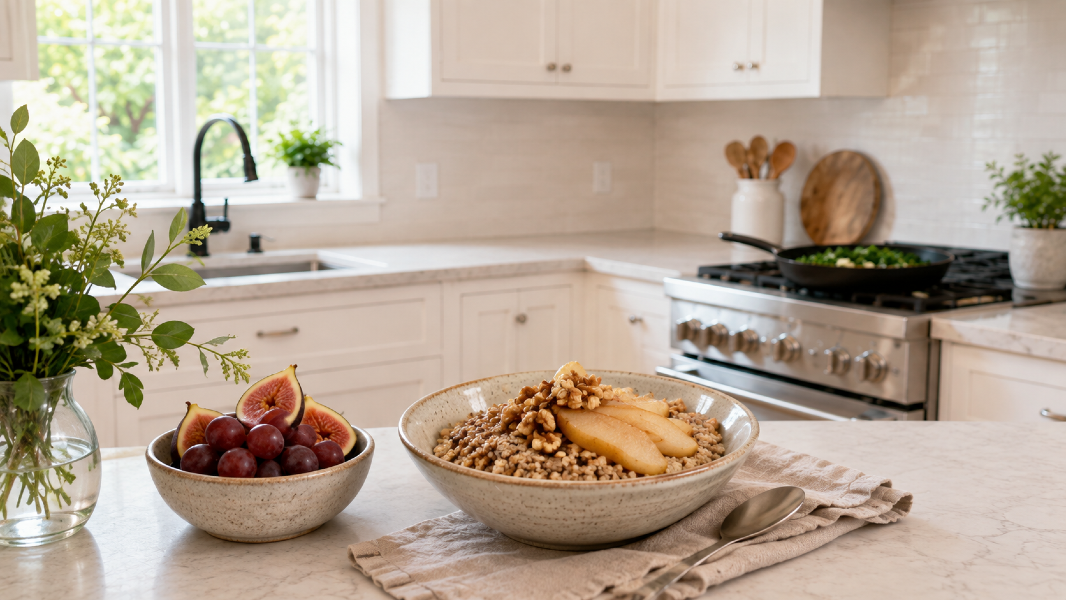
A warm grain bowl with fresh pear.
Roasted squash with a cool yogurt sauce.
Oatmeal topped with fresh grapes.
Warm cauliflower beside a crisp salad.
That combination feels much more realistic than pretending one season disappeared overnight.
Warm food can also make meal prep easier
A tray of roasted vegetables gives you several meals with almost no additional decision-making.
Roast squash and cauliflower once, then use them in:
- bowls
- wraps
- eggs
- grain plates
- skillet meals
- simple sides
Warm food does not have to mean long cooking.
I pay attention to digestion too
Sometimes a large raw salad sounds wonderful. Sometimes it does not.
Cooking changes texture and softens many vegetables. For people who find very large raw meals uncomfortable, a mix of cooked and fresh food may be easier to work into the day.
That is individual, so I do not believe in blanket rules about raw versus cooked.
September breakfast changes first
Breakfast is usually where I notice the seasonal shift first.
I start reaching for:
- warm buckwheat
- oatmeal
- baked fruit
- eggs with greens
- squash hash
- warm pear or apple with yogurt
The ingredients are still simple. The temperature changes.
Let the season do some of the planning
Seasonal shifts can actually reduce decision fatigue.
Instead of asking what entirely new diet you should follow, ask a smaller question:
What sounds good now that did not sound good a month ago?
Maybe the answer is roasted squash.
Maybe it is oatmeal.
Maybe it is soup once a week.
That is enough to start.
September does not need to be a reset. It can simply be a gradual pivot into what feels good for the next season.
Featured Cookbook
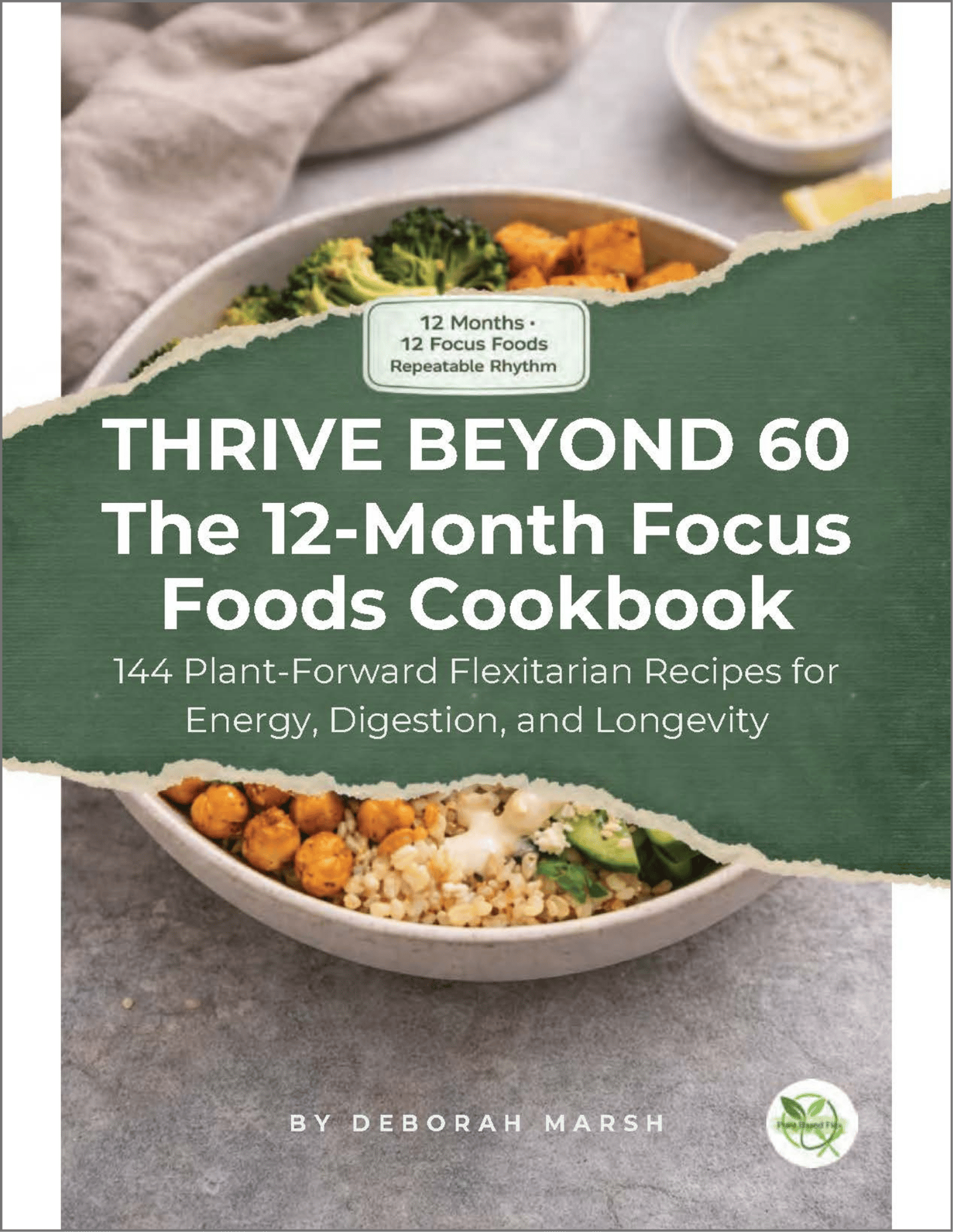
Thrive Beyond 60 Cookbook
Simple, practical plant-based flexitarian recipes built for energy, digestion, and healthy aging after 60.
- Easy, real-life recipes you'll actually use
- Focus foods framework to simplify your meals
- Built for energy, digestion & healthy aging
Disclaimer:
This content is for informational purposes only and is not medical advice. Always consult your healthcare provider before making changes to your diet, supplements, or lifestyle, especially if you have existing conditions or take medication.
💌Want plant-based tips each week
Join the Plant Based Flex newsletter. It’s free, and when you confirm your email I’ll send you a 7-Day Kickstart Wellness Bundle to help you thrive beyond 60.