What August Produce Can Add to Healthy Aging
Instead of chasing one “superfood,” use August’s colorful seasonal produce as a simple way to bring more variety, antioxidants, fiber, and plant compounds into your healthy-aging routine.
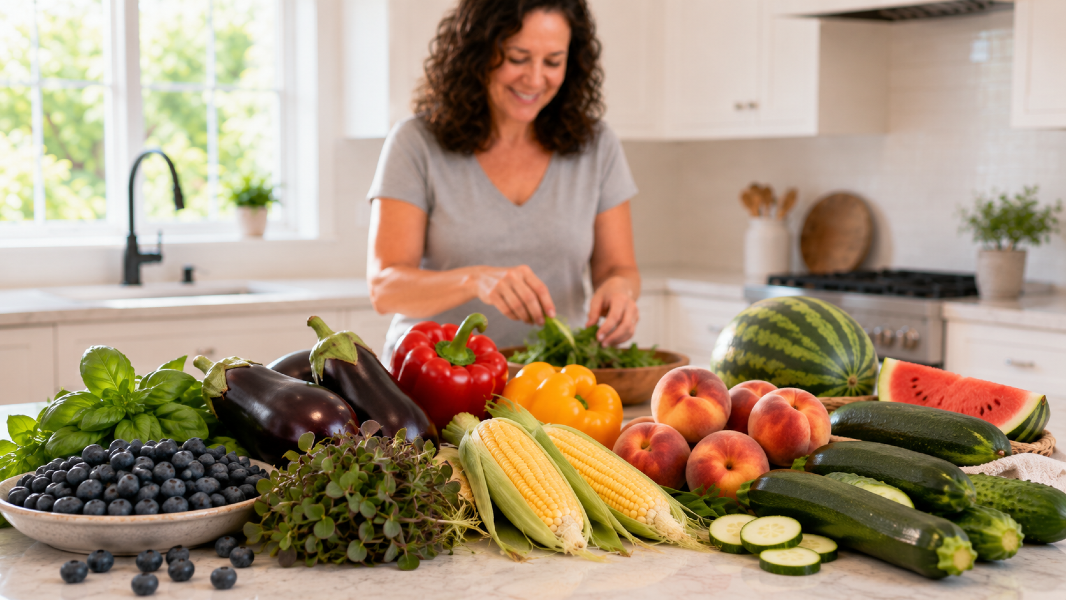
Why Color Matters: What August Produce Can Add to Healthy Aging
Healthy eating advice can get complicated fast.
One day we are told to eat more of one “superfood.”
The next day there is a new supplement, powder, or ingredient we supposedly cannot live without.
I prefer something much simpler.
Eat a wider variety of colorful whole foods.
That is one of the reasons our August focus-food list is so colorful.
This month we are working with:
- Basil
- Zucchini
- Bell peppers
- Corn
- Cucumbers
- Eggplant
- Blueberries
- Watermelon
- Peaches
- Purslane
Each brings something a little different to the table.
Not because one color is magically better than another.
But because different colors often represent different naturally occurring plant compounds, vitamins, minerals, and antioxidants.
The goal is not to memorize every nutrient.
The goal is variety.
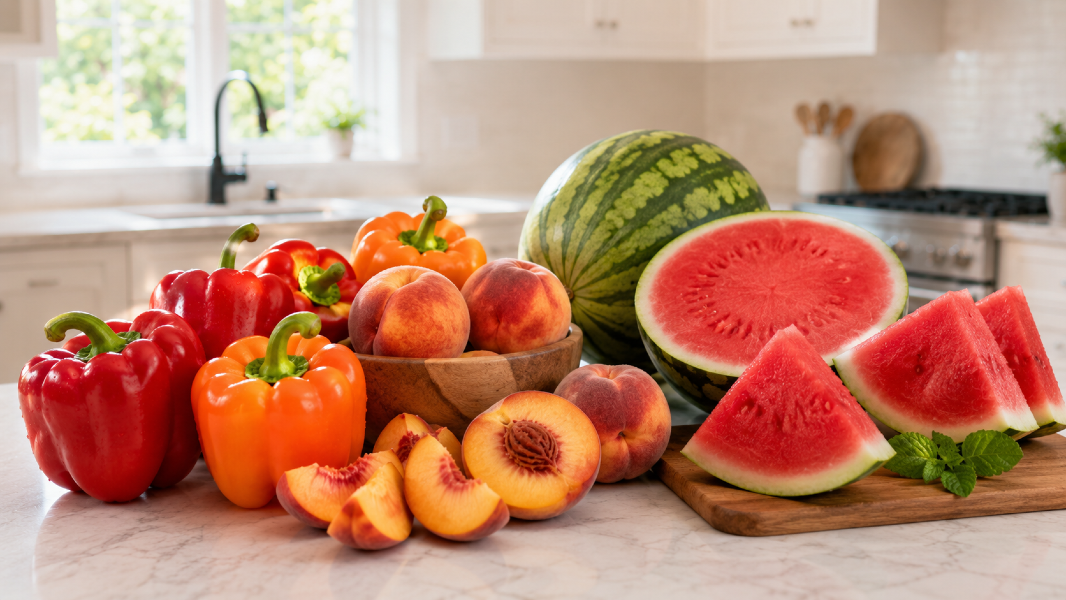
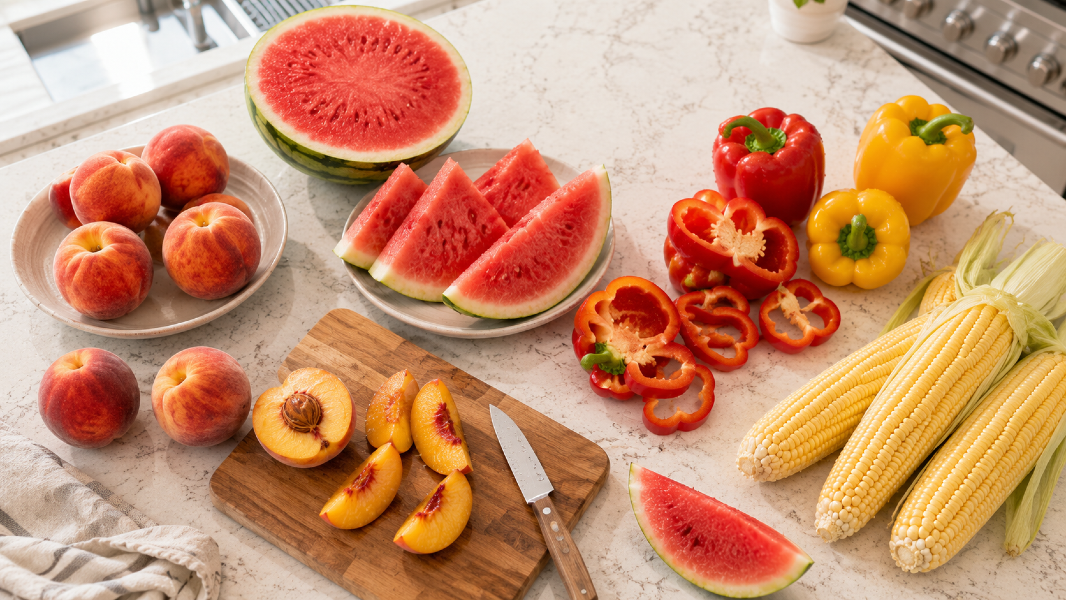
Red and Orange: Bell Peppers, Peaches, and Watermelon
Red and orange foods contain natural pigments called carotenoids.
Different carotenoids perform different roles in plants and in our diets.
Bell Peppers
Red bell peppers are especially rich in vitamin C.
They also contain carotenoids that give them their vivid color.
Try them:
- Raw with hummus
- Chopped into grain bowls
- Roasted
- Stuffed
- Sautéed with zucchini or corn
Peaches
Peaches bring:
- Vitamin C
- Fiber
- Water
- Natural sweetness
They also make it easier to add fruit to both sweet and savory meals.
Use them in:
- Overnight oats
- Yogurt bowls
- Salads
- Grain bowls
- Smoothies
- Grilled dishes
Watermelon
Watermelon is especially refreshing in August because it is naturally water-rich.
Its red color comes partly from lycopene, the same pigment found in foods like tomatoes.
Use watermelon in:
- Fruit bowls
- Smoothies
- Salads
- Slushes
- Cold snacks
- Savory dishes with cucumber and herbs
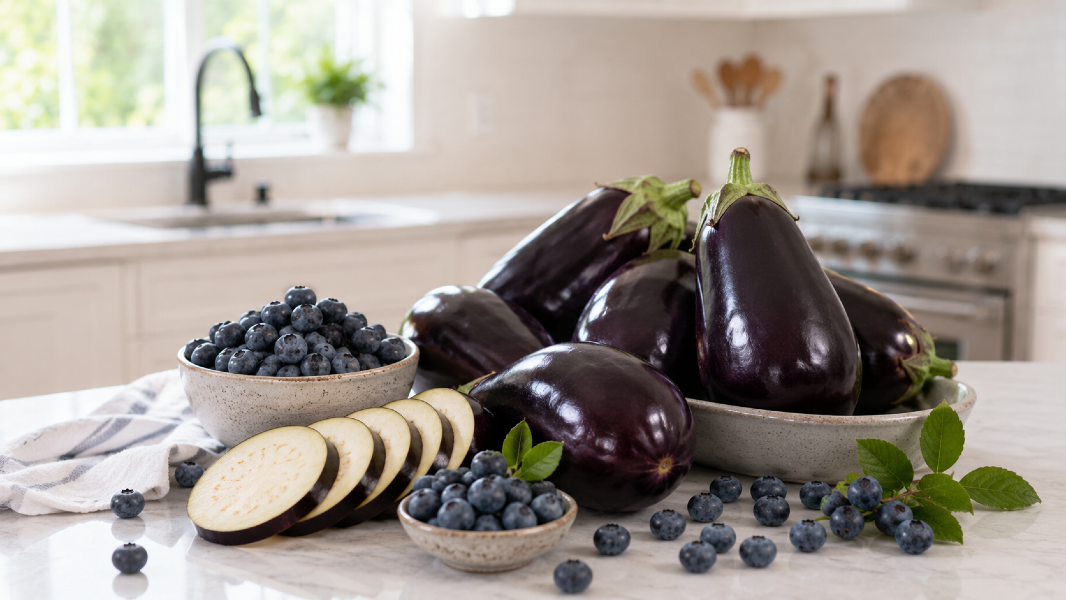
Blue and Purple: Blueberries and Eggplant
Blue and purple foods often contain anthocyanins and other polyphenols.
These compounds give plants their deep blue, red, or purple coloring.
Blueberries
Blueberries are one of the easiest foods to keep on hand.
Fresh or frozen, they work in:
- Oatmeal
- Yogurt
- Smoothies
- Salads
- Breakfast bowls
- Baked oats
Their deep blue-purple color comes from anthocyanins.
Eggplant
Eggplant brings a completely different texture to the month.
Most of the color is concentrated in the skin, which is one reason I like to leave the skin on when the recipe allows.
Try eggplant:
- Roasted
- Grilled
- Sautéed
- Added to pasta
- Mixed into grain bowls
- Paired with lentils or beans
The important thing with eggplant is usually cooking it long enough.
Undercooked eggplant can feel spongy.
Well-cooked eggplant becomes soft, savory, and almost creamy.
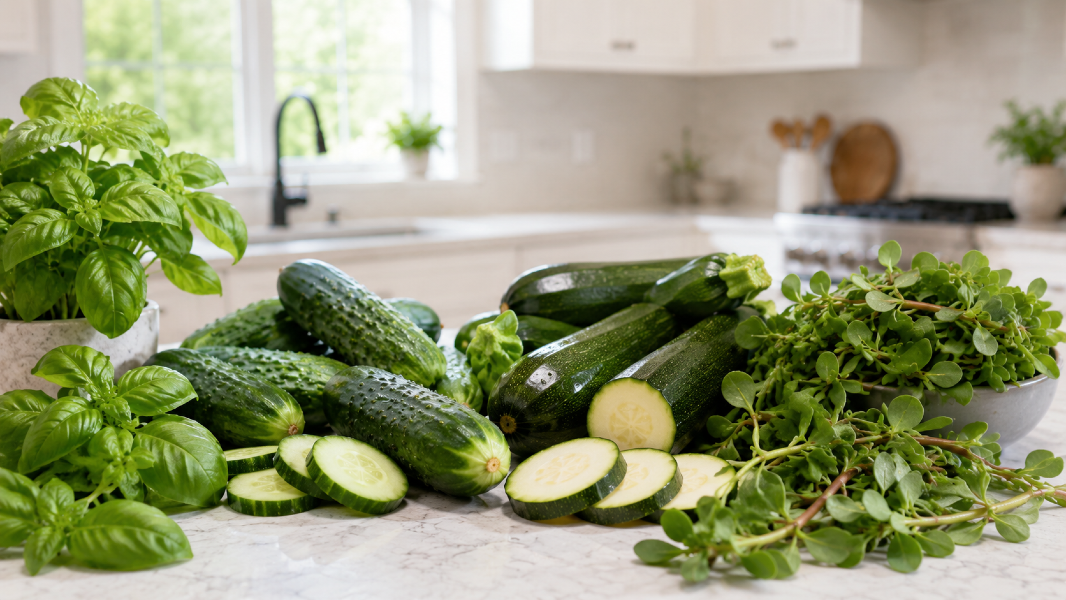
Green: Basil, Cucumbers, Zucchini, and Purslane
Green foods are incredibly diverse nutritionally.
They may contain combinations of:
- Folate
- Vitamin K
- Vitamin C
- Minerals
- Fiber
- Plant compounds
Basil
Basil is proof that herbs count too.
You do not need cups of basil to benefit from using herbs regularly.
Basil makes simple food more interesting.
Use it in:
- Salads
- Grain bowls
- Dressings
- Sauces
- Soups
- Fruit dishes
Cucumbers
Cucumbers are crisp and water-rich.
They are especially useful when hot weather makes heavy food less appealing.
Use them in:
- Chopped salads
- Yogurt bowls
- Wraps
- Grain bowls
- Chilled soups
- Infused water
Zucchini
Zucchini is mild enough to disappear into almost anything.
Use it:
- Raw as ribbons
- Sautéed
- Roasted
- Grilled
- In fritters
- Added to soups and bowls
Purslane
Purslane is probably the least familiar August focus food.
It has a slightly tangy flavor and a succulent texture.
One thing that makes purslane interesting is that it contains alpha-linolenic acid, a plant-based omega-3 fatty acid.
Try it:
- In salads
- On sandwiches
- In bowls
- With avocado
- Lightly sautéed
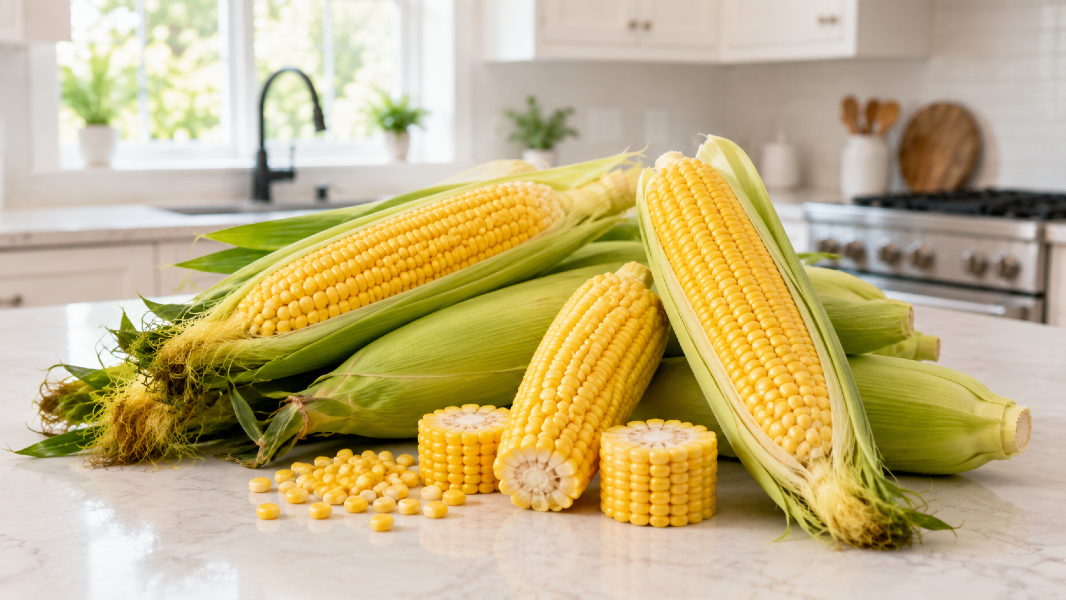
Yellow: Corn
Corn deserves its own category this month.
Fresh sweet corn brings:
- Fiber
- Carbohydrates
- Natural sweetness
- Plant pigments including lutein and zeaxanthin
Corn is often treated as something we either “should” or “should not” eat.
I think that makes food unnecessarily complicated.
Corn can absolutely be part of a balanced meal.
Try pairing it with:
- Black beans
- Chickpeas
- Quinoa
- Bell peppers
- Zucchini
- Avocado
- Herbs
Instead of making corn the entire meal, let it be one part of the plate.
Stop Chasing the “Best” Food
There is no single August food you need to eat every day.
Blueberries are not better than peppers.
Purslane is not automatically better than zucchini just because it sounds less familiar.
The value comes from the overall pattern.
A colorful plate may help remind you to include:
- Different plants
- Different textures
- Different nutrients
- Different sources of fiber
That variety matters more than chasing one perfect ingredient.
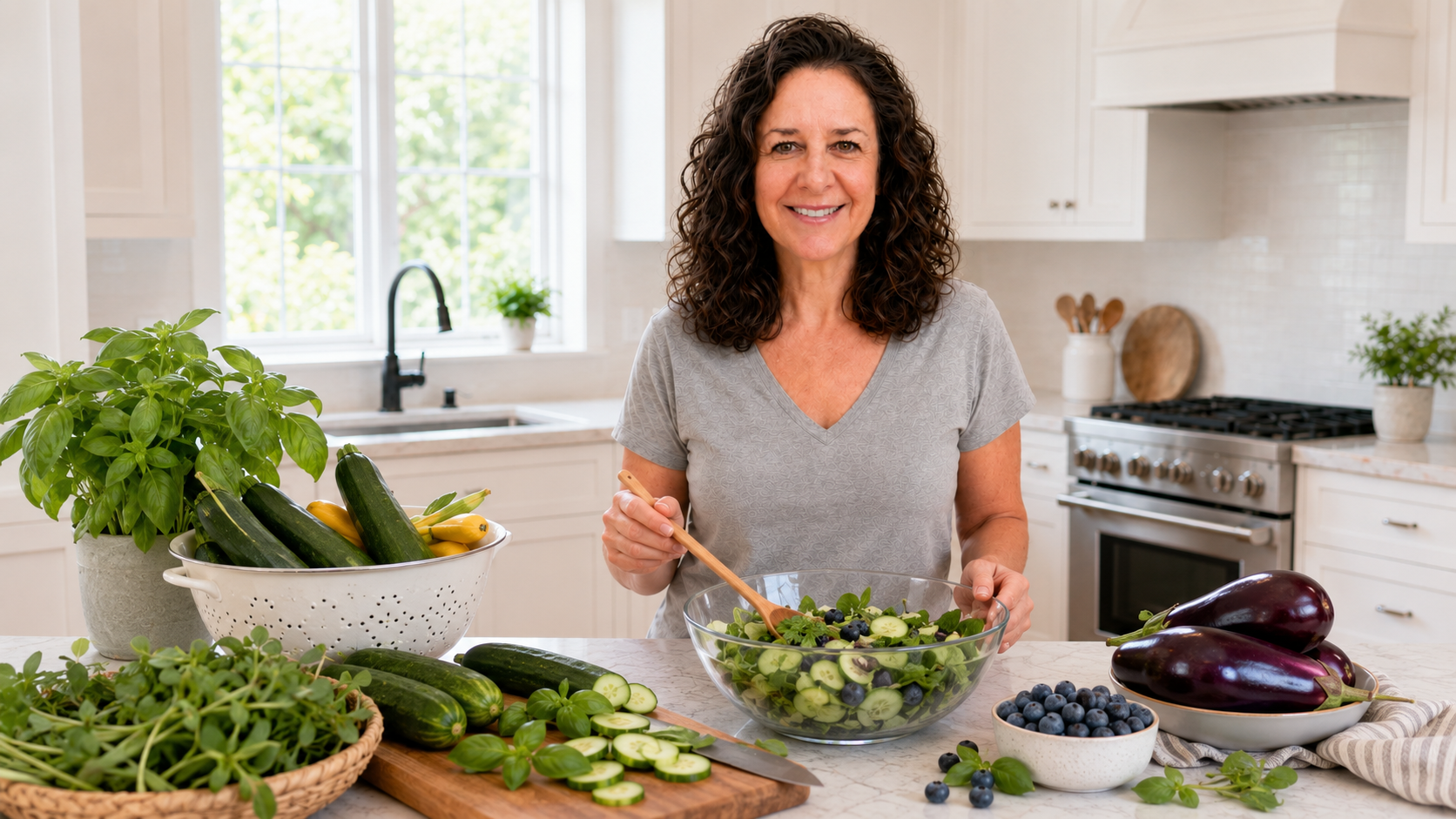
A Simple August Color Challenge
Look at your meals this week.
How many colors are showing up regularly?
Not artificial colors.
Real food colors.
Red.
Orange.
Yellow.
Green.
Blue.
Purple.
You do not need all of them at every meal.
Just rotate them throughout the week.
That is a much easier goal to sustain.
Your August Action
The next time you grocery shop, look at your cart before you check out.
Is one color missing?
Add one whole food in a color you have not eaten much lately.
Eat the rainbow without turning it into another rule. Keep it simple, flex your plant power, and thrive beyond 60.
Internal Linking Suggestions
Link naturally to:
- August 3: 10 August Focus Foods
- August 4: 10 Easy August Recipes
- Thrive Beyond 60 cookbook
- Functional Foods tag archive
- Ingredient Spotlights archive
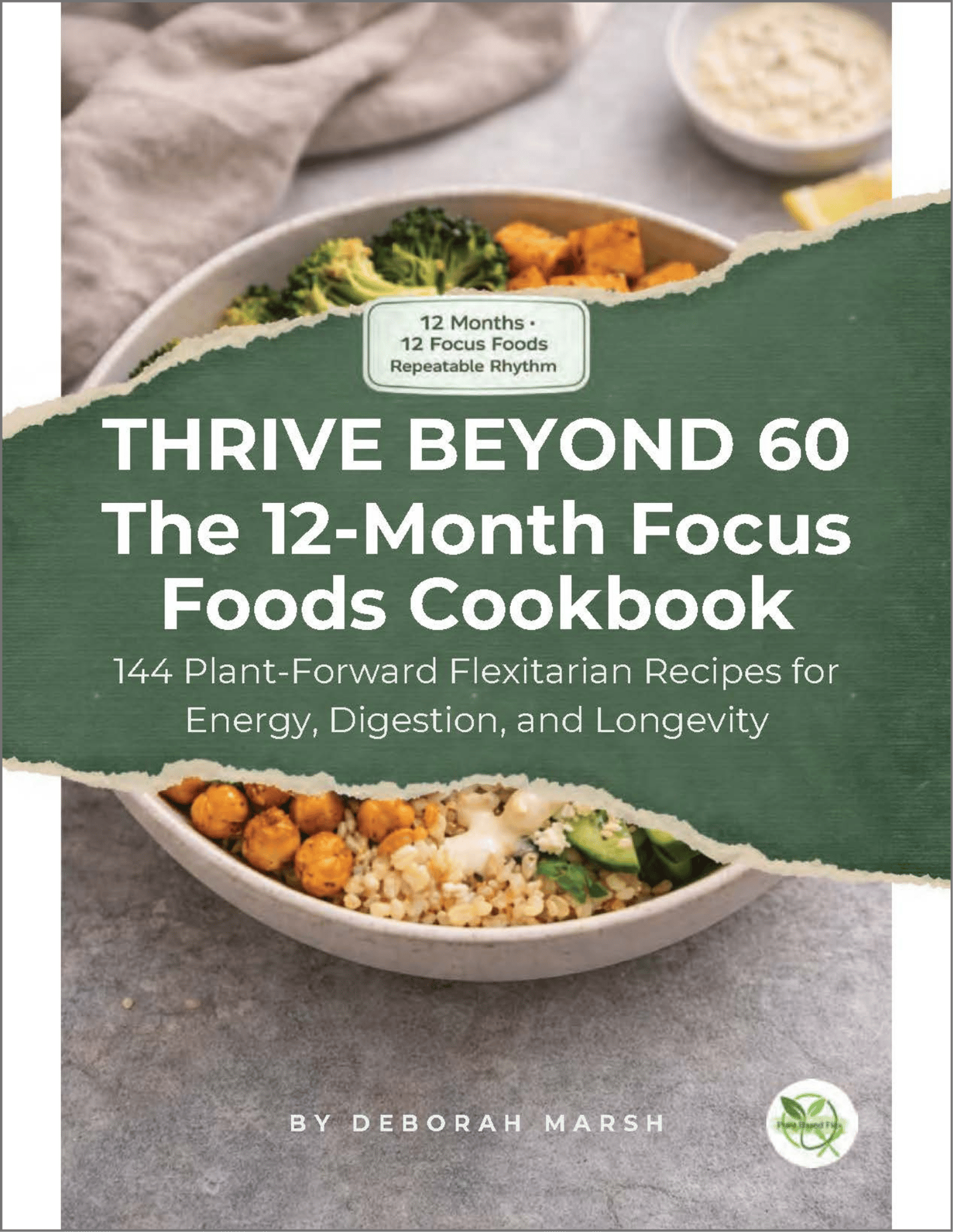
Featured Cookbook
Thrive Beyond 60 Cookbook
Simple, practical plant-based flexitarian recipes built for energy, digestion, and healthy aging after 60.
- Easy, real-life recipes you'll actually use
- Focus foods framework to simplify your meals
- Built for energy, digestion & healthy aging
Disclaimer:
This content is for informational purposes only and is not medical advice. Always consult your healthcare provider before making changes to your diet, supplements, or lifestyle, especially if you have existing conditions or take medication.
💌Want plant-based tips each week
Join the Plant Based Flex newsletter. It’s free, and when you confirm your email I’ll send you a 7-Day Kickstart Wellness Bundle to help you thrive beyond 60.