Walnuts and Chestnuts Are Not Nutritionally the Same
Compare walnuts and chestnuts for healthy fats, carbohydrates, texture, storage, and the best ways to use each in fall meals.

Walnuts and chestnuts both have "nut" in the name.
That's about where the nutritional similarity ends.
I included both in my October Focus Foods because they're wonderful examples of something I think we sometimes oversimplify in healthy eating:
Foods in the same category don't necessarily play the same role on our plates.
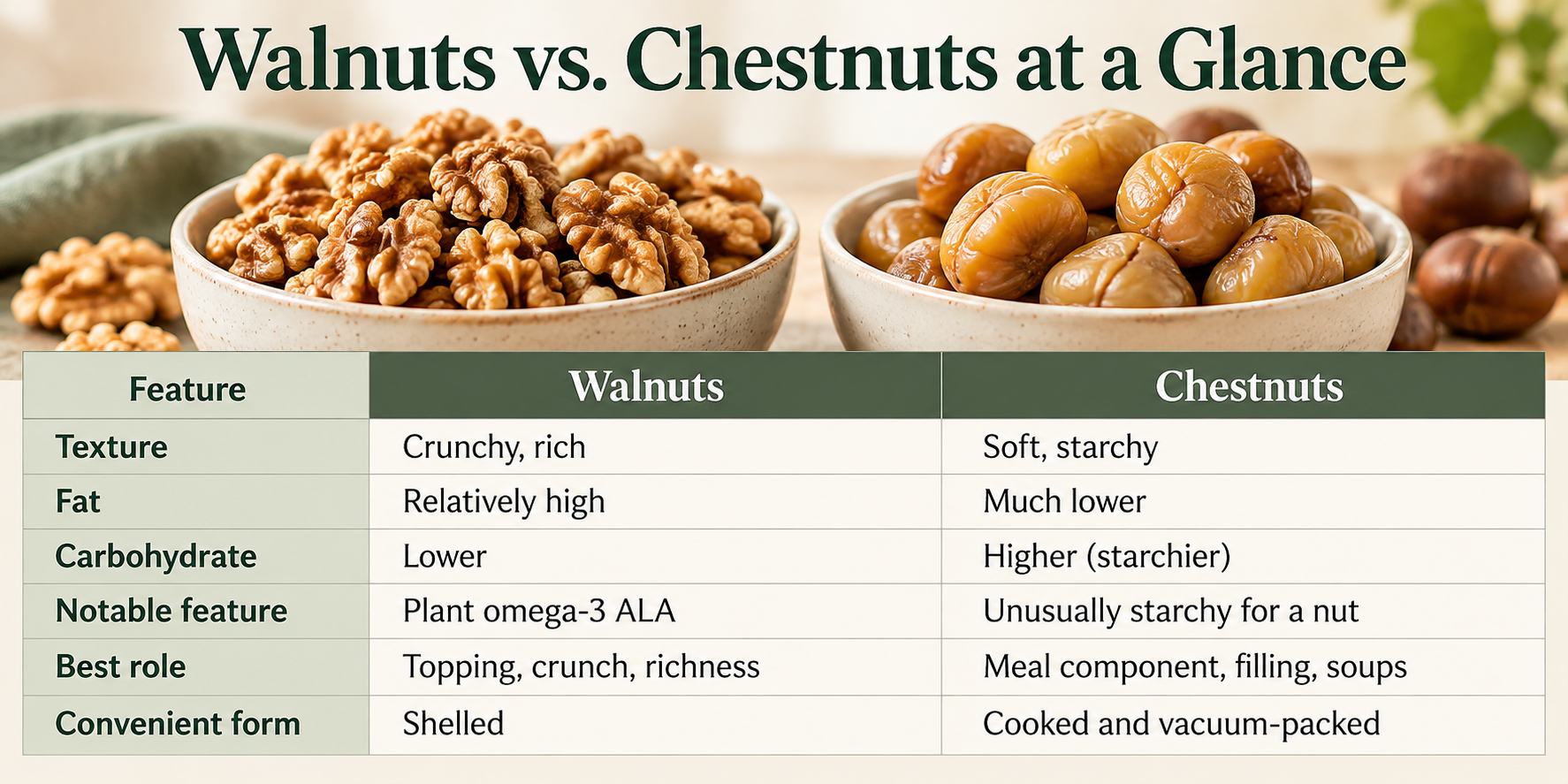
Walnuts are rich, crunchy, and naturally high in fat.
Chestnuts are softer, starchier, and much lower in fat than most nuts.
That means I don't really think of them as substitutes for one another.
Instead, I use them for completely different jobs.
Walnuts: Rich, Crunchy, and Nutrient-Dense
Walnuts are what most of us picture when we hear the word nut.
They're rich because much of their energy comes from fat — primarily unsaturated fats.
Walnuts are also notable because they provide alpha-linolenic acid, or ALA, a plant-based omega-3 fatty acid.
They also contribute plant protein, fiber, minerals, and other plant compounds.
Because they're concentrated, you don't need an enormous amount for them to change a meal.
A small handful can add richness, crunch, and staying power.
What walnuts taste like
Walnuts have a slightly earthy flavor with a mild bitterness from their skins.
Toast them and that flavor becomes deeper and nuttier.
Five practical ways I use walnuts
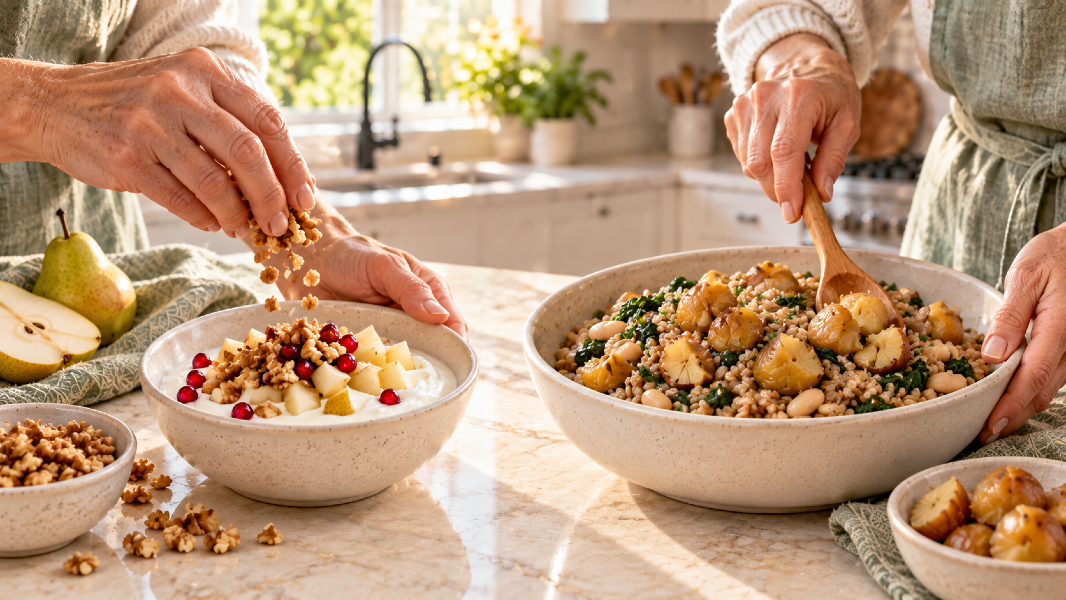
1. Add crunch to yogurt
Instead of turning breakfast into a giant bowl of toppings, chop a few walnuts and scatter them over plain yogurt with seasonal fruit.
2. Finish roasted vegetables
Brussels sprouts, cauliflower, beets, winter squash, and carrots all benefit from a little walnut crunch.
3. Blend them into sauces
Walnuts can help create body in pesto-style sauces and vegetable spreads without relying entirely on cheese or cream.
4. Add them to warm grains
Stir chopped toasted walnuts into brown rice, barley, or farro after cooking rather than cooking them until they're soft.
5. Use them to finish soups
A few chopped walnuts over a creamy pumpkin, cauliflower, or root-vegetable soup can add texture that the soup itself doesn't have.
Chestnuts: A Very Different Kind of Nut
Chestnuts surprised me when I first started paying closer attention to them.
Compared with walnuts and most other nuts, chestnuts are much lower in fat and considerably starchier.
Their texture is soft rather than crunchy.
Once cooked, they're almost somewhere between a nut, a potato, and a grain in the way they can function in a meal.
That's why treating chestnuts exactly like walnuts doesn't make much sense.
What chestnuts taste like
Cooked chestnuts are mildly sweet and earthy.
They're tender and somewhat crumbly rather than oily and crunchy.
That makes them especially useful in fall dishes where you want substance without adding another grain.
Five practical ways to use chestnuts
1. Fold them into grain bowls
Roughly chop cooked chestnuts and combine them with brown rice or farro, greens, beans, and roasted vegetables.
2. Add them to vegetable soups
Chopped chestnuts add soft texture and subtle sweetness to mushroom, cauliflower, pumpkin, or root-vegetable soups.
3. Mix them into bean dishes
White beans and chestnuts work particularly well together because one is creamy and the other slightly firm and starchy.
4. Add them to roasted vegetables
Toss cooked chestnuts into the pan during the last several minutes rather than roasting them for the entire cooking time.
5. Use them in savory fillings
Chopped chestnuts can add texture to vegetable-and-bean fillings for stuffed squash, mushrooms, or other fall dishes.
The Simplest Way to Buy Chestnuts
You can absolutely roast whole chestnuts.
You can score them.
Roast them.
Peel them.
And try to remove that stubborn inner skin.
Or...
You can buy cooked, peeled, vacuum-packed chestnuts.
For everyday cooking, that's what I would choose.
There's no nutritional medal awarded for making an ingredient unnecessarily difficult.
If convenience makes a nutritious food more likely to end up on your plate, convenience has value.
Walnuts vs. Chestnuts at a Glance
And this is why I wouldn't ask:
Which one is healthier?
That's the wrong question.
The better question is:
What does my meal need?
If I need richness and crunch?
Walnuts.
If I want something soft and starchy that feels more substantial?
Chestnuts.
Different food.
Different job.
Storage Matters
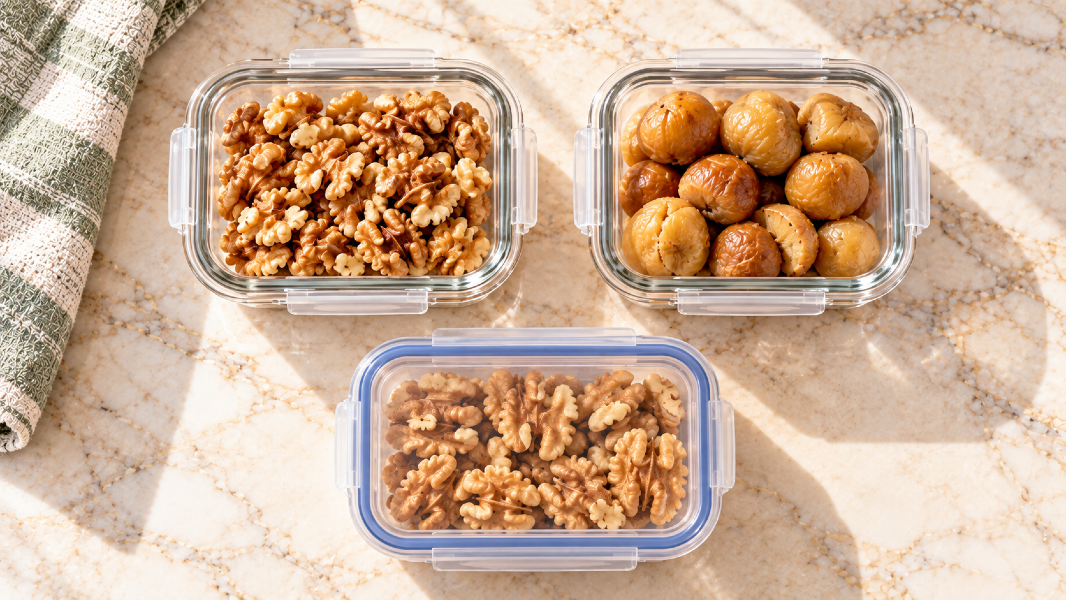
Because walnuts contain a significant amount of unsaturated fat, those oils can eventually become rancid.
If you don't use walnuts quickly, I prefer storing them in the refrigerator or freezer in a well-sealed container.
Cooked packaged chestnuts are different.
Unopened shelf-stable packages should be stored according to the manufacturer's directions.
Once opened, refrigerate them and use them within the time recommended on the package.
And that's another reason I like smaller packages.
I'm much more likely to actually finish them.
My October Takeaway
One of the things I hope this month's Focus Foods series has shown is that healthy eating doesn't have to mean identifying one "best" food.
We need different foods to do different things.
Some bring protein.
Some bring healthy fats.
Some bring fiber.
Some bring starch.
Some bring color, crunch, sweetness, acidity, or simply enjoyment.
Variety is the point.
So this week, use walnuts where you want richness and crunch.
Try chestnuts where you want a soft, starchy fall ingredient.
And notice how differently they behave on the plate.
That's exactly the kind of experimenting I want the Focus Foods approach to encourage.
Join Plant Based Flex free to have new Thrive Beyond 60 food, movement, and practical healthy-living posts delivered to you.
And for the full year-round Focus Foods approach, my Thrive Beyond 60 — The 12-Month Focus Foods Cookbook includes 144 recipes built around seasonal ingredients.
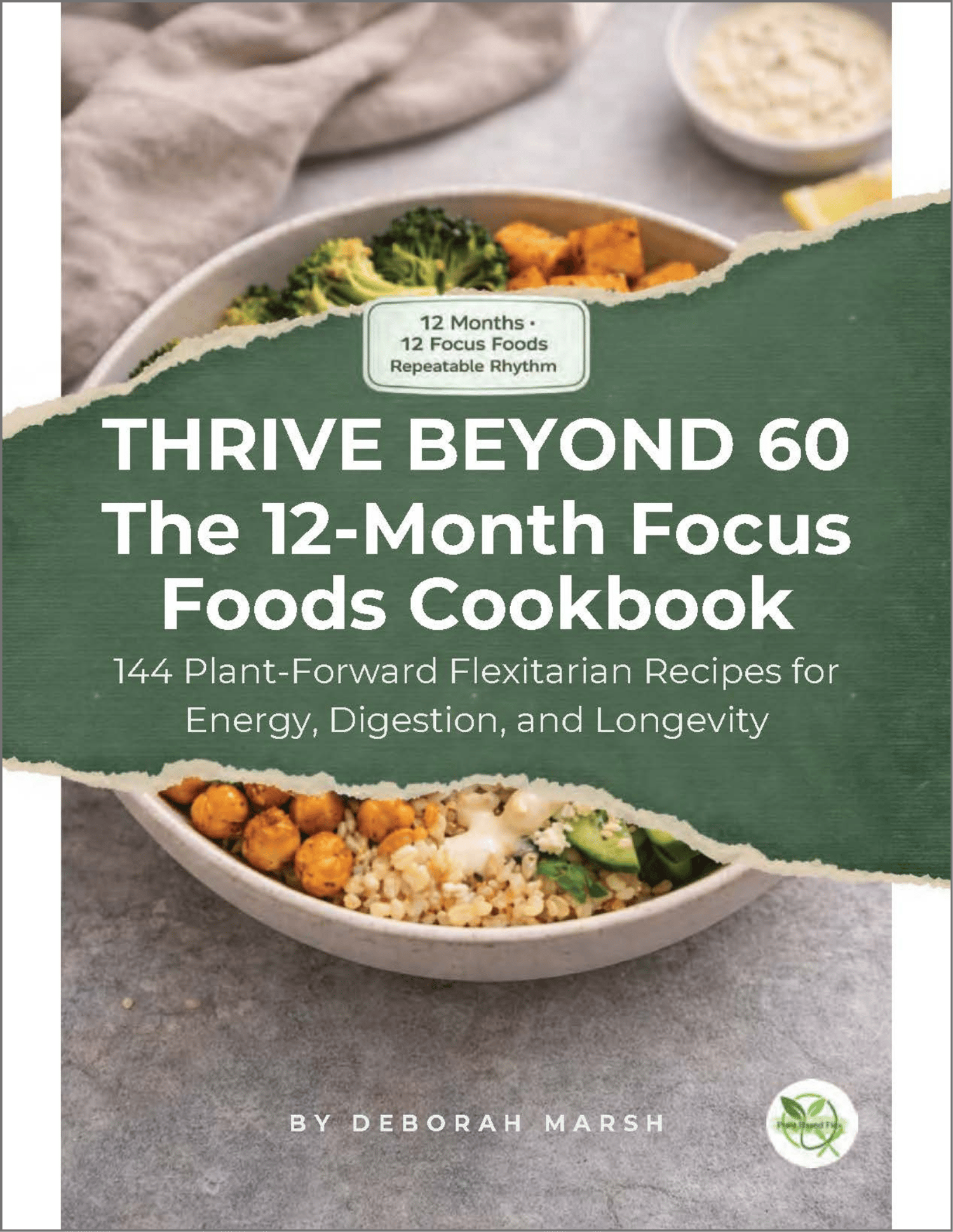
Featured Cookbook
Thrive Beyond 60 Cookbook
Simple, practical plant-based flexitarian recipes built for energy, digestion, and healthy aging after 60.
- Easy, real-life recipes you'll actually use
- Focus foods framework to simplify your meals
- Built for energy, digestion & healthy aging
Disclaimer:
This content is for informational purposes only and is not medical advice. Always consult your healthcare provider before making changes to your diet, supplements, or lifestyle, especially if you have existing conditions or take medication.
💌Want plant-based tips each week
Join the Plant Based Flex newsletter. It’s free, and when you confirm your email I’ll send you a 7-Day Kickstart Wellness Bundle to help you thrive beyond 60.