
The Simple Daily Habit That Helps You Feel Strong, Clear, and Alive
Walking over 60 is one of the simplest ways to support healthy aging, energy, digestion, balance, strength, mood, and independence. Learn how to walk, what to wear, where to go, and how to build a simple walking habit.
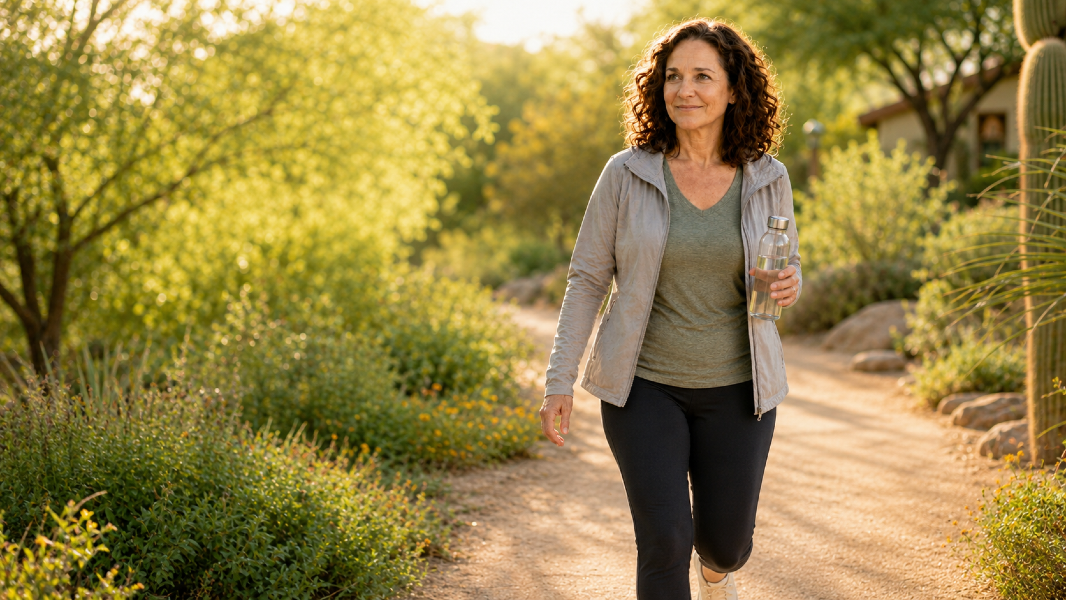
Walking Over 60 Helps You Feel Strong, Clear, and Alive
Walking does not get enough credit.
It is not flashy. It does not require a gym membership. It does not need expensive equipment. You do not have to be athletic, competitive, or dressed like you are training for a marathon.
You just need a pair of comfortable shoes, a little common sense, and the willingness to move your body forward one step at a time.
And after 60, that matters more than most people realize.
Walking is one of the most underrated ways to support healthy aging, steady energy, digestion, joint mobility, mood, balance, heart health, and independence. It is simple, but it is not small.
Because here is the truth.
The goal after 60 is not to punish your body into fitness. The goal is to keep your body capable, confident, mobile, and strong enough to keep saying yes to life.
That is why walking deserves a real place in your healthy aging routine.
Walking After 60 Is Not “Just Walking”
Walking is one of the simplest ways to support healthy aging, steady energy, better digestion, stronger legs, clearer thinking, and everyday independence. No gym. No complicated plan. Just one steady step at a time.
Why Walking Matters So Much After 60
Walking is one of the easiest ways to keep your body in motion without overcomplicating your wellness routine.
It helps wake up your circulation, loosen stiff joints, support digestion, clear your head, and remind your body that it is still designed to move.
For many people over 60, walking can help support:
Walking can help support:
- Better heart and lung function
- More stable daily energy
- Improved balance and coordination
- Stronger legs, hips, and glutes
- Better digestion after meals
- A calmer nervous system
- Less stiffness from sitting too long
- A brighter mood and clearer mind
- More confidence getting around
- A stronger sense of independence
And let’s be honest, independence is a big deal.
Walking helps you keep doing the things that make life feel good. Grocery shopping. Traveling. Hiking. Playing with grandkids. Going to events. Exploring new places. Getting outside without feeling fragile.
That is the real win.
Not a step count. Not a fitness badge. Not trying to look like someone half your age.
The win is being able to move through your life with more freedom.
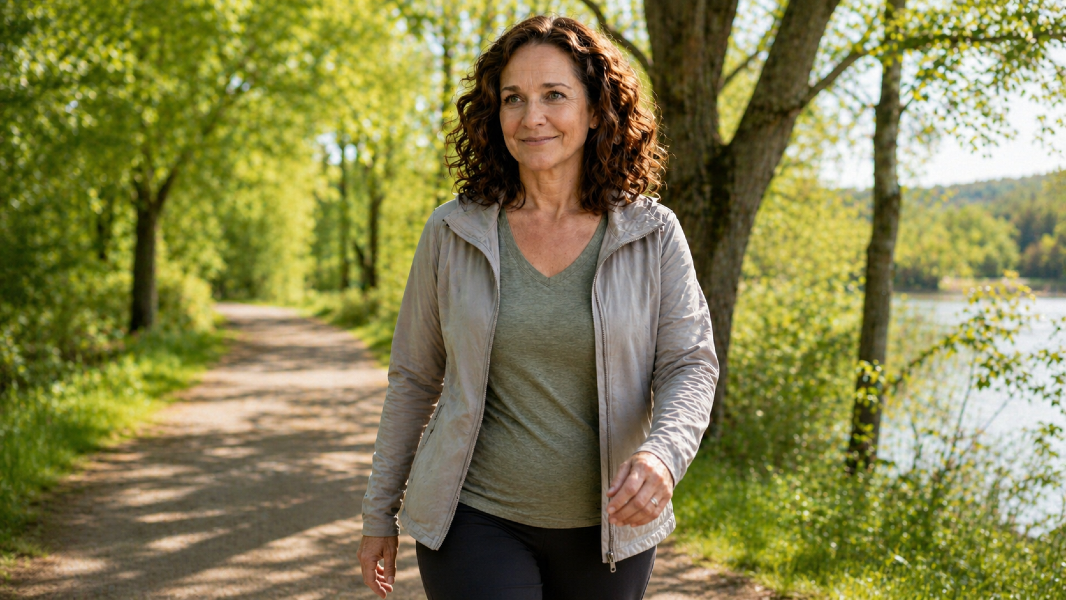
Walking Is Not “Just Walking”
A lot of people dismiss walking because it seems too basic.
But basic is not bad. Basic is often what works.
Walking is functional movement. It trains the exact muscles, balance, coordination, posture, and endurance you use every single day.
Every walk is a message to your body:
- I still need my legs.
- I still need my lungs.
- I still need my balance.
- I still need my strength.
- I am still participating in my life.
That is powerful.
You do not have to make walking complicated. But you do need to make it intentional.
How to Walk After 60
Yes, there is a better way to walk.
Simple Walking Form Check
- Stand tall without forcing yourself stiff
- Relax your shoulders and open your chest
- Let your arms swing naturally
- Look ahead while still scanning the ground
- Take steady, comfortable steps
- Land softly instead of stomping
- Breathe naturally and do not force the pace
- Slow down when the ground is uneven
You do not need perfect form, but a few simple adjustments can help you feel better and reduce strain.
Start with your posture.
Stand tall without forcing yourself stiff. Imagine your head gently lifting upward, your shoulders relaxed, and your chest open enough to breathe comfortably.
Let your arms swing naturally. Do not clench your fists. Keep your hands relaxed.
Look ahead instead of staring down at your feet the whole time. You still need to scan the ground, especially on uneven surfaces, but try not to walk folded forward.
Take comfortable steps. Bigger is not always better. Shorter, steady steps are often safer and easier on the joints.
Land softly. Your walk should not feel like you are stomping. Think smooth, steady, and controlled.
Breathe through your nose when you can, but do not force it. If you are walking uphill or moving faster, it is normal to breathe through your mouth too.
Most of all, walk in a way that feels sustainable.
You are not trying to prove anything. You are building a body that can keep showing up.
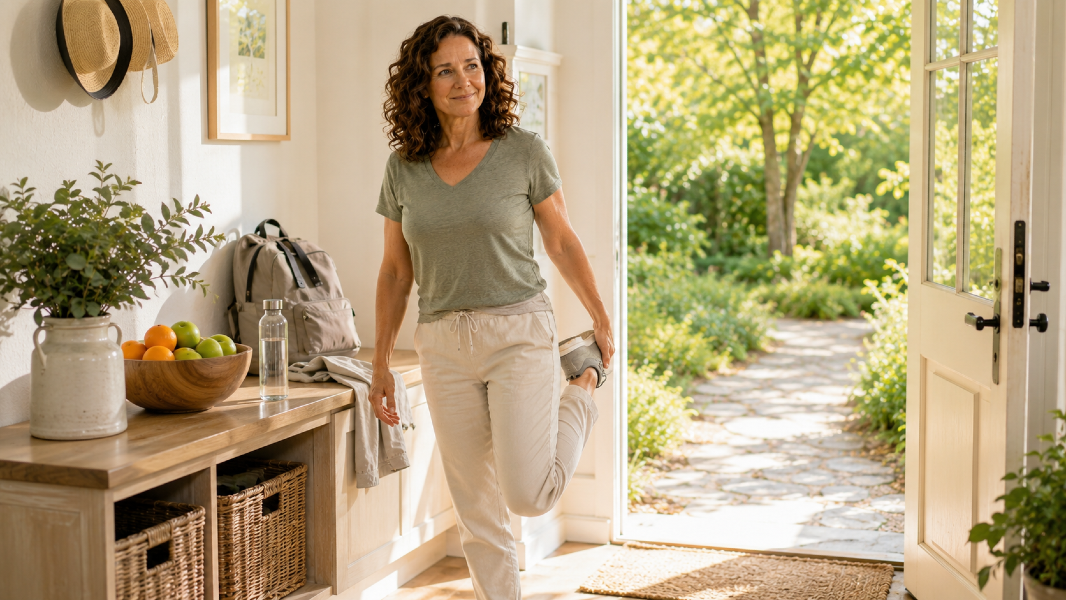
How Long Should You Walk?
Start where you are.
Start Small. Build Steady.
A walk does not have to be long to count. Five minutes is still a start. Ten minutes is still movement. Three short walks can still add up to a strong daily rhythm.
The goal is not perfection. The goal is consistency.
That might be 5 minutes. That might be 10 minutes. That might be 30 minutes. That might be a slow walk around the block after dinner.
The mistake is thinking it only counts if it is long or intense.
It counts when you do it.
A realistic walking rhythm might look like this:
- A short morning walk to wake up your body
- A gentle after meal walk to support digestion
- A longer weekend walk in nature
- A few extra steps during errands
- A light evening walk to unwind
You can also break walking into smaller sessions.
Three 10 minute walks can be just as meaningful as one 30 minute walk, especially if you are busy, tired, recovering, or rebuilding stamina.
Done is better than perfect.
Where to Walk
The best place to walk is the place you will actually go.
That might be your neighborhood, a local park, a paved trail, a mall, a track, a botanical garden, a quiet shopping center, or a nature path.
If you are newer to walking, choose places that feel safe, flat, and predictable.
Good walking places include:
Good Places to Walk
- Neighborhood sidewalks
- Paved park paths
- School tracks when open to the public
- Indoor malls
- Community centers
- Beginner friendly nature trails
- Botanical gardens
- Large stores during extreme weather
- Flat desert trails early in the morning
- Shaded greenbelt paths
If you live somewhere hot, like Arizona, timing matters.
Walk early in the morning when the air is cooler. Avoid peak heat. Carry water. Wear sun protection. Respect the weather.
A beautiful walk is not worth overheating, getting dizzy, or pushing your body past common sense.
What to Wear
You do not need fancy walking clothes, but you do need clothes that support movement and comfort.
Start with shoes.
Your shoes matter. A lot.
Look for walking shoes or trail shoes that feel stable, supportive, and comfortable. They should not pinch your toes, slip at the heel, or feel too heavy.
For pavement, a good walking shoe is usually enough. For dirt trails or uneven ground, trail shoes with better grip may be smarter.
Your socks matter too. Avoid socks that bunch, slide, or rub. Moisture wicking socks can help reduce blisters.
What to Wear for a Better Walk
- Supportive walking shoes or trail shoes
- Comfortable socks that do not bunch or rub
- Breathable clothing that allows easy movement
- Light layers you can adjust as needed
- A brimmed hat for sunny walks
- Sunglasses for eye protection
- Lightweight long sleeves when sun exposure is high
- A light jacket for cooler mornings
For clothing, think comfort and weather.
Wear breathable layers. Choose clothes that allow your legs and arms to move freely. In warmer weather, lightweight fabric helps. In cooler weather, layers make it easier to adjust.
For sunny walks, consider:
- A brimmed hat
- Sunglasses
- Sunscreen
- Lightweight long sleeves
- A cooling towel
- Comfortable breathable pants or shorts
For cooler walks, consider:
- A light jacket
- Warm socks
- Gloves if needed
- A layer you can remove once you warm up
The right outfit is the one that keeps you comfortable enough to keep walking.
What to Bring
For a short neighborhood walk, you may not need much.
For longer walks or trails, be smarter.
Walking Essentials
- Water
- Your phone
- ID
- A small snack
- Lip balm
- Tissues
- A hat
- Sunglasses
- Sunscreen
- A small first aid item
- Electrolytes for hot weather or longer walks
- Walking poles for uneven trails
- A lightweight waist pack or small backpack
Bring water. Always.
You may also want:
Walking poles can be especially helpful on trails. They can give you extra stability, help with balance, and reduce some strain on your knees during uneven terrain or downhill sections.
They are not just for serious hikers. They are smart tools.
How to Prep Before a Walk
You do not need a full production.
But do not just jump up from sitting all day and expect your body to love it.
Give yourself a few minutes.
Quick Pre Walk Warm Up
- Ankle circles
- Gentle calf raises
- Shoulder rolls
- Easy side steps
- Slow marching in place
- Gentle hip circles
- A few sips of water
This is especially helpful if you feel stiff in the morning or after sitting.
Start your walk slowly for the first few minutes. Let your body warm up naturally.
After your walk, slow down before stopping completely. Then stretch lightly if it feels good.
A few gentle calf, hamstring, hip, and chest stretches can help you feel less stiff later.
Walking After Meals
Try the 10 Minute After Meal Walk
A gentle walk after meals can be one of the easiest habits to build. It helps you move your body, support digestion, and avoid sinking straight into the couch after eating.
One of my favorite simple habits is the after meal walk.
It does not have to be long. Even 5 to 10 minutes can feel good.
A gentle walk after eating may help digestion, reduce that heavy sluggish feeling, and give your body a chance to use some of that meal energy instead of sinking into the couch immediately.
This is not about speed walking after dinner.
It is more like telling your body, “Let’s keep things moving.”
That is a very Plant Based Flex kind of habit. Simple. Practical. Repeatable.
Make Walking Fun
Walking should not feel like punishment.
Make it something you look forward to.
Try a sunrise walk.
Make Your Walk More Fun
- Take a sunrise walk
- Notice five beautiful things
- Listen to a podcast or calming music
- Walk with your spouse or a friend
- Take photos of flowers, clouds, birds, or funny signs
- Walk to a local coffee shop
- Use walking time to think through a creative idea
- Try a new park once a week
- Turn it into a mini nature reset
You can also create themed walks:
- The calm walk
- The gratitude walk
- The digestion walk
- The strong legs walk
- The clear my head walk
- The “I need to get out of the house” walk
- The “I am still groovy” walk
Because yes, walking can be groovy.
Safety Tips for Walking Over 60
Walking is simple, but safety still matters.
Pay attention to uneven sidewalks, loose gravel, curbs, rocks, wet areas, and poor lighting.
Do not assume every path is friendly to your knees, hips, feet, or balance.
A few smart rules:
Smart Walking Safety Tips
- Tell someone where you are going if walking alone
- Carry your phone
- Avoid isolated areas if they do not feel safe
- Walk during daylight when possible
- Use reflective gear if walking near roads
- Stay hydrated
- Avoid extreme heat
- Slow down on uneven ground
- Use walking poles if needed
- Do not ignore dizziness, chest pain, unusual shortness of breath, or sudden weakness
Also, do not let pride override wisdom.
Turning around is not failure. It is strategy.
How to Build a Walking Habit
The best walking routine is the one you can repeat.
Do not start with a dramatic plan that burns you out in a week.
Start small and make it almost too easy.
Simple 4 Week Walking Build Up
- Week 1: Walk 5 to 10 minutes most days
- Week 2: Add a few extra minutes when it feels good
- Week 3: Add one slightly longer walk
- Week 4: Add variety with parks, gentle hills, or nature trails
You can build from there.
A simple weekly walking rhythm might be:
- 3 easy walks
- 1 longer walk
- 1 nature walk
- 1 after meal walk day
- 1 rest or gentle mobility day
But keep it flexible.
You are building a lifestyle, not a rigid rulebook.
What If You Are Starting From Zero?
Start from zero.
There is no shame in that.
Walk to the mailbox. Walk around the block. Walk inside your home. Walk in a store. Walk for 3 minutes.
Then build.
The body usually responds well to consistent, gentle signals.
The key is not intensity. The key is repetition.
A little walking done often can become a powerful foundation.
Walking and a Mostly Plant Based Flexitarian Lifestyle
Walking pairs beautifully with a mostly plant based flexitarian lifestyle.
Plant focused meals can support energy, digestion, hydration, and recovery. Walking helps your body use that nourishment.
Before a walk, keep food simple.
Simple Food Ideas Before a Walk
- Banana with nut butter
- A small smoothie
- Oat or buckwheat cereal
- Whole grain toast with avocado
- Fruit with a few nuts
- Hummus with whole grain crackers
- A small chia pudding
- Leftover roasted sweet potato
Simple Food Ideas After a Longer Walk
- Lentil bowl with greens
- Tofu scramble with vegetables
- Chickpea salad
- Veggie wrap with hummus
- Smoothie with plant protein
- Eggs with greens
- Sardines with avocado toast
- Hearty bean soup
The goal is not perfection. The goal is steady nourishment that helps you keep moving.
Flex your plant power, then take it for a walk.
The Real Reason Walking Matters
Walking is not just exercise.
It is freedom training.
It is confidence training.
It is mood medicine.
It is joint oil.
It is circulation support.
It is moving meditation.
It is a daily reminder that your body is still part of your adventure.
After 60, that reminder matters.
You do not have to chase youth. You do not have to compare yourself to anyone else. You do not have to hit some perfect number of steps.
Just begin.
Walk around the block. Walk after dinner. Walk through a park. Walk in the morning light. Walk with someone you love. Walk while dreaming up your next chapter.
Because thriving beyond 60 is not about sitting on the sidelines.
It is about staying in motion, one strong and steady step at a time.
Final Thought
Ready to Thrive Beyond 60?
Walking is one of the easiest ways to start feeling stronger, clearer, and more confident in your body. Pair it with simple plant powered meals, daily movement, and realistic healthy aging habits.
Flex your plant power and take the next step today.
Walking may be simple, but it is one of the most powerful habits you can build after 60.
Start small. Stay consistent. Dress smart. Hydrate. Choose safe places. Make it enjoyable. Let it become part of who you are.
Your body does not need perfection.
It needs movement.
And walking is one of the best places to start.
Disclaimer:
This content is for informational purposes only and is not medical advice. Always consult your healthcare provider before making changes to your diet, supplements, or lifestyle, especially if you have existing conditions or take medication.
💌Want plant-based tips each week
Join the Plant Based Flex newsletter. It’s free, and when you confirm your email I’ll send you a 7-Day Kickstart Wellness Bundle to help you thrive beyond 60.