
How to Add Walking Intervals Without Running
Add beginner-friendly walking intervals after 60 using brief pace changes, longer recoveries, and a simple progression that does not require running.

You don't have to run to make a walk more challenging.
And you definitely don't have to turn every walk into a workout.
But if you're already comfortable walking, one simple way to add a little variety is to occasionally change your pace.
Walk normally.
Walk briskly for a short period.
Slow down.
Recover.
Repeat.
That's a walking interval.
No running required.
Why Change the Pace?
Our bodies respond to changing demands.
If every walk is always the same pace on the same route for the same amount of time, it can still be valuable movement.
But occasionally walking faster asks a little more from your heart, lungs, and legs.
Then the slower interval gives you time to recover before doing it again.
The important word here is:
Occasionally.
You don't need every walk to become interval training.
What Does "Brisk" Actually Mean?
I don't want you chasing someone else's speed.
Use your own effort.
On a simple 1–10 perceived-effort scale:
Easy walking might feel around 2–3.
Your brisk interval might feel around 5–6.
You're working noticeably harder, but you still feel in control.
Another option is the talk test.
During the easy portion, normal conversation should feel comfortable.
During the brisk portion, talking should become more challenging, but you should still be able to speak a short sentence.
We're not sprinting.
We're not gasping.
We're walking with purpose.
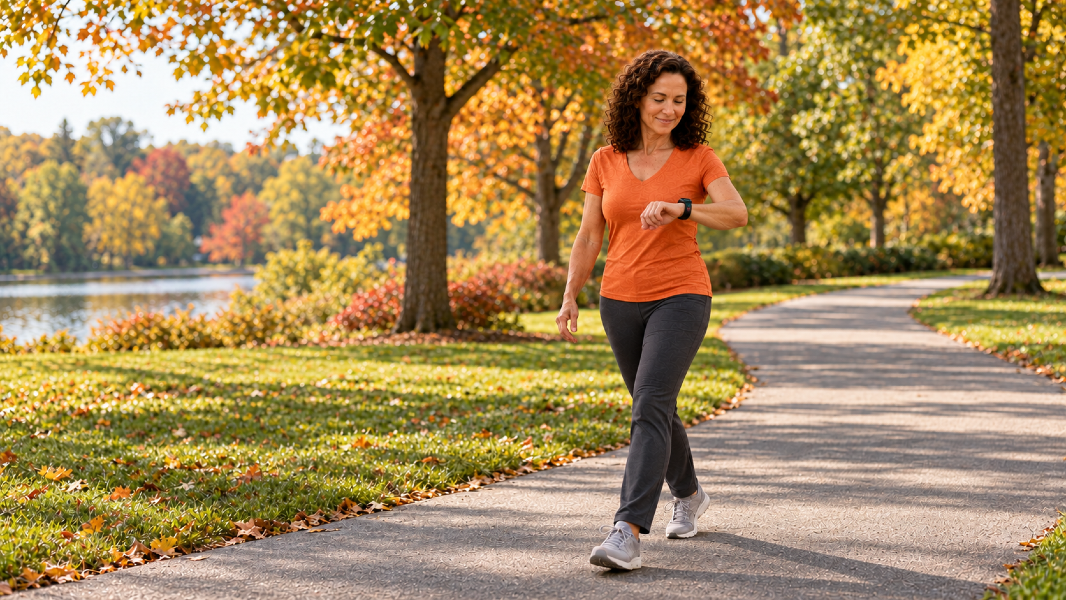
Your First 20-Minute Walking Interval
Choose a flat, familiar, safe route.
Avoid starting this on steep hills, loose gravel, crowded trails, or uneven terrain.
Minutes 0–5: Warm Up
Walk at an easy comfortable pace.
Let your body gradually warm up.
Minutes 5–13: Four Rounds
Repeat:
30 seconds brisk walking
then
90 seconds easy walking
Four rounds = 8 minutes.
Minutes 13–20: Easy Walk and Cool Down
Return to your comfortable walking pace.
Gradually let your breathing settle.
That's it.
You just completed a walking-interval session.
Four Weeks Without Turning It Into a Race
I want to progress this by changing one variable at a time.
Week 1
4 rounds:
30 seconds brisk + 90 seconds easy
Week 2
5 rounds:
30 seconds brisk + 90 seconds easy
We're only adding one round.
Week 3
5 rounds:
45 seconds brisk + 90 seconds easy
Now we're changing the brisk interval.
Week 4
5 rounds:
45 seconds brisk + 75 seconds easy
Now we're slightly shortening recovery.
You do not need to keep increasing every week indefinitely.
If Week 2 feels like the right challenge, stay there.
Progression isn't a deadline.
Don't Make the Brisk Portion Too Fast
This is where people can turn a useful idea into an unpleasant one.
The goal isn't:
"How fast can I possibly walk for 30 seconds?"
The goal is:
"Can I noticeably increase my pace while still moving well and staying in control?"
Your posture shouldn't fall apart.
You shouldn't feel as though you're about to trip.
And you don't need to compete with your watch.
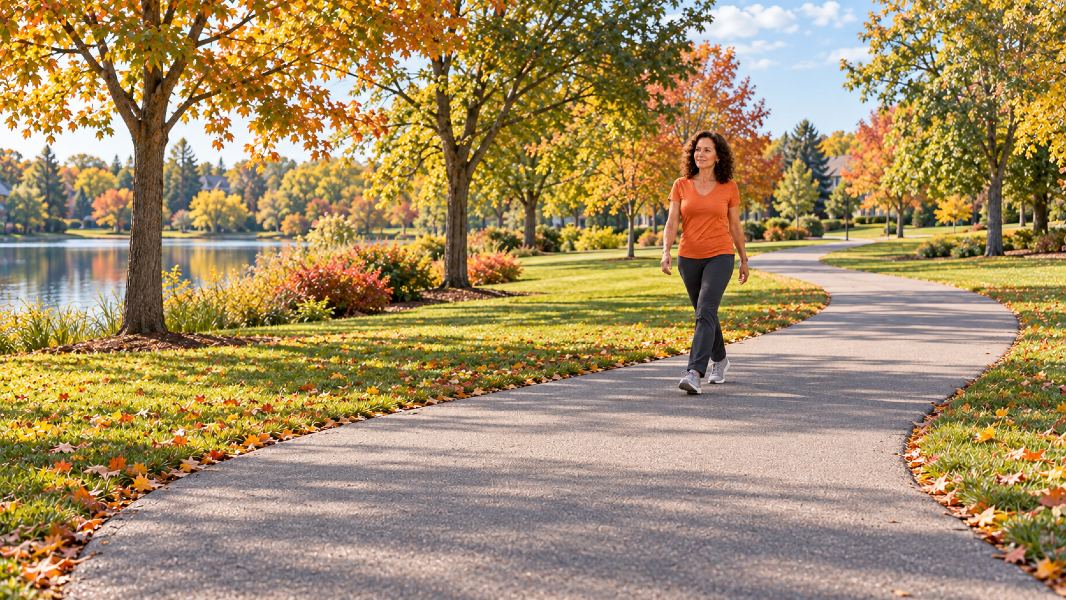
Choose the Route Carefully
For interval days, I'd choose:
- A flat paved loop
- A familiar neighborhood route
- A treadmill
- A track
- A smooth park path
Save uneven trails for another day when your attention can stay on the terrain.
When to Get Medical Guidance First
For many people, walking is an accessible form of activity, but increasing exercise intensity isn't appropriate for everyone without individualized guidance.
If you have cardiovascular or pulmonary disease, significant balance problems, unexplained dizziness, chest symptoms, or another condition that may affect exercise safety — or you've been advised to limit activity — talk with your healthcare professional about what's appropriate for you.
Stop exercising and seek appropriate medical care if you develop concerning symptoms such as chest pain or pressure, severe dizziness, fainting, or unusual shortness of breath.
Your Challenge
Try the Week 1 version once this week.
After the final brisk interval, ask yourself:
Could I have done another one with good form?
If yes, excellent.
That's where I want you.
You don't need to finish destroyed for movement to count.
You just need enough challenge to give your body something different to respond to.
Join Plant Based Flex free for new Thrive Beyond 60 movement, food, and practical healthy-living posts delivered to you.
Disclaimer:
This content is for informational purposes only and is not medical advice. Always consult your healthcare provider before making changes to your diet, supplements, or lifestyle, especially if you have existing conditions or take medication.
💌Want plant-based tips each week
Join the Plant Based Flex newsletter. It’s free, and when you confirm your email I’ll send you a 7-Day Kickstart Wellness Bundle to help you thrive beyond 60.