
Walk Stronger This Fall
Build stronger walking for fall by gradually adding hills, stairs, and varied terrain while protecting balance and recovery.
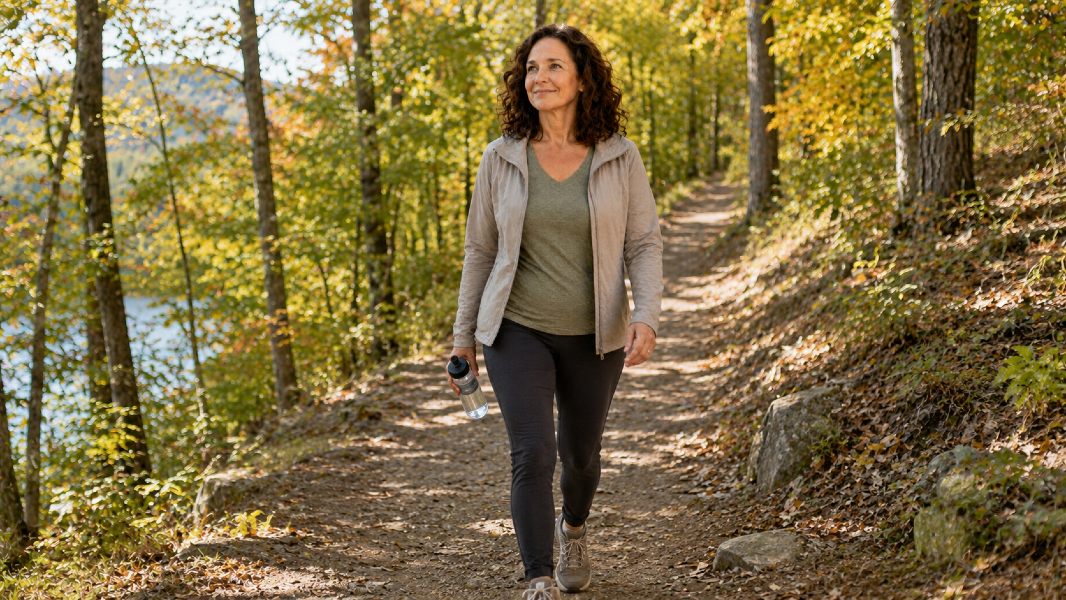
Walk Stronger This Fall: Add Hills, Stairs, and Uneven Ground Gradually
One of the things I love about walking and hiking is that the terrain can change the workout without changing the activity.
A flat sidewalk, a hill, stairs, packed dirt, and a rocky trail all ask something different from the body.
That is useful, but it is also why I think progression matters.
Start with distance you already handle well
Before adding harder terrain, use a walking distance that feels comfortable and familiar.
If two miles on flat ground already leaves you exhausted, adding a steep hill is probably not the next move.
Build the base first.
Add gentle hills
A gradual incline increases the demand on glutes, calves, quads, and cardiovascular fitness.
You do not need a mountain.
Try one small hill during a normal walk, then return to flatter ground.
Use stairs strategically
Stairs are efficient because they combine strength and cardiovascular demand.
Start with a small number of flights or repeat a short set of stairs once or twice.
Use the railing when needed.
Going down can be surprisingly demanding on the knees and thighs, so do not ignore the descent.
Practice uneven ground before a serious hike
Grass, packed dirt, and mild trail surfaces give the ankles and balance system more feedback than smooth pavement.
If you plan to hike, it makes sense to practice on easier uneven surfaces first rather than asking your body to adapt halfway up a difficult trail.
Slow down when the surface changes
A faster pace on a smooth sidewalk may not be appropriate on loose rock or uneven trail.
Shorter steps, deliberate foot placement, and a slower pace can make the walk safer and more controlled.
Train the support system too
Stronger walking is not only about walking.
Helpful exercises include:
- calf raises
- step-ups
- split squats
- hip hinges
- single-leg balance with support
- ankle mobility
These movements help prepare the legs for the demands of varied terrain.
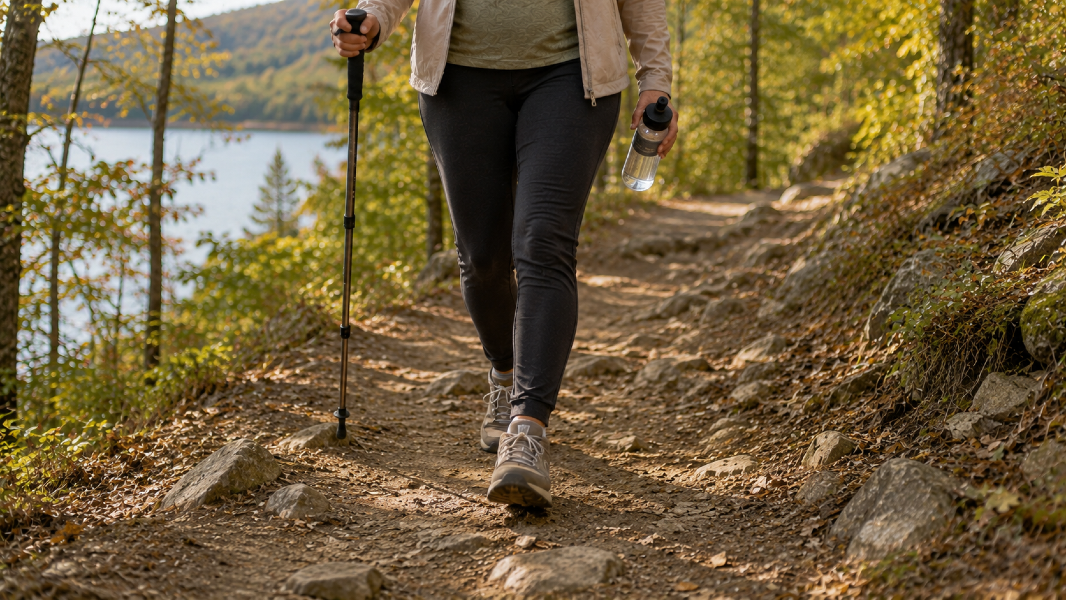
Carry what you plan to carry
If you hike with water, trekking poles, or a small backpack, gradually practice with the gear you will actually use.
Do not make your first loaded walk the longest hike of the season.
Let recovery tell you how fast to progress
Some muscle fatigue is normal when you increase difficulty.
Persistent joint pain, swelling, dizziness, chest pain, or symptoms that feel unusual are not something to push through.
Adjust, recover, and get appropriate medical guidance when needed.
The goal is not to conquer the steepest hill.
The goal is to make your everyday walking body a little more prepared for the terrain you want to enjoy.
Disclaimer:
This content is for informational purposes only and is not medical advice. Always consult your healthcare provider before making changes to your diet, supplements, or lifestyle, especially if you have existing conditions or take medication.
💌Want plant-based tips each week
Join the Plant Based Flex newsletter. It’s free, and when you confirm your email I’ll send you a 7-Day Kickstart Wellness Bundle to help you thrive beyond 60.