
Legs, Balance and Core for Everyday Independence
Support summer mobility with practical exercises for leg strength, balance, core stability and flexibility without exercising in peak heat.
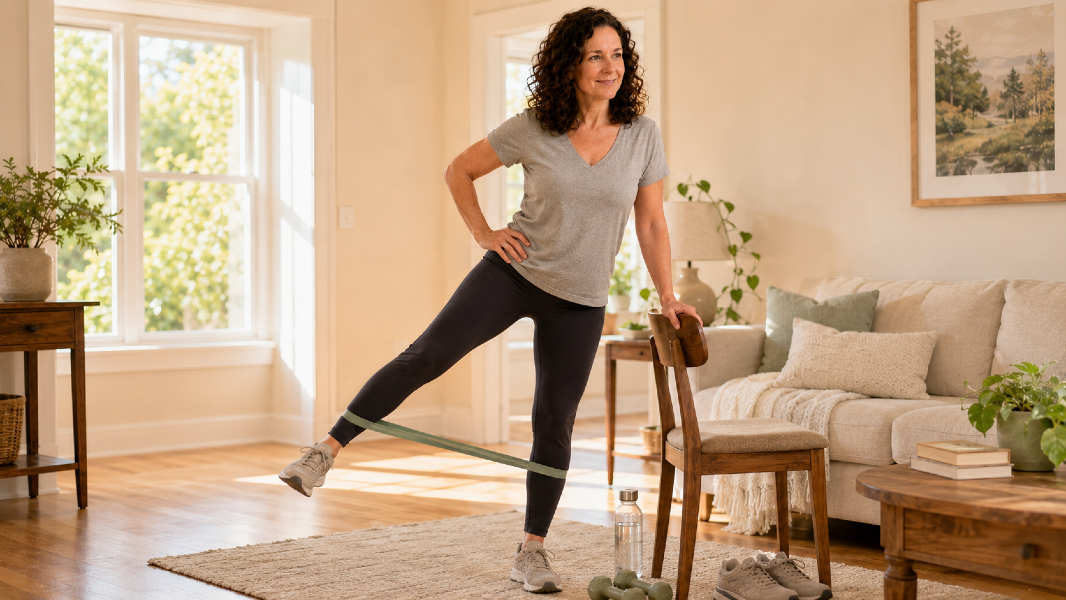
The Summer Strength Triangle: Legs, Balance and Core for Everyday Independence
Summer gives us more reasons to move.
Walking through airports.
Climbing steps at outdoor events.
Standing at family gatherings.
Gardening.
Shopping.
Traveling.
Exploring a park or trail.
But enjoying those activities requires more than flexibility alone.
Three areas work together to support everyday independence:
Leg strength
Balance
Core stability
Think of them as a triangle.
If one side becomes weak, everyday movement may feel less steady or more tiring.
Strong legs help you stand and climb.
Balance helps you adjust to uneven ground and changing positions.
Core stability helps control the body during movement.
This does not require a complicated workout. A few focused exercises performed consistently can support all three.
Why Leg Strength Matters
Leg strength affects almost everything we do.
Standing from a chair
Climbing stairs
Walking uphill
Getting in and out of a car
Carrying groceries
Recovering from a small stumble
One useful personal benchmark is whether you can stand from a chair several times without using your hands.
This is not a test of worth or fitness. It is simply a practical way to notice changes in functional strength.
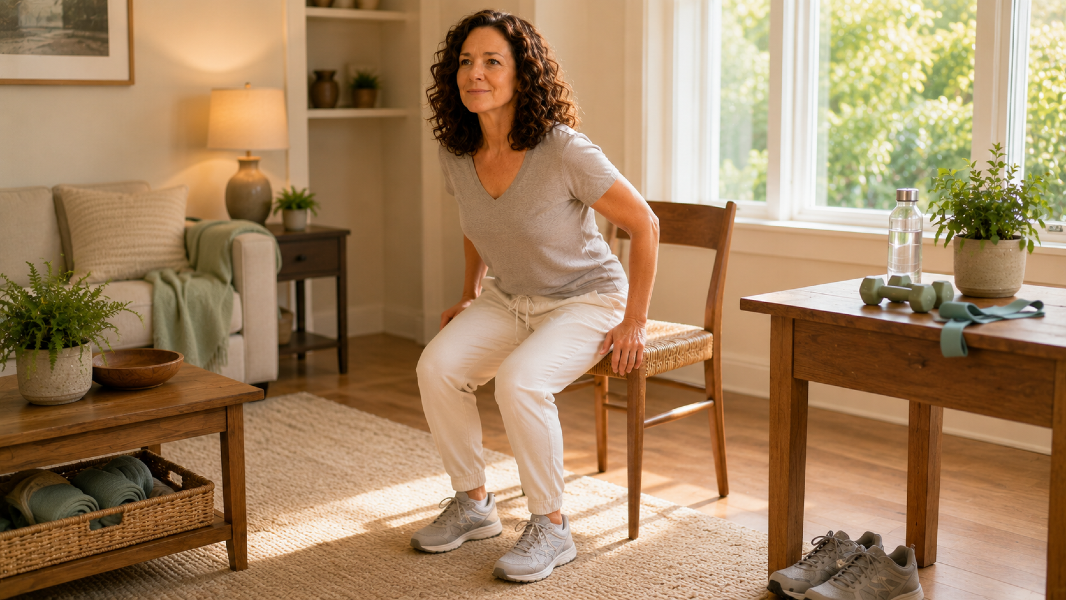
Exercise 1: Chair Sit-to-Stands
Sit near the front of a sturdy chair.
Place your feet flat on the floor.
Lean forward slightly and stand.
Lower yourself back to the chair with control.
Begin with 5 to 8 repetitions.
Build toward 10 to 12.
Use your hands if needed. Over time, work toward using less assistance.
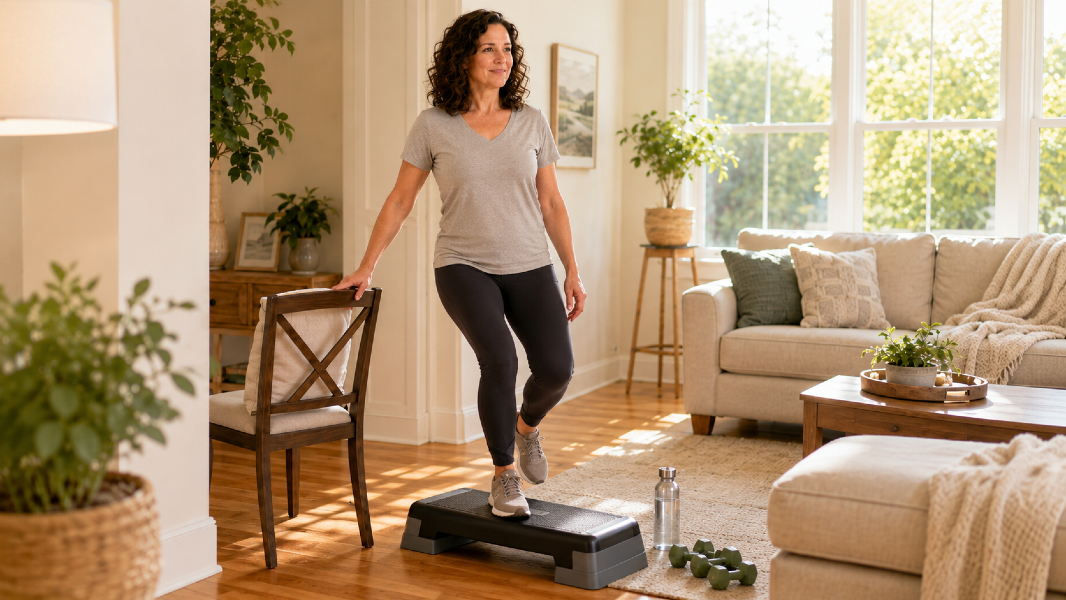
Exercise 2: Low Step-Ups
Use a secure low step.
Step up with one foot, bring the other foot up, then step down carefully.
Complete 5 repetitions leading with each leg.
Hold a railing or stable counter if needed.
The goal is control, not speed.
Why Balance Deserves Regular Practice
Balance is not something we either have or do not have.
It is a skill that can be challenged and practiced.
Balance depends on strength, vision, the inner ear, sensation in the feet and the brain’s ability to coordinate movement.
Summer surfaces may be less predictable.
Grass, gravel, curbs, pool decks, trails and unfamiliar travel environments can all require quicker adjustments.
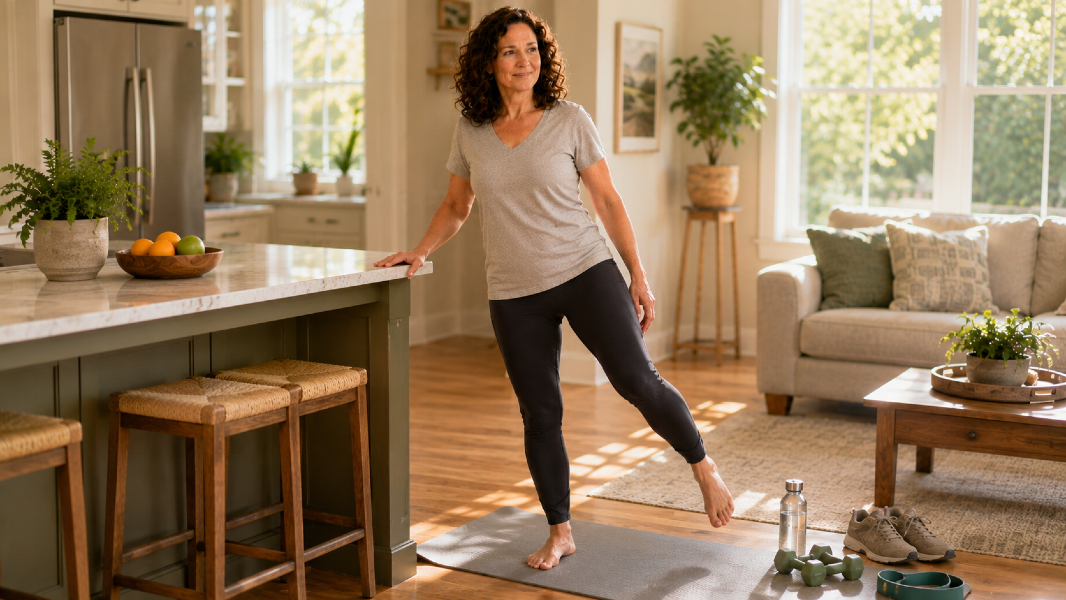
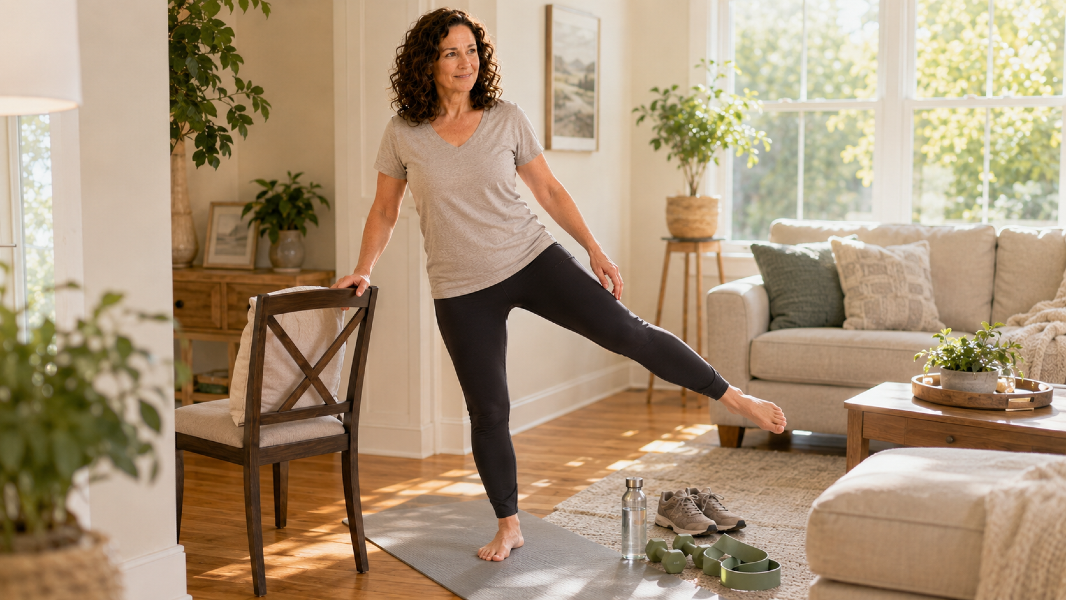
Exercise 3: Supported Single-Leg Stand
Stand beside a counter.
Place one or two fingers on the counter.
Lift one foot slightly off the floor.
Hold for 10 to 20 seconds.
Switch sides.
Repeat two or three times.
Use as much support as needed.
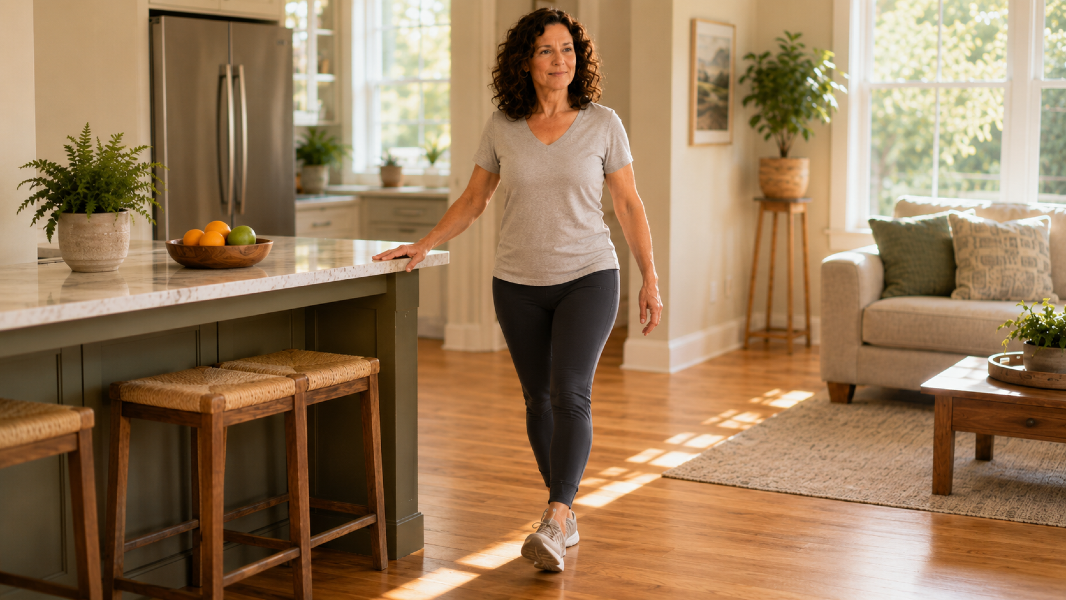
Exercise 4: Heel-to-Toe Walk
Stand near a wall or counter.
Place one foot directly in front of the other, as though walking on a line.
Take 5 to 10 slow steps.
Turn carefully and return.
Keep your eyes forward rather than looking straight down the entire time.
Why Core Strength Is About More Than Abdominals
The core includes muscles around the abdomen, back, hips and pelvis.
These muscles help the body stay controlled while the arms and legs move.
Core strength supports posture, balance, lifting and back comfort.
You do not need to get on the floor to train it.
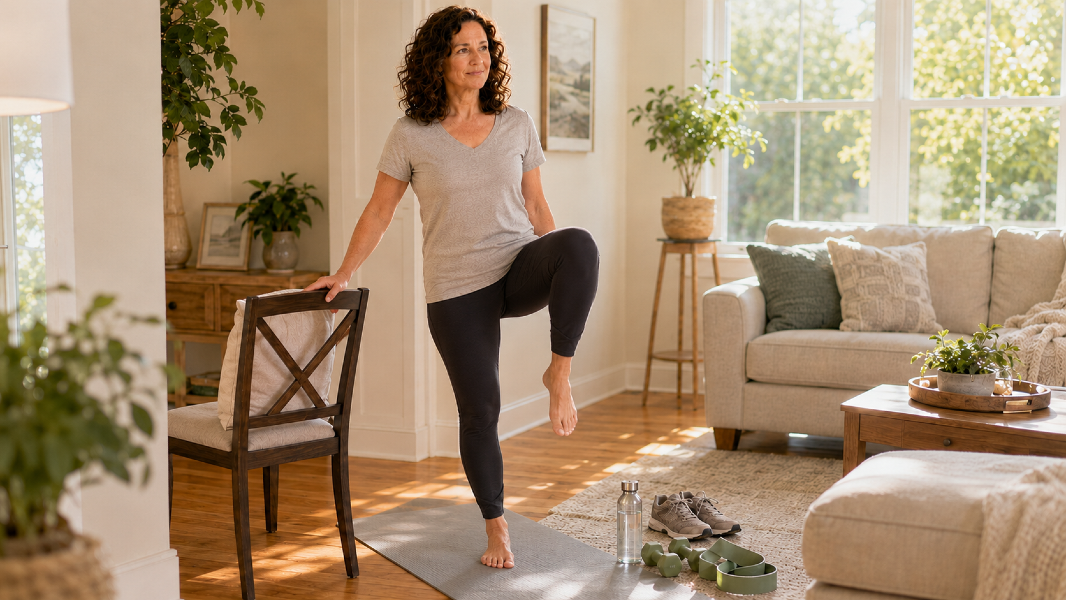
Exercise 5: Standing March with Abdominal Brace
Stand beside a chair or counter.
Gently tighten the abdominal muscles as though preparing for someone to tap your stomach.
Lift one knee, lower it, then lift the other.
Continue for 30 to 60 seconds.
Keep the movement controlled.
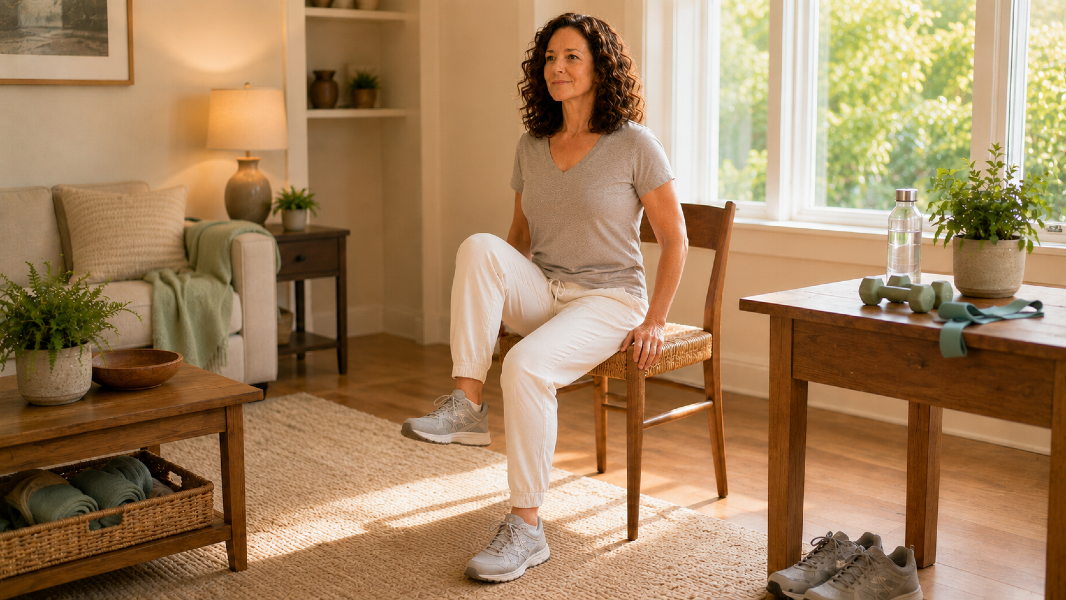
Exercise 6: Seated Knee Lifts
Sit tall in a sturdy chair.
Lift one knee a few inches.
Lower it slowly.
Switch sides.
Complete 8 to 12 repetitions per leg.
Avoid leaning back or swinging the legs.
Add Flexibility Where It Helps Most
Strength and balance matter, but tight joints can make movement feel harder than it needs to.
Five areas deserve regular attention:
Hips
Hamstrings
Calves
Shoulders
Upper back
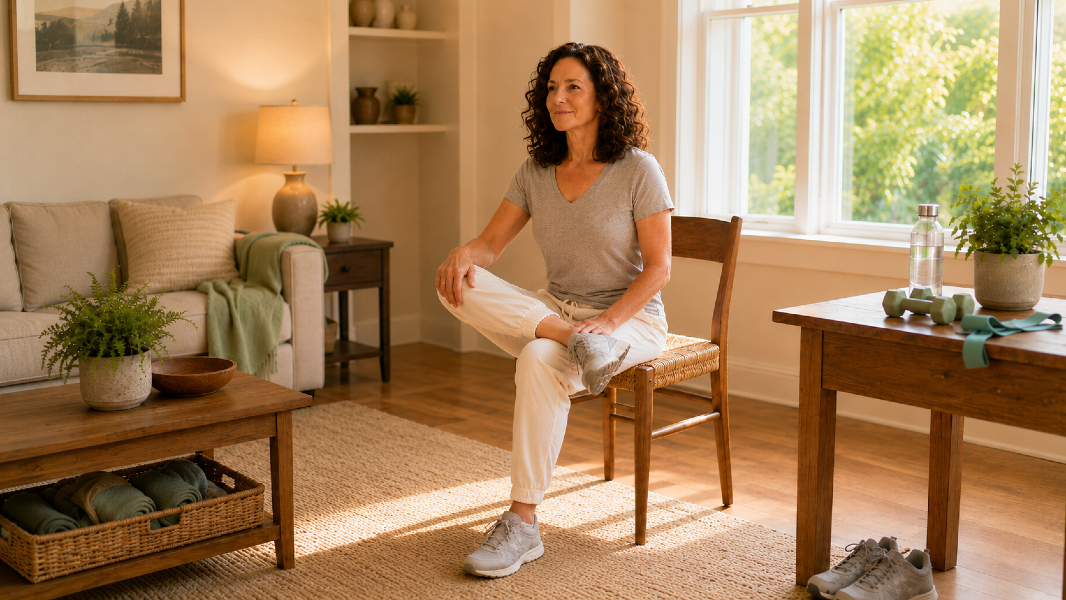
Gentle Hip Stretch
Sit near the front of a chair.
Place one ankle over the opposite thigh if comfortable.
Keep the back long and lean forward slightly.
Hold for 15 to 30 seconds.
Switch sides.
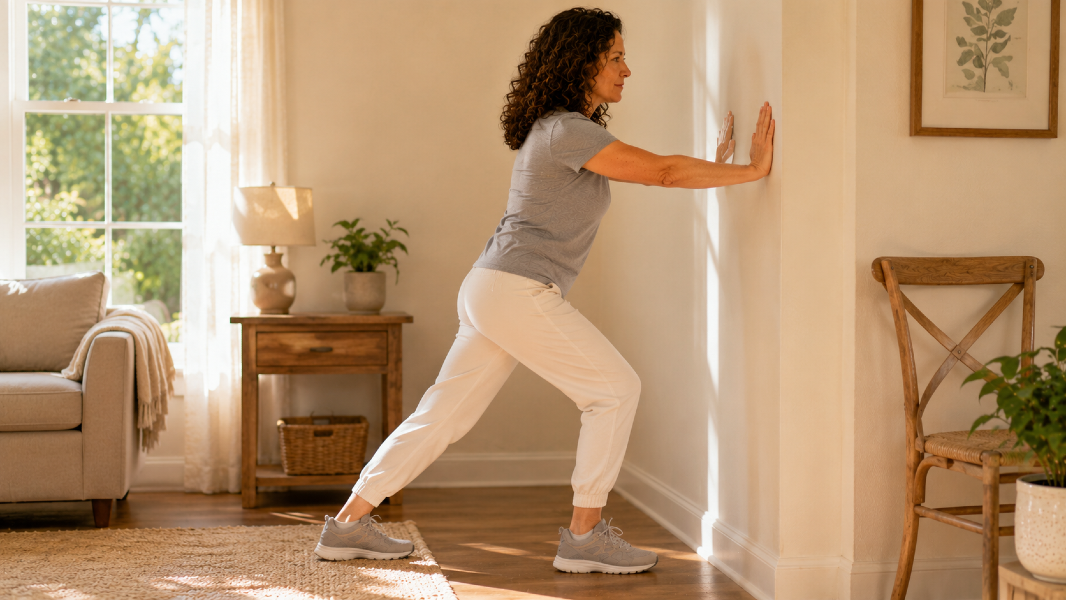
Calf Stretch
Stand facing a wall.
Step one foot back.
Keep the heel down and bend the front knee.
Hold for 15 to 30 seconds.
Switch sides.
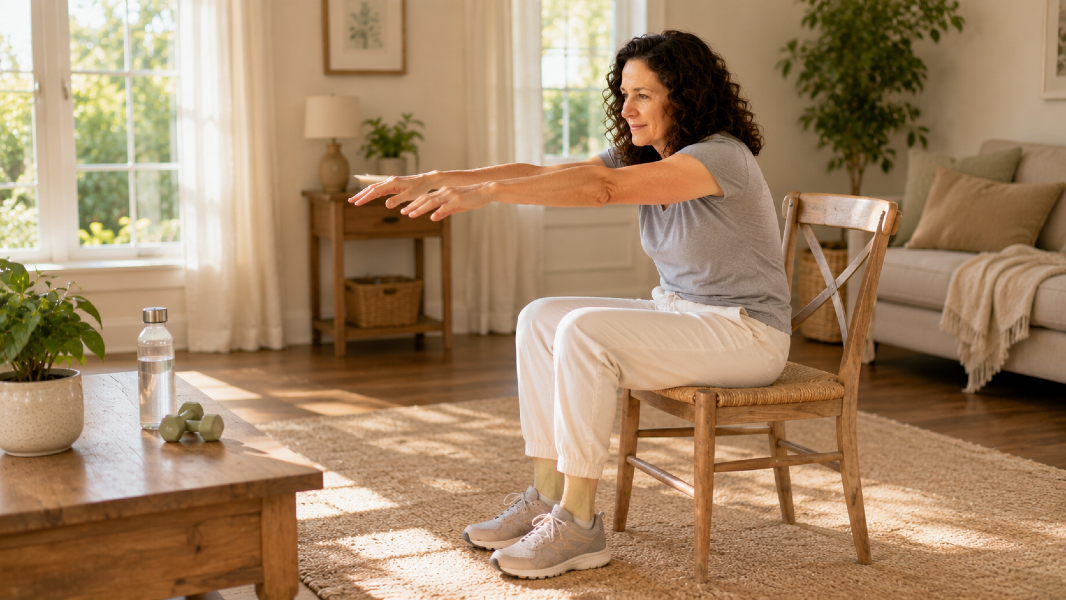
Upper-Back and Shoulder Release
Reach both arms forward and gently round the upper back.
Then bring the shoulders down and back.
Repeat slowly several times.
A 15-Minute Summer Strength Session
Complete this session two or three times per week:
Chair sit-to-stands: 8 to 12
Low step-ups: 5 per side
Supported single-leg stand: 20 seconds per side
Heel-to-toe walking: 5 to 10 steps
Standing march: 60 seconds
Seated knee lifts: 10 per side
Hip stretch: 20 seconds per side
Calf stretch: 20 seconds per side
Rest when needed.
Move near a chair, counter or wall.
Stop if you feel dizzy, overheated or unsteady.
Stay Active Without Overheating
Summer heat can reduce activity quickly.
A few missed days can easily become a few missed weeks.
That is why having an indoor plan matters.
Exercise early in the day.
Use an air-conditioned room when necessary.
Drink water before and after activity.
Take cooling breaks.
Use a mall, community center or gym for climate-controlled walking.
Consistency matters more than intensity.
A Practical Weekly Goal
A realistic summer movement plan may include:
Walking most days, even briefly
Strength training two or three times each week
Stretching for five minutes most days
Practicing balance several times each week
Avoiding peak heat
Keeping an indoor backup option
The goal is not to move the way you did decades ago.
The goal is to move well enough to continue doing the things you value now.
Final Thoughts
Leg strength, balance and core stability work together.
They support walking, travel, gardening, stairs, errands and everyday confidence.
Start with support.
Move slowly.
Practice regularly.
Progress does not need to look dramatic to be meaningful.
A few focused minutes, repeated consistently, can help protect the independence that makes the rest of life possible.
Flex your plant power and keep thriving.
Movement Disclaimer:
This article provides general fitness information and is not a substitute for medical or physical therapy guidance. Consult a qualified healthcare professional before beginning a new exercise program, especially if you have pain, balance concerns, recent surgery or medical restrictions.
Disclaimer:
This content is for informational purposes only and is not medical advice. Always consult your healthcare provider before making changes to your diet, supplements, or lifestyle, especially if you have existing conditions or take medication.
💌Want plant-based tips each week
Join the Plant Based Flex newsletter. It’s free, and when you confirm your email I’ll send you a 7-Day Kickstart Wellness Bundle to help you thrive beyond 60.