10 October Focus Foods for a Grounded, Strong Fall
Meet 10 October focus foods that support practical fall meals, healthy aging, and a stronger, more grounded seasonal routine.
October always feels like the month when fall becomes real.
The mornings are cooler. The days start getting shorter. And after months of lighter summer meals, I naturally start wanting food that feels a little warmer, heartier, and more grounding.
But that doesn't mean our meals need to become heavy or complicated.
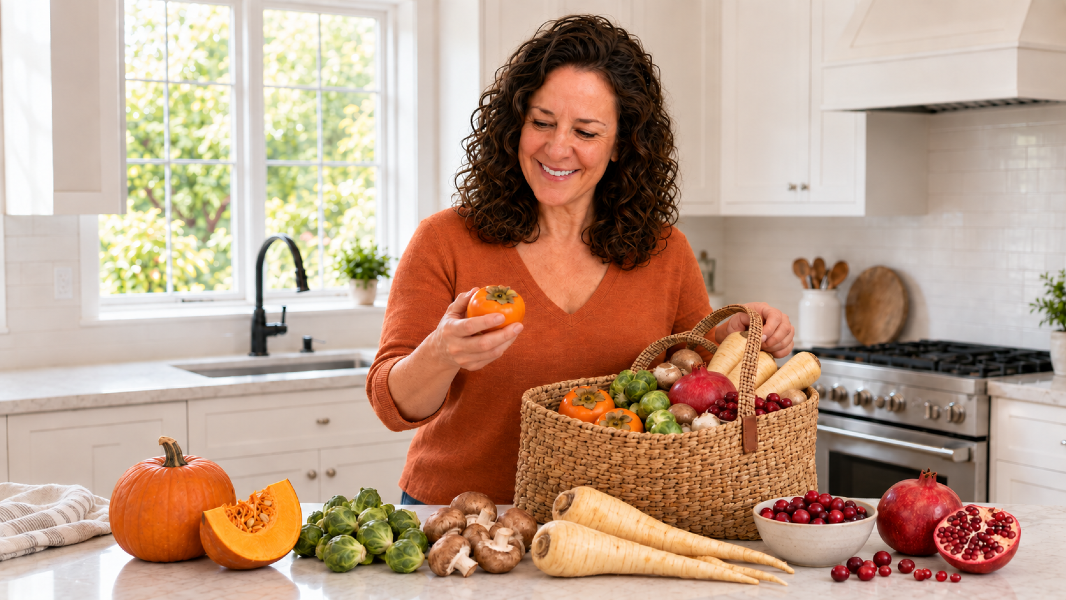
My October focus foods are about comfort with structure — seasonal foods that make it easier to build satisfying meals while still keeping plants at the center of the plate.
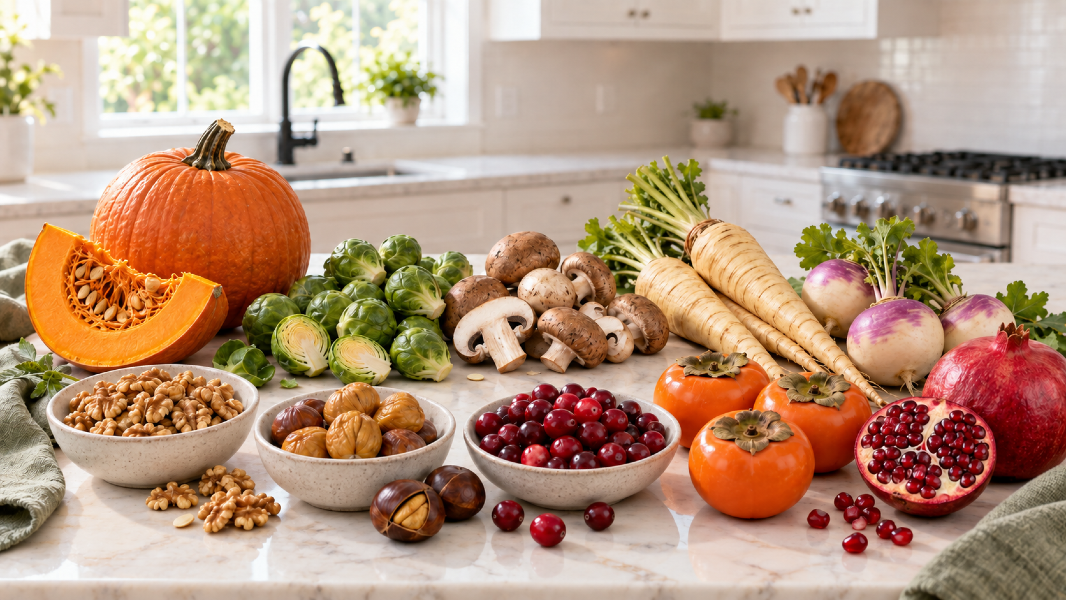
This month we're working with:
Pumpkin, Brussels sprouts, mushrooms, parsnips, turnips, walnuts, chestnuts, cranberries, persimmons, and pomegranate.
Some will probably be familiar. A few may not make it into your grocery cart very often.
That's part of the fun.
You don't need to buy all ten. Pick a few you already enjoy, add one that feels interesting, and see where the month takes you.
1. Pumpkin
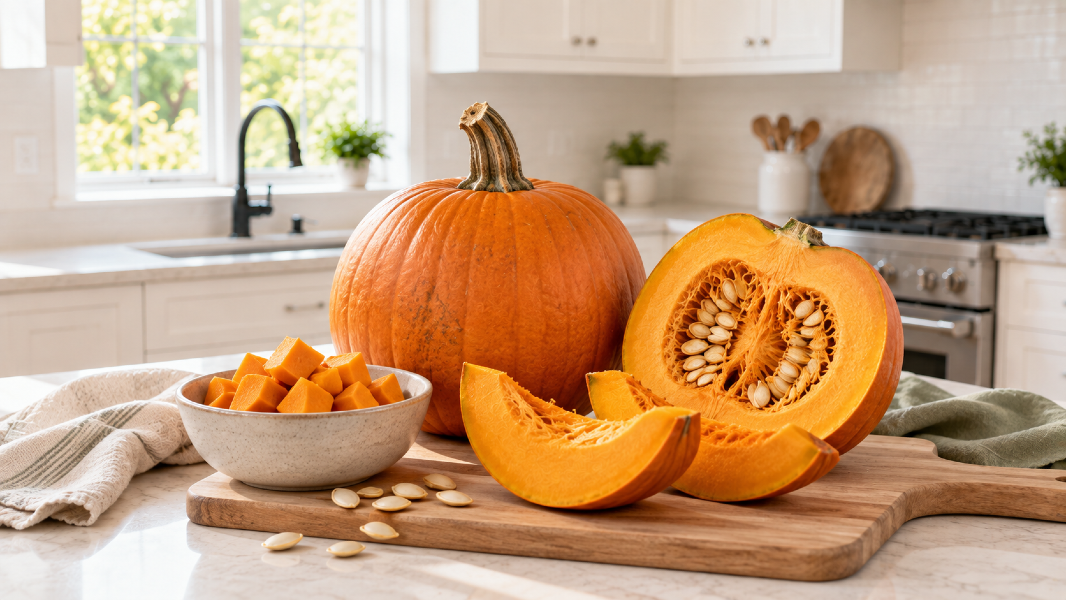
Pumpkin deserves more attention than it gets outside of pie.
It's rich in beta-carotene, which the body converts to vitamin A, and canned pumpkin makes it incredibly easy to add vegetables to everyday meals.
Buying: Look for canned 100% pumpkin, not pumpkin pie filling. Fresh sugar pumpkins are another option.
Storage: Refrigerate leftover canned pumpkin in a covered container and use within several days, or freeze portions for later.
Try it: Stir a spoonful into oatmeal, polenta, soup, or a savory sauce.
2. Brussels Sprouts
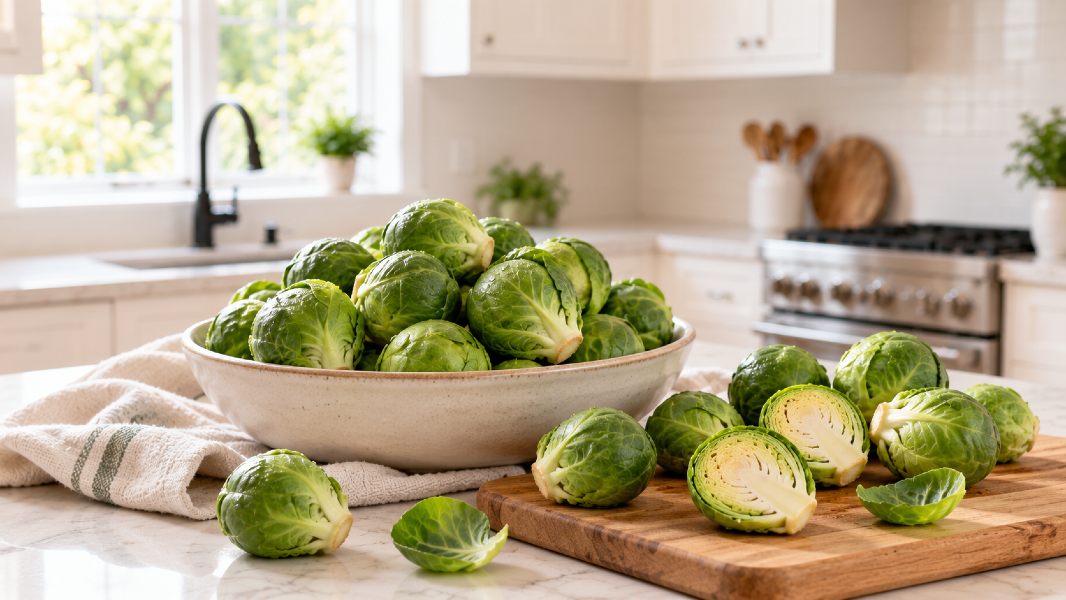
Brussels sprouts are part of the cruciferous vegetable family, along with broccoli, cabbage, and cauliflower.
They're also one of those vegetables that can completely change depending on how they're cooked.
Buying: Choose firm, compact sprouts with bright green leaves.
Storage: Keep them refrigerated and unwashed until you're ready to use them.
Try it: Thinly slice them and sauté with walnuts and a splash of balsamic vinegar.
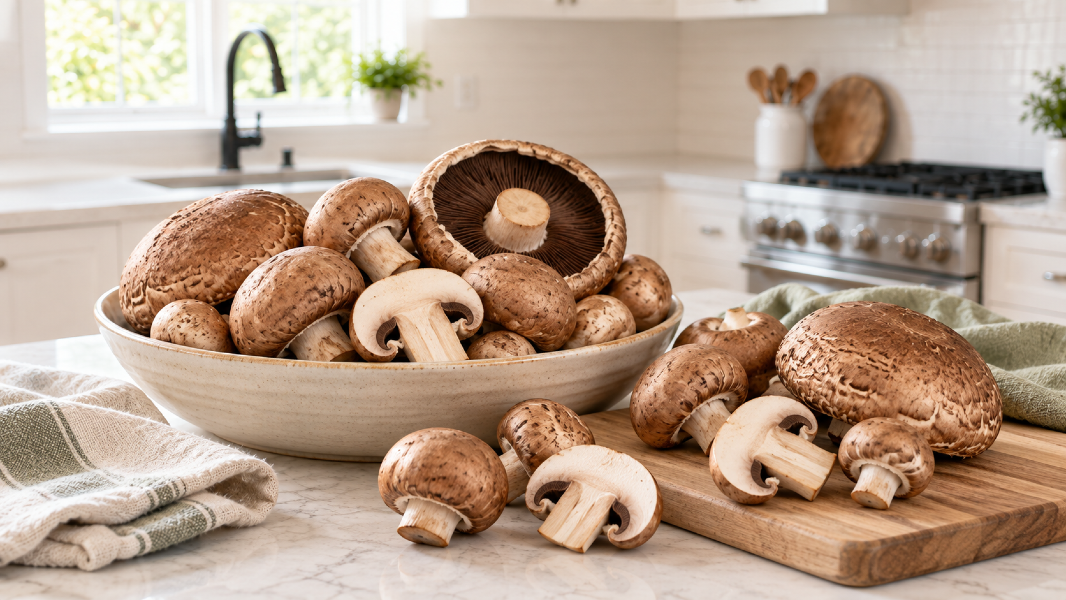
3. Mushrooms
Mushrooms bring something especially useful to mostly plant-forward cooking: deep savory flavor.
They can make beans, grains, eggs, soups, and vegetables feel much more substantial without requiring a long ingredient list.
Buying: Look for mushrooms that are firm and relatively dry rather than slimy or shriveled.
Storage: Refrigerate in a paper bag or breathable container.
Try it: Brown sliced mushrooms and spoon them over toast with a soft egg.
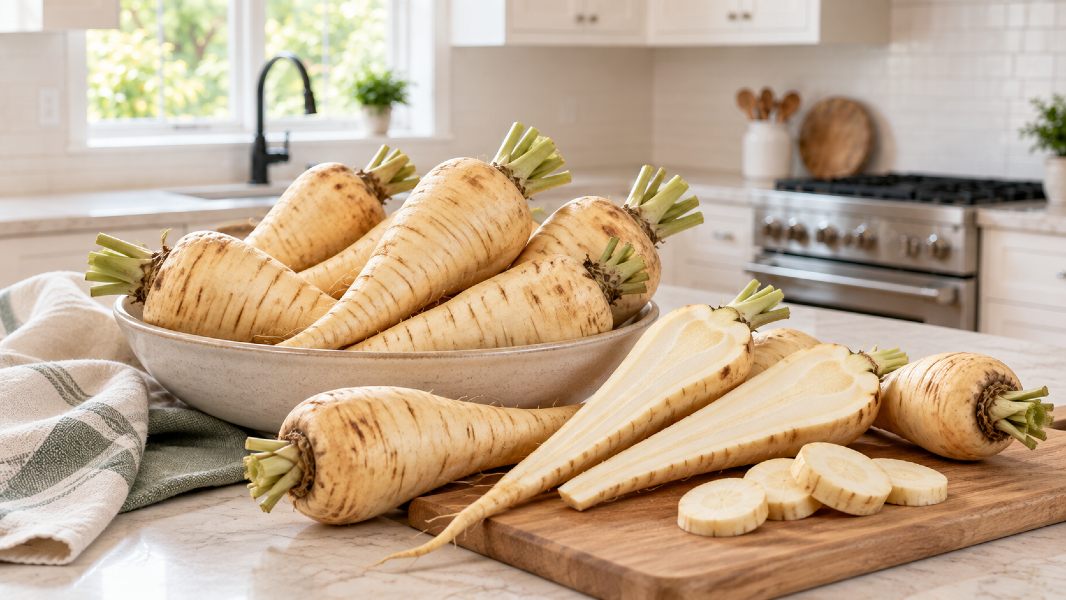
4. Parsnips
If carrots and potatoes had an autumn cousin, it might be the parsnip.
They're slightly sweet, earthy, and especially good roasted.
Buying: Smaller and medium parsnips tend to be more tender than very large ones.
Storage: Keep refrigerated in the produce drawer.
Try it: Roast parsnip sticks with olive oil, pepper, and thyme until caramelized around the edges.
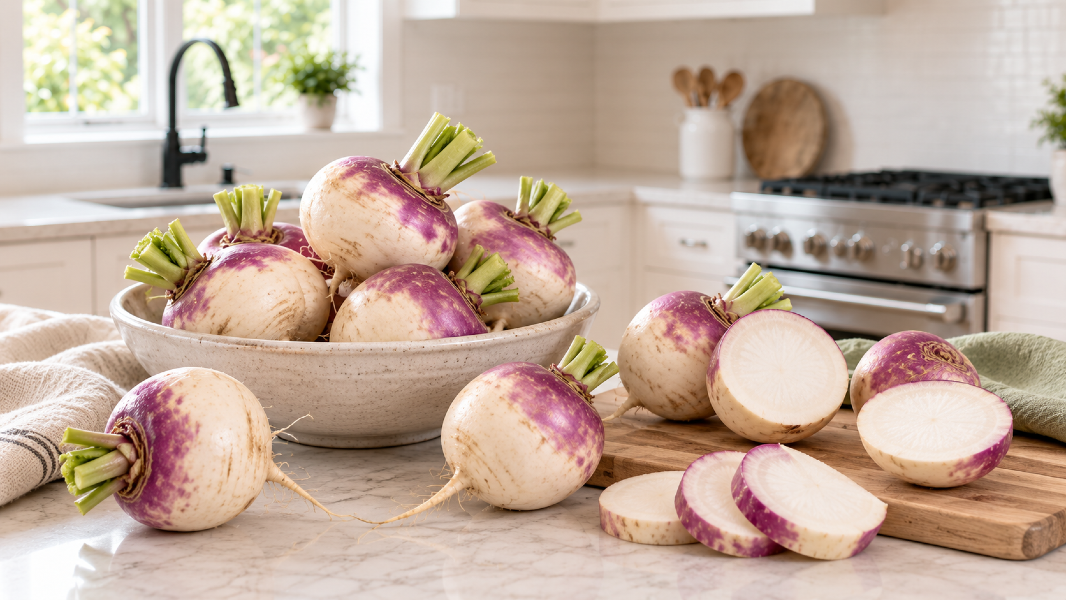
5. Turnips
Turnips don't get much attention anymore, but they're worth rediscovering.
The roots have a mild peppery quality, while the greens can also be cooked if you buy them attached.
Buying: Look for firm, smooth turnips that feel heavy for their size.
Storage: Remove the greens before refrigerating the roots.
Try it: Cube turnips and roast them alongside sweet potatoes for a sweet-and-savory combination.
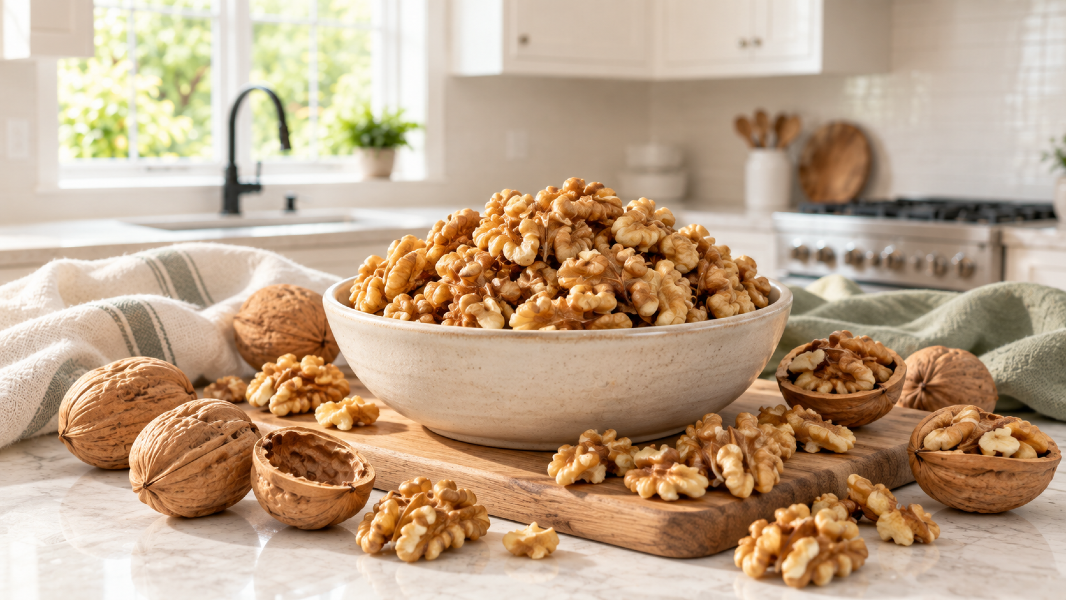
6. Walnuts
Walnuts are one of my favorite ways to give a plant-forward meal a little more staying power.
They provide healthy unsaturated fats, plant protein, fiber, and alpha-linolenic acid, a plant-based omega-3 fatty acid.
Buying: Shelled walnuts are easiest for everyday cooking.
Storage: Because their oils can become rancid, keep them refrigerated or frozen if you don't use them quickly.
Try it: Toast a small handful and scatter them over roasted vegetables, oatmeal, yogurt, or salads.
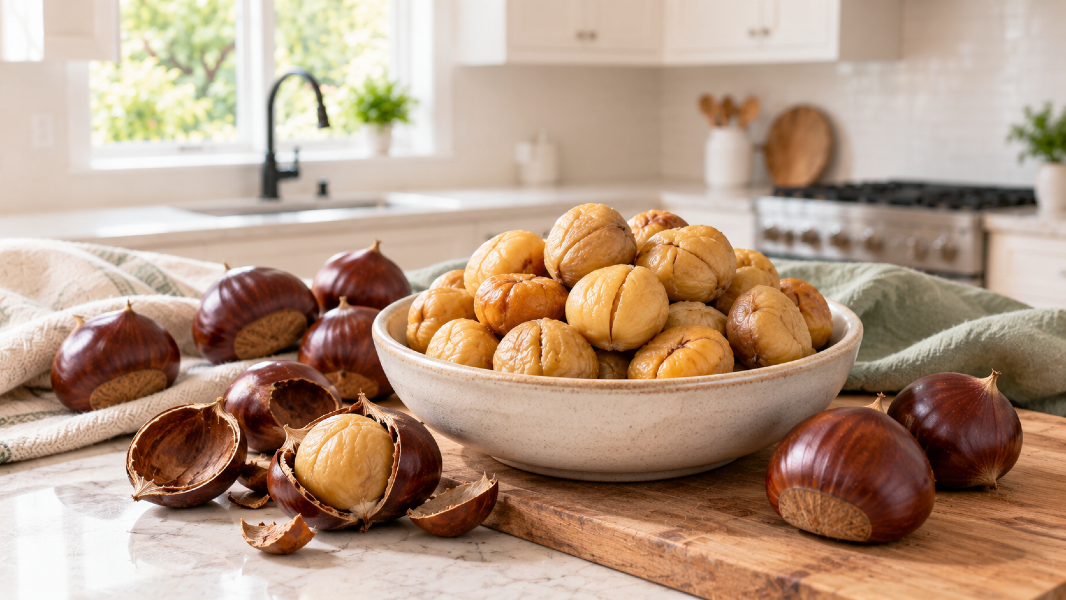
7. Chestnuts
Chestnuts are very different from most nuts.
They're lower in fat and starchier, with a slightly sweet flavor that works beautifully in fall dishes.
And no, you don't have to roast them over an open fire.
Buying: Vacuum-packed cooked chestnuts are the easiest option.
Storage: Follow package directions and refrigerate opened packages.
Try it: Roughly chop cooked chestnuts and add them to a warm grain-and-vegetable bowl.
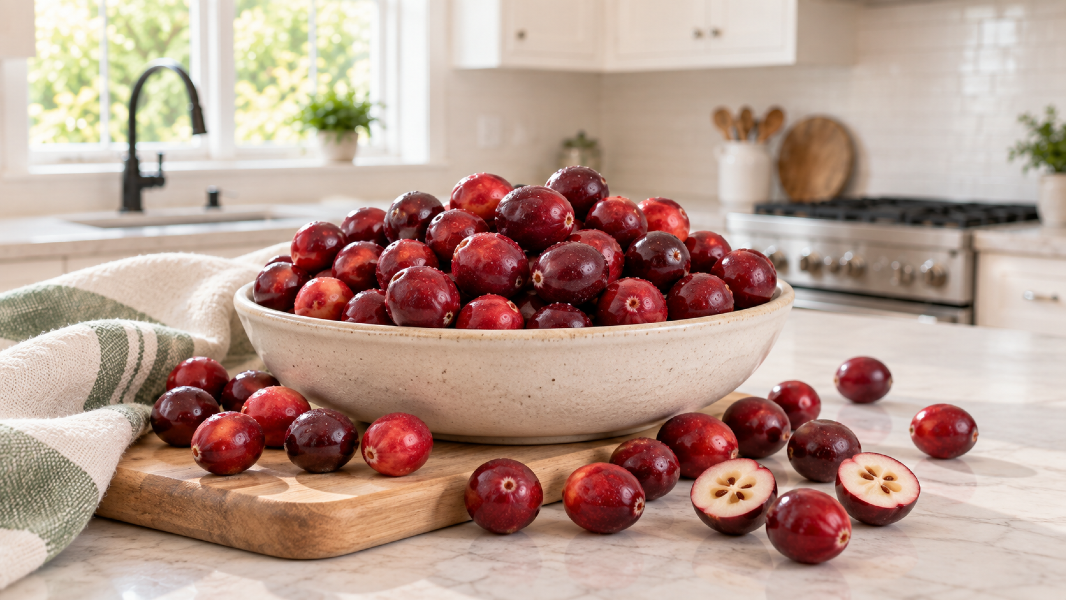
8. Cranberries
Fresh cranberries aren't just for Thanksgiving sauce.
Their naturally tart flavor can brighten sweeter ingredients and richer fall meals.
Buying: Look for firm berries with strong red color. Frozen cranberries work beautifully too.
Storage: Refrigerate fresh cranberries or freeze them for longer storage.
Try it: Simmer cranberries with chopped pear and cinnamon for a simple tart fruit topping.
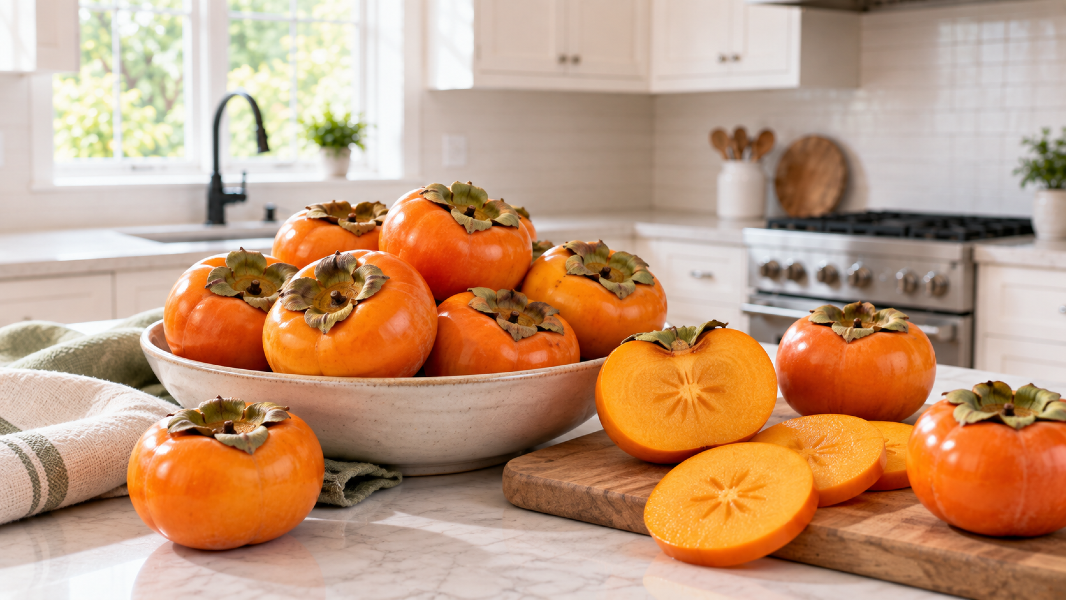
9. Persimmons
Persimmons are one of those fruits that can seem mysterious until you know which kind you're buying.
Fuyu persimmons can be eaten while firm. Hachiya persimmons need to become extremely soft before eating or they'll be unpleasantly astringent.
Buying: Check the variety before deciding when to use it.
Storage: Allow firm fruit to ripen at room temperature.
Try it: Slice a ripe Fuyu persimmon over yogurt with walnuts and cinnamon.
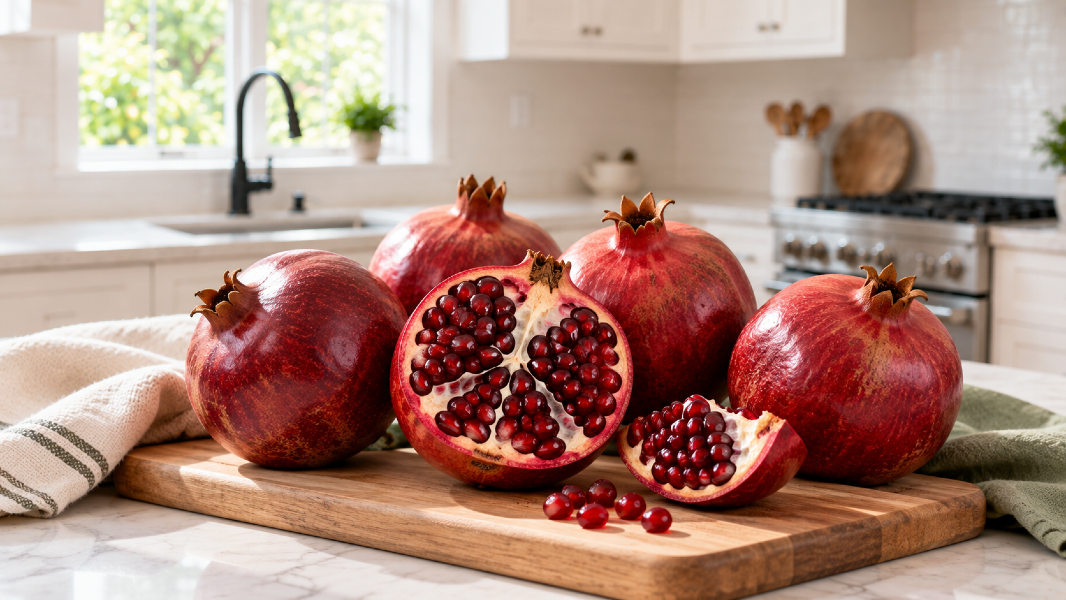
10. Pomegranate
Pomegranate arils add sweetness, tartness, color, and crunch with almost no preparation if you buy them already removed from the fruit.
They're also rich in polyphenol compounds.
Buying: Whole pomegranates should feel heavy for their size.
Storage: Whole fruit keeps well refrigerated; loose arils should be used much sooner.
Try it: Scatter the arils over roasted vegetables, grain bowls, yogurt, or oatmeal.
My October Approach: Comfort With Structure
Here's what I don't want you to do after reading this:
Buy ten different ingredients and suddenly create ten complicated recipes.
Instead, try this.
Each week, prepare:
- One vegetable
- One grain or bean
- One flavorful topping
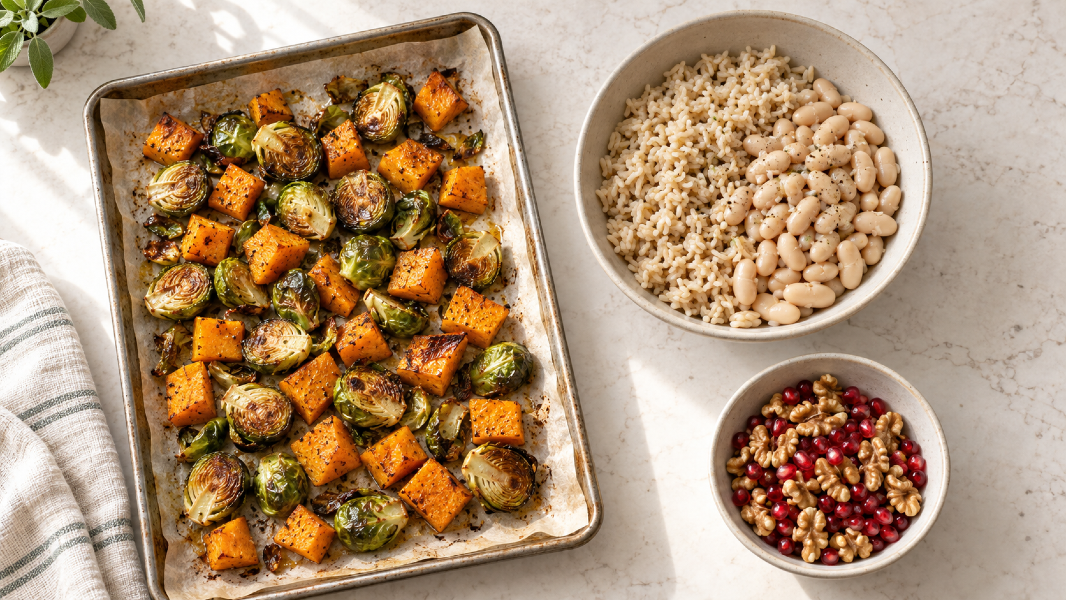
Maybe that's roasted Brussels sprouts, brown rice, and toasted walnuts.
Next week it could be roasted pumpkin, white beans, and pomegranate.
You've already created the beginning of several meals without spending Sunday afternoon preparing fourteen containers of food.
That's what I mean by comfort with structure.
Enough preparation to make eating well easier.
Not so much preparation that healthy living becomes another job.
Your October Challenge
Choose two foods from this list that you already know you enjoy.
Then choose one you haven't eaten recently — or perhaps haven't tried at all.
That's enough to get started.
And throughout October, I'll be sharing more ways to use these foods without turning them into complicated projects.
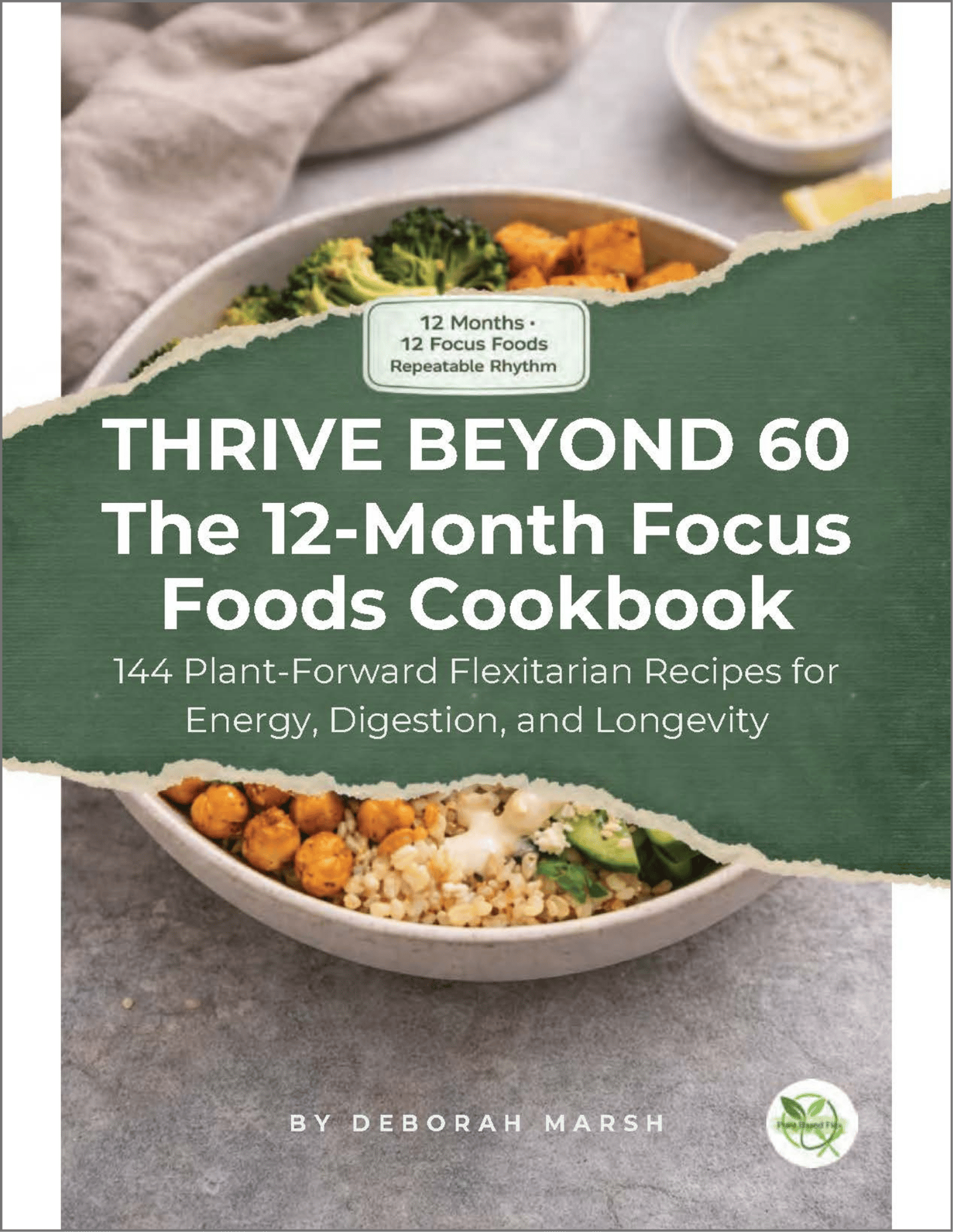
Want even more seasonal inspiration? My Thrive Beyond 60 — The 12-Month Focus Foods Cookbook takes this idea through the entire year with 144 recipes built around seasonal focus foods.
And if you're new here, join Plant Based Flex free to have new Thrive Beyond 60 posts delivered to you.
Featured Cookbook
Thrive Beyond 60 Cookbook
Simple, practical plant-based flexitarian recipes built for energy, digestion, and healthy aging after 60.
- Easy, real-life recipes you'll actually use
- Focus foods framework to simplify your meals
- Built for energy, digestion & healthy aging
Disclaimer:
This content is for informational purposes only and is not medical advice. Always consult your healthcare provider before making changes to your diet, supplements, or lifestyle, especially if you have existing conditions or take medication.
💌Want plant-based tips each week
Join the Plant Based Flex newsletter. It’s free, and when you confirm your email I’ll send you a 7-Day Kickstart Wellness Bundle to help you thrive beyond 60.