
5 Lower-Body Moves That Make Fall Activities Easier After 60
Build practical leg and hip strength after 60 with five accessible moves for walking, stairs, hiking, and everyday fall activities.
Fall has a way of inviting us to move more.
Walking when the temperature finally cools down. Hiking. Day trips. Stairs. Farmers markets. Yard work. Even getting in and out of the car more often.
And much of that depends on something very basic:
Lower-body strength.
I'm less interested in exercises that simply look impressive than movements that help us keep doing the things we actually want to do.
Here are five.
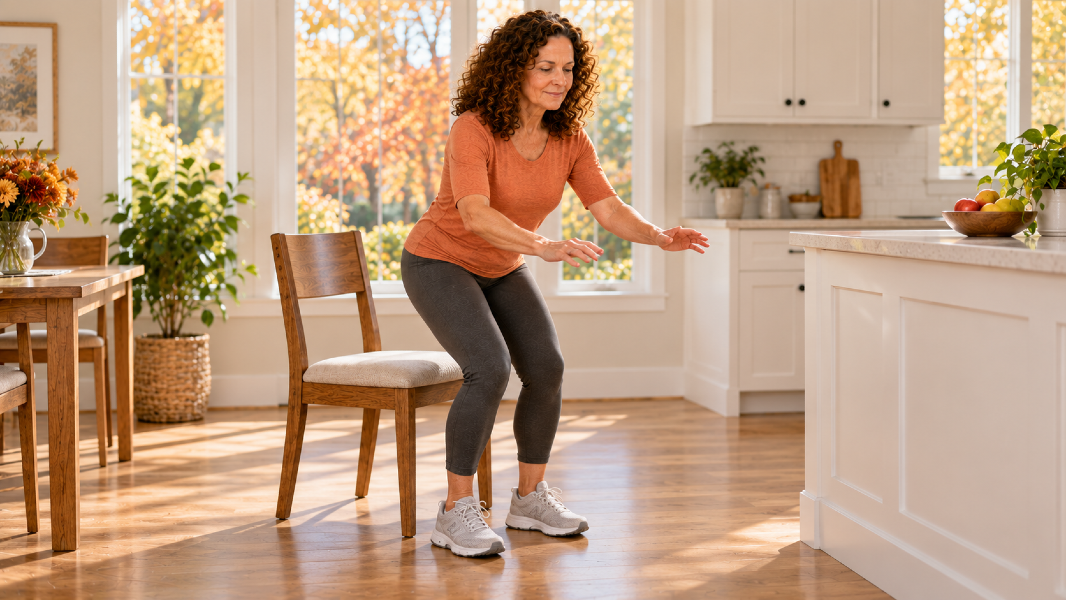
1. Supported Sit-to-Stand
Sit toward the front of a sturdy chair with your feet about hip-width apart.
Lean slightly forward, press through your feet, and stand.
Then slowly lower yourself back to the chair.
Use the chair arms or a nearby counter for support if needed.
Start with: 6–10 repetitions.
Why it matters: Standing up from chairs, getting out of the car, and getting off the toilet all use this basic movement pattern.
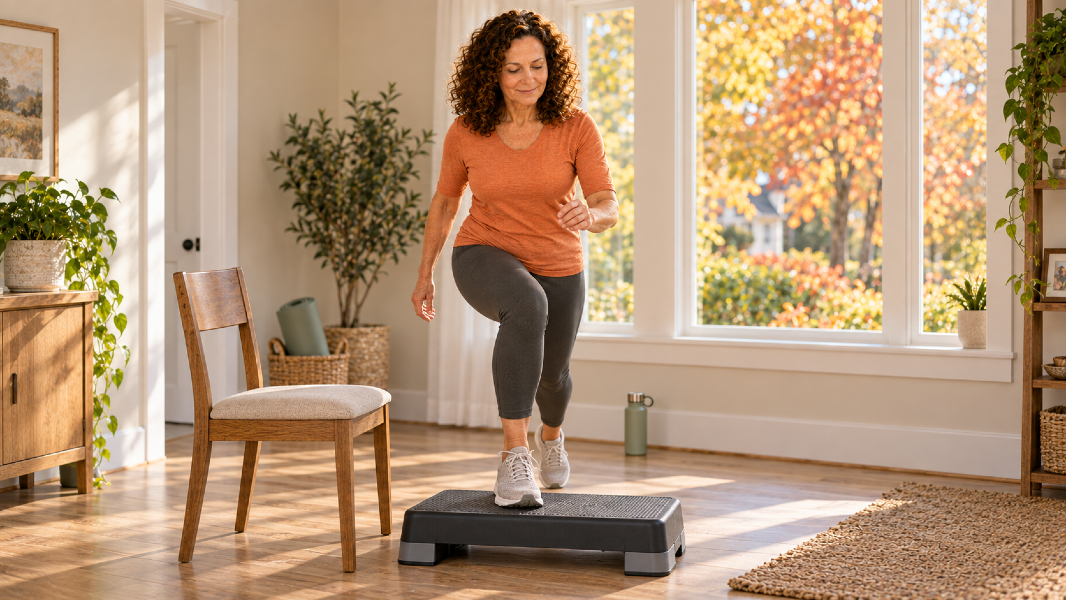
2. Low Step-Ups
Use a stable low step.
Place one foot completely on the step and press through that foot to bring yourself up. Step down slowly and repeat.
Keep a railing, wall, or sturdy counter available for balance.
Start with: 5–8 repetitions per leg.
Why it matters: Stairs, curbs, trail steps, and uneven terrain all ask us to lift and control our body weight one leg at a time.
3. Standing Hip Abduction
Stand tall while holding a sturdy chair or counter.
Keeping your torso upright, slowly move one leg out to the side without leaning.
Return with control.
Start with: 8–10 repetitions on each side.
Why it matters: The muscles along the sides of our hips contribute to stability when walking and standing on one leg.
4. Supported Calf Raises
Stand behind a sturdy chair or at a counter.
Slowly rise onto the balls of your feet.
Pause briefly.
Lower your heels with control.
Start with: 8–12 repetitions.
Why it matters: Calf strength helps with walking, stairs, pushing off the ground, and ankle stability.
5. Light Balanced Carry
Hold a light object in each hand — small dumbbells, evenly filled water bottles, or another comfortable household weight.
Stand tall and walk slowly across a clear room.
Keep the load light enough that your posture stays upright.
Start with: 20–30 seconds.
Why it matters: Carrying groceries, bags, packages, or supplies requires our legs, core, grip, and balance to work together.
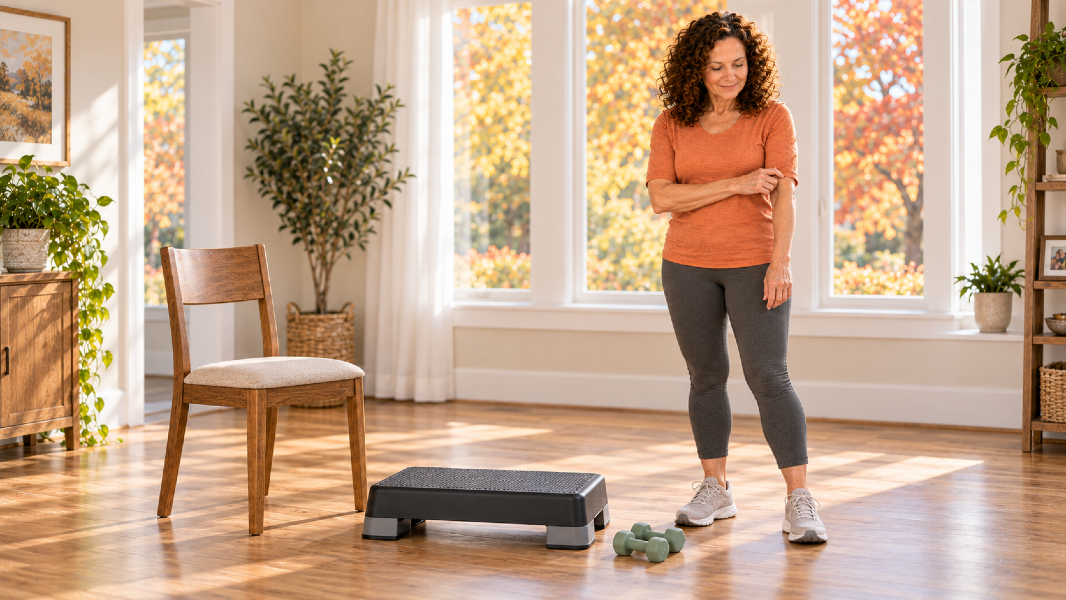
Put Them Together
You don't need an hour-long workout.
Try:
Round 1
Sit-to-stand × 8
Step-ups × 6 each side
Hip abduction × 8 each side
Calf raises × 10
Carry × 20–30 seconds
Rest.
Then repeat once if you feel good.
That's two rounds.
Support Counts
Using a chair, counter, railing, or wall isn't cheating.
It's a tool.
Use whatever support allows you to perform the movement with control and confidence, and work within a comfortable, pain-free range.
If you're new to exercise, have significant balance concerns, or have a medical or orthopedic condition that affects these movements, getting individualized guidance from an appropriate healthcare or fitness professional can be worthwhile.
And stop if you experience sharp pain, dizziness, chest discomfort, unusual shortness of breath, or other concerning symptoms.
The goal isn't to prove anything.
The goal is to keep building the strength that lets us participate in our own lives.
This Week
Choose three of these movements and do them twice this week.
That's enough to start.
Then explore the other Thrive Beyond 60 movement posts for more practical ways to keep building strength, mobility, and confidence after 60.
Disclaimer:
This content is for informational purposes only and is not medical advice. Always consult your healthcare provider before making changes to your diet, supplements, or lifestyle, especially if you have existing conditions or take medication.
💌Want plant-based tips each week
Join the Plant Based Flex newsletter. It’s free, and when you confirm your email I’ll send you a 7-Day Kickstart Wellness Bundle to help you thrive beyond 60.