The July Wellness Formula

Learn how July foods can support hydration, digestion, energy, and satisfaction through a simple balance of produce, fiber, protein, and healthy fats.

The July Wellness Formula

The July Wellness Formula: Hydration, Fiber, Protein, and Healthy Fats

July has a way of changing what sounds good.

Heavy meals become less appealing. Long cooking sessions feel unnecessary. Fresh produce, cooler meals, and simple combinations start to make more sense.

But light summer eating can create a problem if we focus only on freshness.

A bowl of lettuce and cucumber may feel refreshing, but it may not provide enough protein, fiber, energy, or satisfaction to carry us through the afternoon.

The goal is not to make July meals heavier.

The goal is to make them more complete.

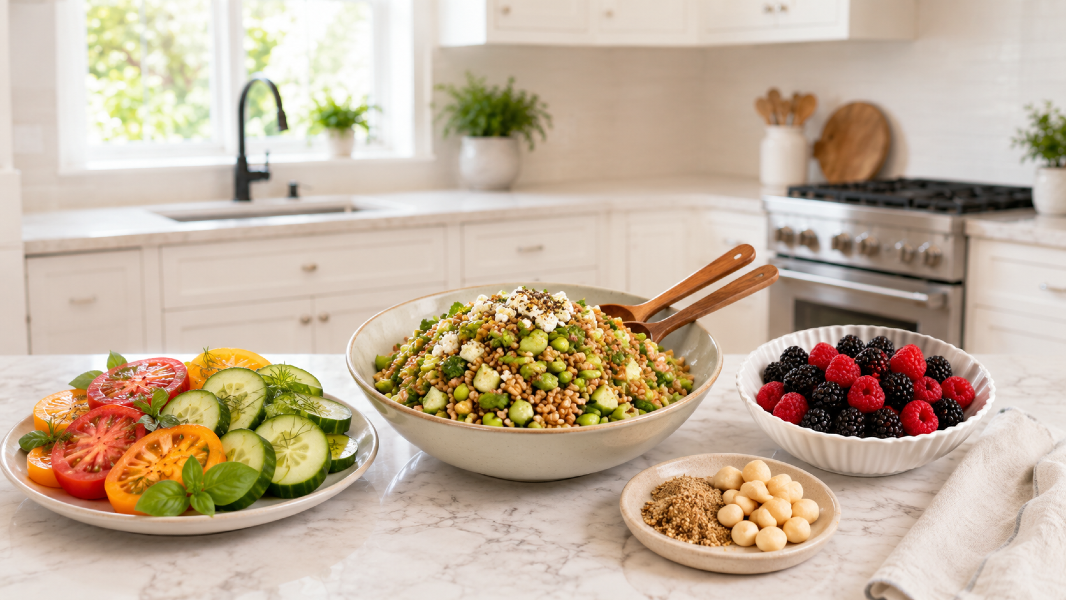
This month’s 10 focus foods give us an easy framework built around four needs:

  • Hydration and freshness
  • Fiber and digestive support
  • Protein and strength
  • Healthy fats and satisfaction

When these four pieces come together, summer meals can remain light without leaving us hungry or drained.

The July Wellness Formula

Part 1: Hydration and Freshness

Water is essential, but hydration also comes from the foods we eat.

Several July focus foods contain a high percentage of water and can help meals feel cooler and more refreshing.

These include:

  • Persian cucumbers
  • Heirloom tomatoes
  • Butter lettuce
  • Blackberries
  • Raspberries

These foods are especially useful during the hottest weeks of summer because they require little or no cooking.

They can be eaten fresh, added to salads, blended into chilled soups, or used in simple snack plates.

Persian Cucumbers

Persian cucumbers are crisp, mild, and easy to use.

Unlike some larger cucumbers, they usually have tender skins and small seeds. This means less preparation and less food waste.

Slice them into:

  • Grain bowls
  • Lettuce wraps
  • Chilled salads
  • Picnic jars
  • Snack plates

Cucumber alone will not replace the fluids lost through heavy sweating, but it can contribute to a pattern of eating that supports hydration.

Heirloom Tomatoes

Tomatoes are another fluid-rich July food.

They bring sweetness, acidity, color, and flavor to meals without requiring complicated seasoning.

Use them in:

  • Farro salads
  • Chilled gazpacho
  • Tomato stacks
  • Stuffed tomatoes
  • Simple open-faced sandwiches
  • Savory breakfast bowls

A sprinkle of salt may improve flavor, but people who have been advised to limit sodium should follow their healthcare provider’s guidance.

Butter Lettuce

Butter lettuce creates a soft, hydrating base for meals.

It works well in salads, but its larger leaves can also replace wraps or tortillas for lighter meals.

Fill the leaves with:

  • Edamame
  • Farro
  • Chopped cucumber
  • Tomatoes
  • Tofu
  • Eggs
  • Fish
  • Beans

The lettuce provides freshness. The filling provides staying power.

Blackberries and Raspberries

Berries add water, fiber, color, and natural sweetness.

They can be added to breakfast bowls and smoothies, but they also work in savory salads.

Try combining berries with:

  • Butter lettuce
  • Cucumbers
  • Farro
  • Macadamia nuts
  • Balsamic vinegar
  • Miso-based dressings

The key is to stop thinking of berries only as dessert.

Part 2: Fiber and Digestive Support

Fiber supports digestion, regularity, satisfaction, and a healthier gut environment.

The July foods that contribute the most fiber include:

  • Farro
  • Blackberries
  • Raspberries
  • Flaxseed
  • Edamame
  • Vegetables

More fiber is not always better when it is added too quickly.

If your current intake is low, increase it gradually and make sure you are getting enough fluid. A sudden increase can lead to bloating, gas, or discomfort.

Farro

Farro is a chewy whole grain that gives summer meals more structure.

It works especially well in chilled grain salads because it does not become mushy as quickly as some other grains.

Cook a batch and use it for:

  • Lunch bowls
  • Breakfast bowls
  • Stuffed tomatoes
  • Picnic jars
  • Warm skillets
  • Lettuce cups

Farro contains gluten, so it is not appropriate for people with celiac disease or those who need to avoid gluten.

Quinoa, brown rice, or certified gluten-free oats can be used when needed.

Ground Flaxseed

Ground flaxseed is a practical way to add fiber and plant-based omega-3 fats.

Use ground rather than whole flaxseed because whole seeds may pass through the digestive system without being fully broken down.

Start with one teaspoon and gradually increase if tolerated.

Add it to:

  • Smoothies
  • Breakfast bowls
  • Homemade patties
  • Baked recipes
  • Plant yogurt
  • Frozen berry treats

Flaxseed absorbs fluid, so adequate hydration is important.

Berries

Raspberries and blackberries are among the more fiber-rich fruits.

Their seeds and pulp contribute texture as well as fiber.

Fresh berries spoil quickly, so freeze extras before they become overly soft.

Frozen berries can be used in:

  • Smoothies
  • Warm fruit sauces
  • Frozen pops
  • Breakfast bakes
  • Chilled drinks

Part 3: Protein and Strength

Protein becomes especially important as we age because maintaining muscle supports strength, balance, mobility, and independence.

The strongest plant-protein food in the July list is edamame.

Edamame

Edamame is the immature soybean.

It provides protein, fiber, and several minerals in a convenient form.

Frozen shelled edamame can be prepared quickly and added to nearly any meal.

Use it in:

  • Farro bowls
  • Lettuce cups
  • Cucumber salads
  • Grain patties
  • Savory breakfasts
  • Simple skillet meals

Protein needs vary by body size, health status, activity level, and medical history.

Rather than depending on one food, distribute protein across the day using foods that fit your flexitarian pattern.

Other options may include:

  • Tofu
  • Tempeh
  • Beans
  • Lentils
  • Eggs
  • Fish
  • Plain Greek-style yogurt
  • Higher-protein plant yogurt

A salad becomes more complete when you add a meaningful protein source rather than relying on vegetables alone.

Part 4: Healthy Fats and Satisfaction

Fat is not something we need to eliminate from summer meals.

Healthy fats can support satisfaction and help the body absorb certain fat-soluble nutrients.

July’s primary healthy-fat foods are:

  • Macadamia nuts
  • Flaxseed

Macadamia Nuts

Macadamia nuts have a mild, buttery flavor.

A small portion can make a simple salad or fruit bowl feel more satisfying.

Use them:

  • Chopped over berries
  • Blended into dressings
  • Added to farro salads
  • Sprinkled over lettuce cups
  • Blended into frozen desserts

Nuts are calorie-dense, so a small handful or one to two tablespoons is often enough.

Flaxseed

Flaxseed contributes both fiber and fat, making it one of the most useful crossover foods in the July list.

It can help thicken smoothies, bind patties, and add nutrition to breakfast bowls.

The July Wellness Formula

The Four-Part July Meal Formula

Use this simple structure when building meals.

1. Start with Freshness

Choose one or two:

  • Butter lettuce
  • Persian cucumber
  • Heirloom tomato
  • Blackberries
  • Raspberries

2. Add Fiber-Rich Carbohydrates

Choose one:

  • Farro
  • Another whole grain
  • Beans
  • Fruit

3. Add Protein

Choose one:

  • Edamame
  • Tofu
  • Beans
  • Eggs
  • Fish
  • Another preferred flexitarian protein

4. Finish with Healthy Fat and Flavor

Choose one or two:

  • Macadamia nuts
  • Ground flaxseed
  • Miso dressing
  • Avocado
  • Olive oil
  • Seeds

Five Simple July Combinations

Farro and Edamame Summer Bowl

Combine cooked farro, edamame, cucumber, tomato, and butter lettuce.

Finish with a light miso dressing.

Blackberry Macadamia Salad

Combine butter lettuce, blackberries, cucumber, and chopped macadamia nuts.

Add your favorite protein.

Tomato and Edamame Lettuce Cups

Fill butter lettuce leaves with edamame, chopped heirloom tomatoes, cucumber, and farro.

Raspberry Flax Breakfast Bowl

Add raspberries and ground flaxseed to plain plant yogurt or oatmeal.

Include nuts or another protein source.

Chilled Tomato Cucumber Farro Salad

Combine cooled farro, tomatoes, cucumber, edamame, and a simple vinegar-based dressing.

Keep the Formula Flexible

You do not need every meal to contain every July focus food.

The formula is simply a reminder to avoid building meals that are refreshing but incomplete.

A balanced summer plate should help you feel:

  • Hydrated
  • Nourished
  • Satisfied
  • Energized
  • Ready for the next part of your day

Start with freshness, but do not stop there.

Add fiber, protein, and healthy fats so your July meals support more than the moment you eat them.

That is how we keep summer eating simple without letting it become nutritionally shallow.

Flex your plant power and thrive beyond 60, one balanced meal at a time.


Thrive Beyond 60 Cookbook

Featured Cookbook

Thrive Beyond 60 Cookbook

Simple, practical plant-based flexitarian recipes built for energy, digestion, and healthy aging after 60.

  • Easy, real-life recipes you'll actually use
  • Focus foods framework to simplify your meals
  • Built for energy, digestion & healthy aging
Get the Cookbook →

Disclaimer:
This content is for informational purposes only and is not medical advice. Always consult your healthcare provider before making changes to your diet, supplements, or lifestyle, especially if you have existing conditions or take medication.

💌Want plant-based tips each week

Join the Plant Based Flex newsletter. It’s free, and when you confirm your email I’ll send you a 7-Day Kickstart Wellness Bundle to help you thrive beyond 60.

👉 Join the newsletter!

Healthy aging starts here. Subscribe for flex-fueled updates.