
The July Balance and Leg-Strength Routine You Can Do at Home
Build balance, leg strength, and walking confidence with this simple July home routine using a sturdy chair and safe, controlled movements.
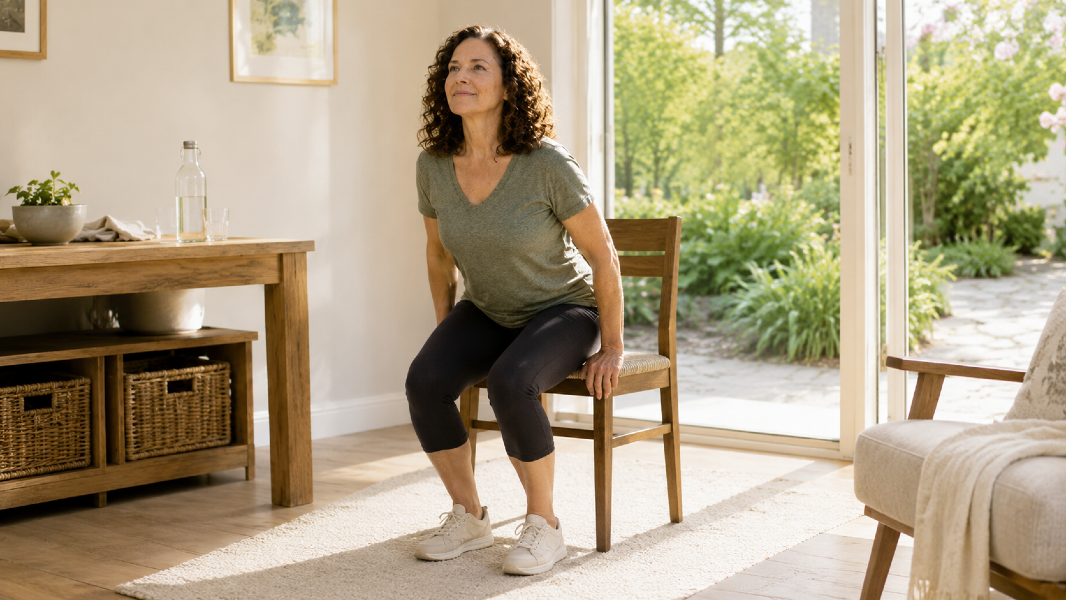
Strong legs support nearly everything we want to keep doing.
They help us:
- Stand up from a chair
- Climb stairs
- Walk with confidence
- Carry groceries
- Recover from a stumble
- Hike
- Travel
- Remain independent
Balance is equally important.
It is not something we either have or do not have.
Balance is a skill that can be practiced.
This short July routine combines leg strength, balance, and mobility using only a sturdy chair and a safe space at home.
It is designed to be simple enough to repeat without turning into another complicated fitness plan.
Before You Begin
This routine is general educational information and may not be appropriate for everyone.
Speak with a healthcare or qualified fitness professional before beginning if you:
- Have recently fallen
- Experience unexplained dizziness
- Have severe joint pain
- Are recovering from surgery
- Have a neurological condition
- Have been advised to limit activity
- Feel unsafe standing without assistance
Keep a sturdy counter, wall, or chair within reach.
Do not use a rolling chair.
Stop if you feel pain, dizziness, chest discomfort, or unusual shortness of breath.
The Routine at a Glance
Complete:
- Ankle circles
- Chair stands
- Supported marching
- Heel raises
- Side steps
- Supported balance hold
- Calf and hip stretches
The routine should take approximately 10 to 15 minutes.
Complete one round at first.
Build to two rounds if appropriate.
1. Ankle Circles
Repetitions: 5 circles in each direction per ankle
Sit tall in a chair.
Lift one foot slightly from the floor.
Slowly circle the ankle.
Reverse direction.
Repeat on the other side.
Why It Matters
Ankle mobility contributes to walking, balance, and the ability to adjust when the ground changes.
Move slowly rather than making fast circles.
2. Chair Stands
Repetitions: 5 to 10
Sit near the front of a sturdy chair.
Place your feet about hip-width apart.
Lean slightly forward from the hips.
Press through your feet and stand.
Pause.
Lower yourself slowly back to the chair.
Make It Easier
Use your hands on the chair or your thighs.
Make It Harder
Cross your arms over your chest or lower more slowly.
Why It Matters
Chair stands train the same muscles used to rise from a chair, toilet, car seat, or low surface.
Control matters more than speed.
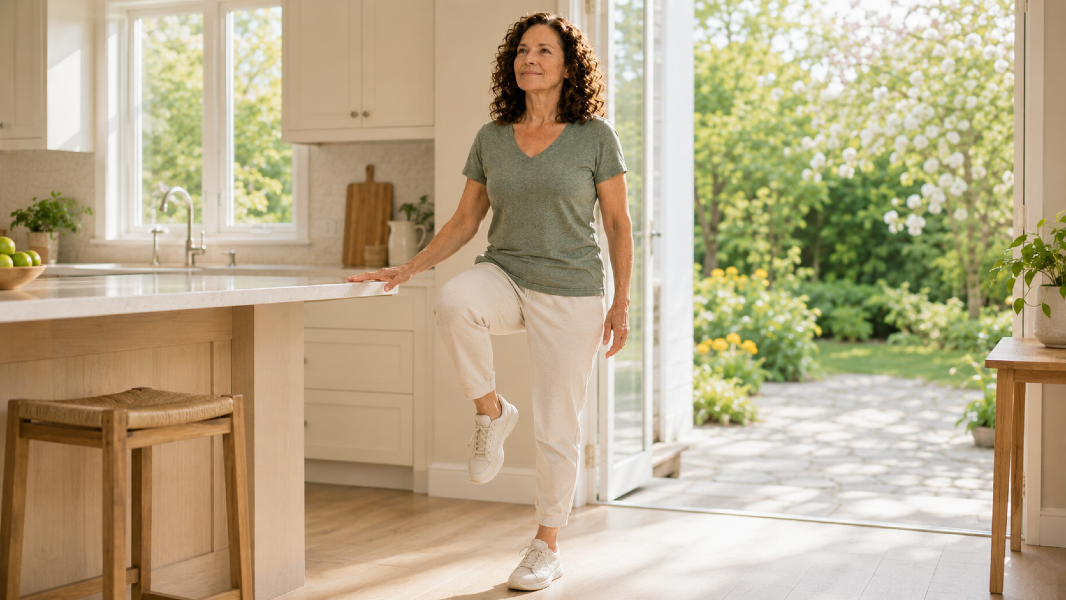
3. Supported Marching
Repetitions: 10 per side
Stand beside a counter or behind a sturdy chair.
Place one or both hands on the support.
Lift one knee comfortably.
Lower it with control.
Alternate sides.
Focus On
- Standing tall
- Keeping the movement slow
- Avoiding excessive leaning
- Placing the foot down gently
Why It Matters
Marching challenges single-leg control and strengthens the hip flexors used during walking and stair climbing.
4. Heel Raises
Repetitions: 8 to 12
Stand near a counter.
Place your feet hip-width apart.
Rise slowly onto the balls of your feet.
Pause briefly.
Lower with control.
Make It Easier
Use both hands for support.
Make It Harder
Use lighter support or pause longer at the top.
Why It Matters
Calf strength supports walking, balance, and pushing off the ground.
5. Side Steps
Repetitions: 5 steps in each direction
Stand facing a counter.
Step to the right with your right foot.
Bring the left foot toward it without dragging.
Continue for five steps.
Reverse direction.
Focus On
- Keeping toes facing forward
- Maintaining a soft bend in the knees
- Avoiding crossed feet
- Moving slowly
Why It Matters
Side steps strengthen the muscles around the hips that help stabilize the pelvis and support balance.
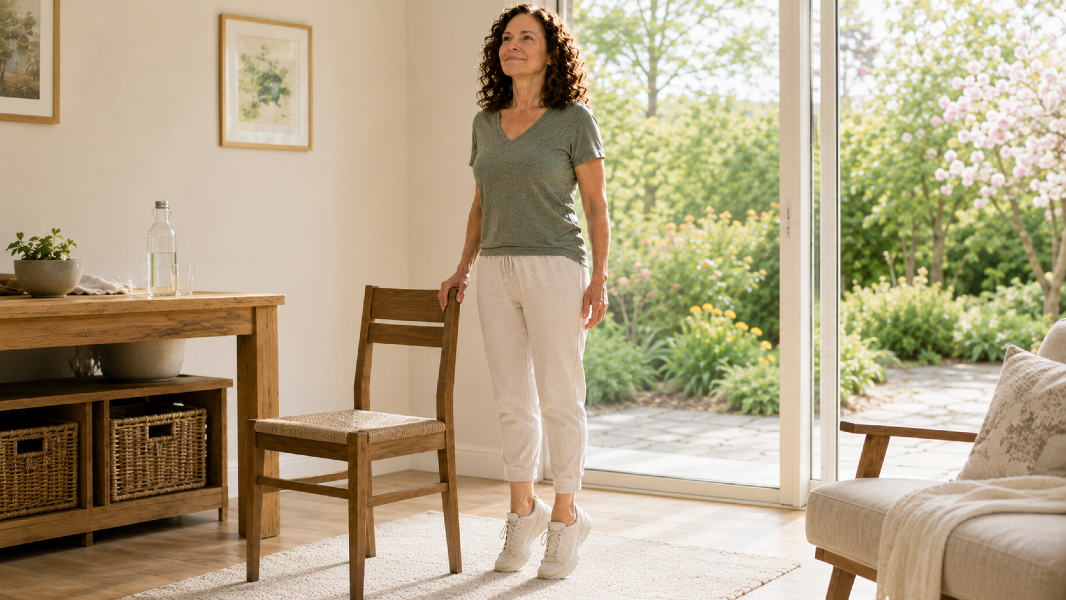
6. Supported Balance Hold
Time: 10 to 20 seconds per side
Stand beside a counter.
Shift your weight onto one leg.
Lift the opposite foot slightly from the floor.
Keep one hand near the counter.
Hold.
Switch sides.
Make It Easier
Keep the toes of the lifted foot lightly touching the floor.
Make It Harder
Use one fingertip for support instead of a full hand.
Do not close your eyes unless supervised by a qualified professional.
Why It Matters
Balance improves when the body is given safe opportunities to practice controlling its position.
7. Calf Stretch
Time: 20 to 30 seconds per side
Stand facing a wall.
Step one foot back.
Keep the back heel on the floor.
Bend the front knee slightly.
Hold a mild stretch in the calf.
Switch sides.
8. Supported Hip Flexor Stretch
Time: 20 to 30 seconds per side
Stand in a split stance beside a chair or wall.
Gently shift your hips forward while keeping your torso upright.
You should feel a mild stretch through the front of the back hip.
Do not arch your lower back.
Switch sides.
How Often Should You Do This?
Start with:
- Two or three days per week
Balance practice can be done more frequently in short sessions.
For example:
- Ten seconds of supported single-leg balance while waiting for the kettle
- Five chair stands before lunch
- Heel raises near the kitchen counter
- Side steps during a work break
Small movement practices are easier to repeat than a routine that always requires special equipment and extra time.
A 5-Minute Version
On busy or lower-energy days, complete:
- 5 chair stands
- 10 supported marches
- 10 heel raises
- 10 seconds of balance per side
- One gentle stretch
A short routine still keeps the habit alive.
How to Progress Safely
Do not progress every exercise at once.
Choose one change:
- Add two repetitions
- Add a second round
- Slow the lowering phase
- Use slightly less hand support
- Hold the balance position five seconds longer
Progress should feel challenging but controlled.
What About Walking?
Walking supports endurance, mood, circulation, and general mobility.
But walking does not fully replace strength and balance training.
A useful July combination is:
- Walking for general movement
- Chair stands and heel raises for strength
- Supported holds and side steps for balance
- Mobility work for comfort and range of motion
Each piece supports the others.
Your July Goal
Do not wait until balance feels poor before practicing it.
Do not wait until getting up from a chair feels difficult before strengthening your legs.
Start with the ability you have now.
Keep support nearby.
Use controlled movements.
Repeat the routine often enough that it becomes familiar.
Healthy aging is not only about adding years.
It is about protecting the strength, stability, and confidence that allow you to use those years well.
Disclaimer:
This content is for informational purposes only and is not medical advice. Always consult your healthcare provider before making changes to your diet, supplements, or lifestyle, especially if you have existing conditions or take medication.
💌Want plant-based tips each week
Join the Plant Based Flex newsletter. It’s free, and when you confirm your email I’ll send you a 7-Day Kickstart Wellness Bundle to help you thrive beyond 60.