It’s About More Than Drinking More Water
Hydration after 60 is about more than counting glasses of water. Learn how food, routines, activity, heat, and individual needs all contribute.
Hydration After 60: It’s About More Than Drinking More Water
When people talk about hydration, the conversation usually turns into a math problem.
How many ounces?
How many bottles?
Eight glasses?
Half your body weight?
A gallon?
Before long, drinking water starts to feel like another full-time wellness assignment.
Water matters, especially during the hotter months, but hydration is about more than carrying the largest water bottle you can find.
We also get fluid from food, other beverages, and the normal rhythm of our meals.
That is one reason August’s focus foods fit this month so well.
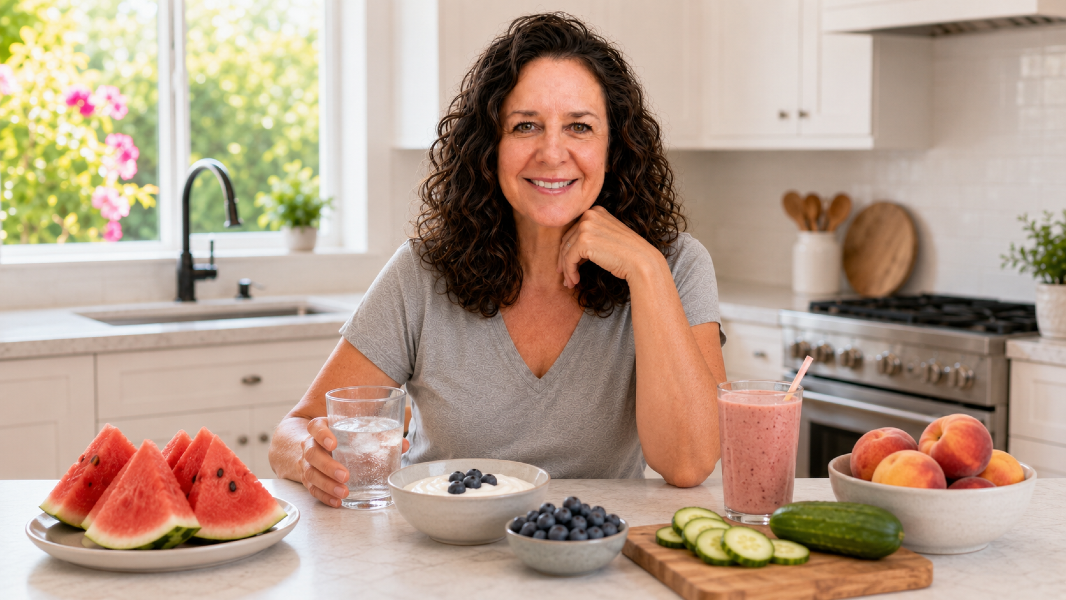
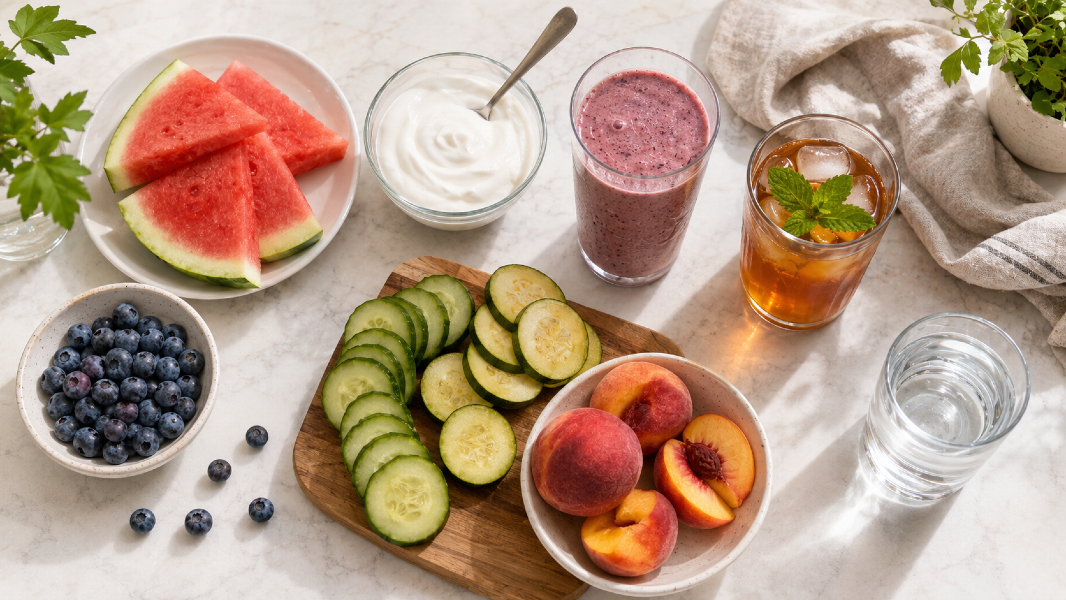
Watermelon, cucumbers, zucchini, peaches, and blueberries all contain water. They do not replace the fluids we drink, but they become part of the bigger hydration picture.
Think About the Water You Eat
A cold slice of watermelon is not the same as drinking a glass of water, but it still contributes fluid.
So does a cucumber salad.
A smoothie.
A bowl of yogurt with berries.
A chilled soup.
Herbal tea.
Milk or plant milk.
Even cooked foods contribute some fluid.
Once we start looking at hydration this way, it feels less like a number we are chasing and more like something naturally built into the day.
That is a much more realistic approach for me.
August Foods Make Hydration Easier
Hot weather can affect appetite.
On the hottest days, a large, heavy meal may not sound good at all. That is when cooler, water-rich foods can become especially appealing.
Watermelon can become a snack, salad, cooler, or breakfast bowl.
Cucumbers can go into wraps, grain bowls, chilled soups, and yogurt-based dishes.
Peaches and blueberries work in smoothies, oats, yogurt, salads, and simple snacks.
Zucchini can be added to lighter skillets, bowls, and summer meals without making them feel heavy.
These foods give us another way to support hydration while also adding color, texture, and variety to our meals.
More Is Not Always Better
Wellness advice sometimes takes a useful idea and pushes it too far.
Yes, dehydration can be a problem.
That does not mean unlimited water is automatically better for everyone.
Fluid needs are not identical from one person to the next. Heat, activity, medications, health conditions, and individual medical guidance can all affect what is appropriate.
Some people are told to monitor or limit fluids because of heart, kidney, or other medical concerns. Others may need to be more intentional about drinking regularly.
That is why I do not believe hydration should become a competition.
The goal is to support your body, not prove how much water you can drink.
Use Hydration Anchors Instead of Chasing a Number
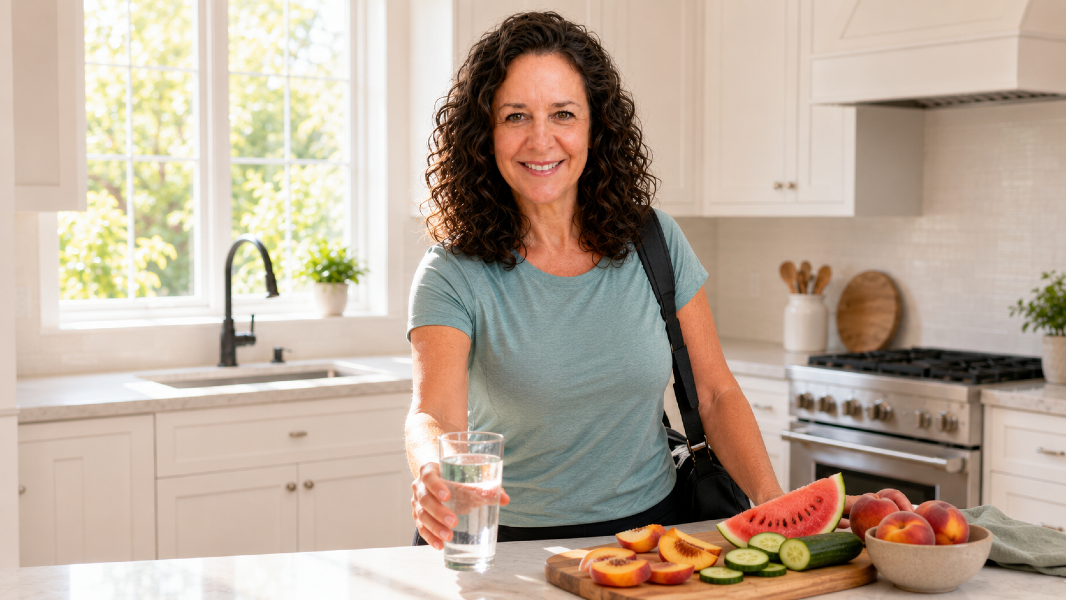
I like habits that connect to something I am already doing.
That could mean:
- A drink after waking
- Water or tea with breakfast
- Fluids with lunch and dinner
- Something to drink after a walk
- A glass nearby while working
- Water-rich foods included throughout the day
These small anchors are easier to remember than realizing late in the evening that you feel “behind.”
They also help spread fluids throughout the day rather than trying to drink a large amount all at once.
Pay Attention to Your Normal Patterns
Healthy aging asks us to pay attention.
Not obsessively.
Just enough to notice when something changes.
If you are suddenly much thirstier than usual, drinking dramatically more or less, feeling persistently dizzy, or noticing a significant change in your normal pattern, it is worth discussing with your healthcare provider.
Not every change means something serious.
But noticing changes is part of taking care of ourselves.
Thrive Beyond 60 Reminder: Hydration is not about winning at water. It is about supporting your body in a way that fits your health, activity, climate, and everyday life.
Before You Go
Choose three simple hydration anchors for this week.
Maybe one in the morning.
One with lunch.
One after your walk or during your afternoon break.
Then add a few water-rich August foods where they naturally fit.
Keep it simple.
Hydrate smarter, not harder.
Featured Cookbook
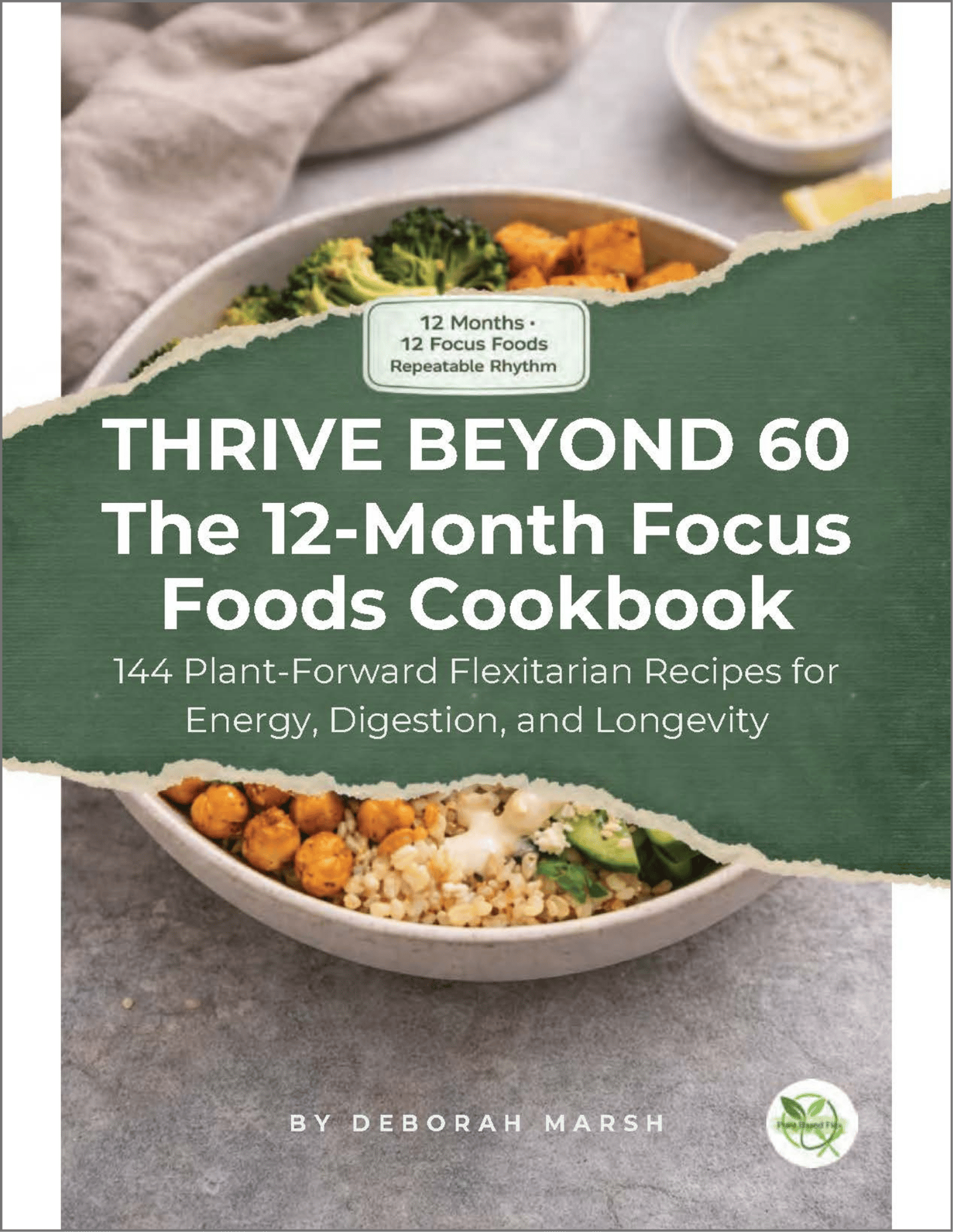
Thrive Beyond 60 Cookbook
Simple, practical plant-based flexitarian recipes built for energy, digestion, and healthy aging after 60.
- Easy, real-life recipes you'll actually use
- Focus foods framework to simplify your meals
- Built for energy, digestion & healthy aging
Disclaimer:
This content is for informational purposes only and is not medical advice. Always consult your healthcare provider before making changes to your diet, supplements, or lifestyle, especially if you have existing conditions or take medication.
💌Want plant-based tips each week
Join the Plant Based Flex newsletter. It’s free, and when you confirm your email I’ll send you a 7-Day Kickstart Wellness Bundle to help you thrive beyond 60.