The 4 Movements That Protect Everyday Independence After 60
Four practical movement patterns can help support everyday independence after 60: standing, bending, carrying, and pushing or pulling.
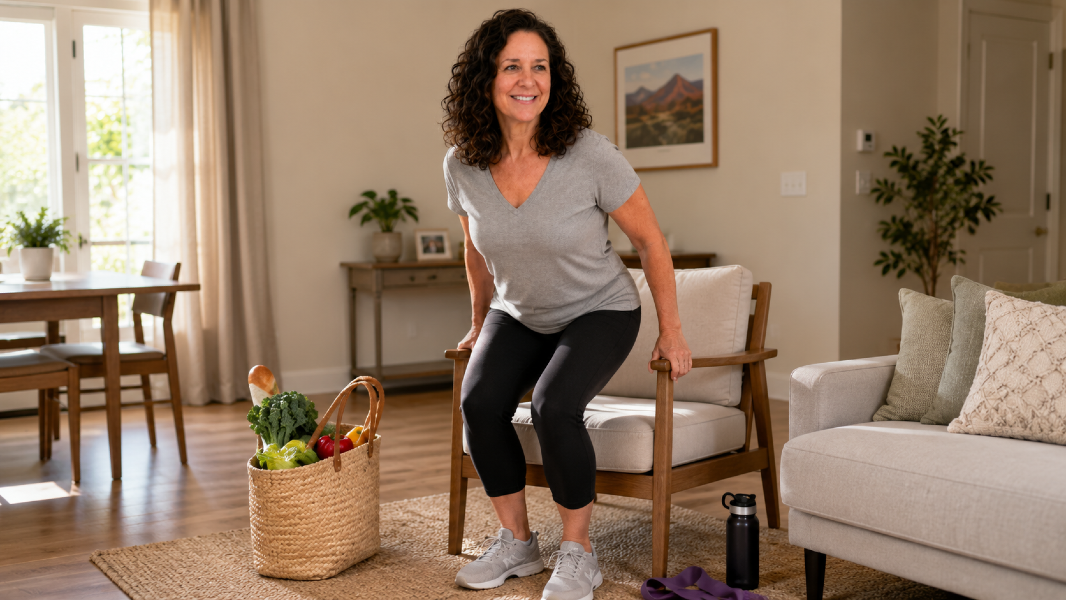
The way I think about exercise has changed.
I still care about getting stronger.
I still want to improve endurance.
I still enjoy walking and hiking.
But now I ask a different question:
What am I training my body to keep doing?
I want to stand up easily.
Carry groceries.
Pick things up.
Move around my home.
Climb steps.
Travel.
Hike.
Get in and out of the car.
Handle everyday life without every task feeling like a physical negotiation.
When we look closely, many of those activities come from a few basic movement patterns.
They may have formal exercise names, but they are really movements we use throughout normal life.
Movement 1: Standing Up and Sitting Down
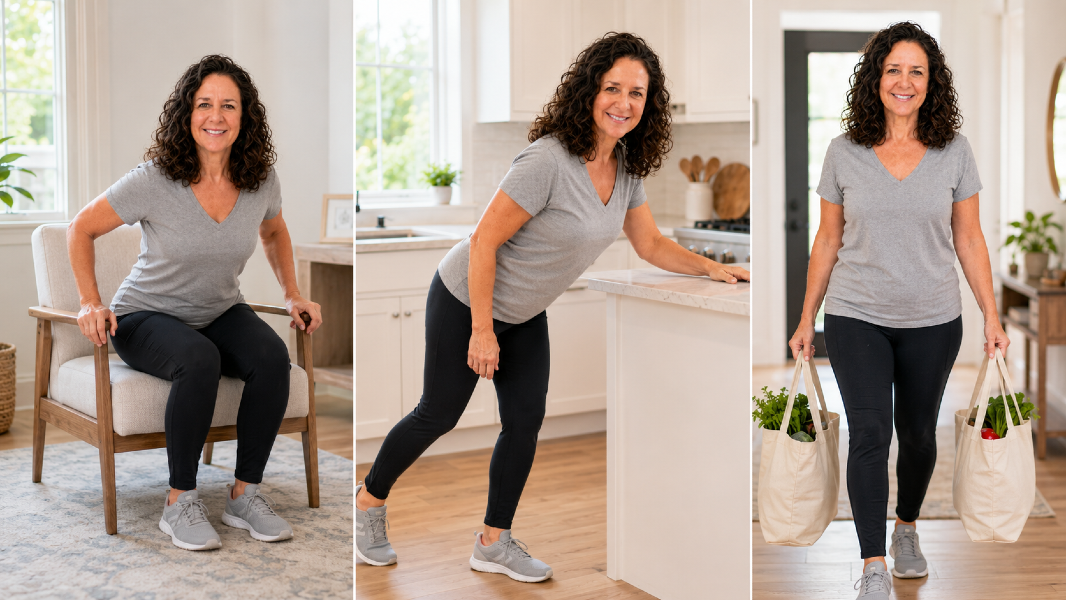
In exercise language, we may call this a squat.
In everyday life, it is sitting down and standing back up.
We do it from chairs, couches, restaurant seats, cars, benches, and toilets.
That is why the simple sit-to-stand is such a practical movement.
Use a sturdy chair.
Place your feet in a comfortable position.
Lean slightly forward.
Stand with control.
Then sit back down with control.
Use your hands for assistance if you need them.
The goal is not to make the exercise look impressive.
The goal is to keep practicing the movement.
Over time, progress may mean using less assistance, standing more smoothly, or feeling more confident.
Movement 2: Bending and Picking Things Up
In fitness terms, this movement is often called a hip hinge.
In real life, it is bending to pick up laundry, load a dishwasher, reach toward the floor, or work in the garden.
The movement should come primarily from the hips rather than rounding and collapsing through the entire body.
You can practice near a counter for support.
Stand tall.
Soften the knees.
Push the hips backward as though closing a drawer behind you.
Keep the movement small and controlled.
Then return to standing.
You do not need a heavy barbell to learn the pattern.
You need awareness and repetition.
Movement 3: Carrying
Carrying may be one of the most useful forms of strength.
We carry:
- Groceries
- Laundry
- Packages
- Suitcases
- Garden supplies
- Pet food
- Household items
Carrying works the hands, arms, shoulders, posture, and trunk while we are moving.
At the gym, this might involve dumbbells.
At home, it might mean carrying two manageable grocery bags.
The key word is manageable.
This is not the one-trip-from-the-car Olympics.
Use a weight you can control while standing tall and walking safely.
Movement 4: Pushing and Pulling
We push doors.
Push shopping carts.
Push ourselves up from something.
Pull open heavy drawers.
Pull weeds.
Move furniture.
Use vacuum cleaners.
Pushing and pulling help us maintain upper-body strength for everyday tasks.
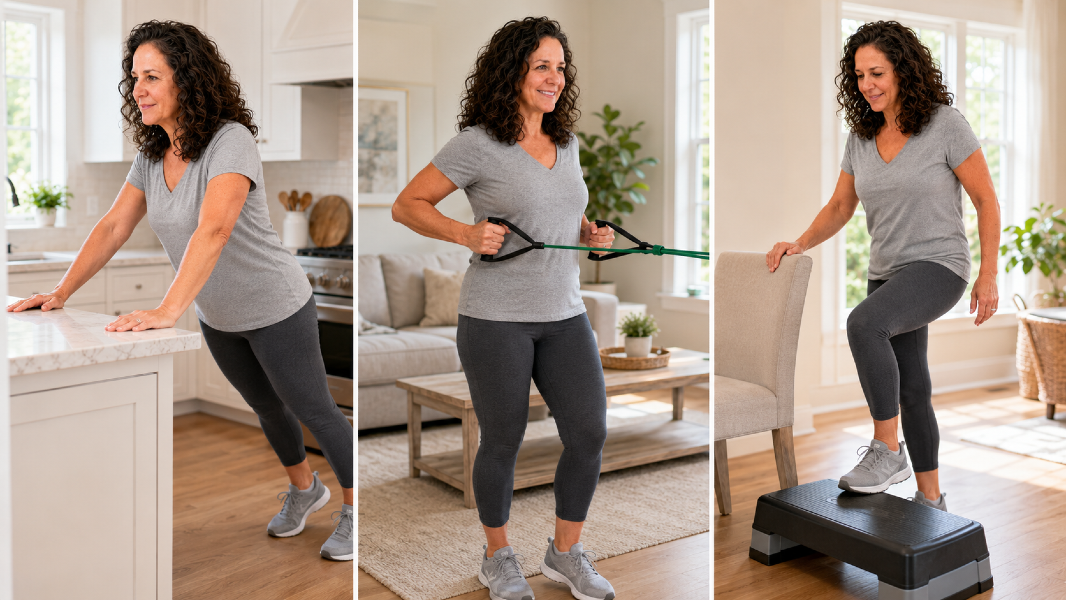
Counter push-ups are one way to practice pushing.
Resistance-band rows are one way to practice pulling.
You can also use weight machines, dumbbells, or other exercises that fit your ability and experience.
The equipment matters less than the movement pattern.
Stepping Deserves Attention Too
I know the title says four movements, but stepping is too important to ignore.
Stairs.
Curbs.
Hiking trails.
Getting onto a bus.
Stepping into a bathtub.
Life is full of changes in height and surface.
Supported low step-ups can help practice this pattern when they are appropriate for your joints, strength, and balance.
Use a sturdy step and nearby support.
This is not the place to test yourself by making the step higher than necessary.
Capability is the goal. Risk is not.
Connect Exercise to the Life You Want
This is what makes functional movement meaningful.
You are not doing random exercises because someone online said you should.
You are training for something.
Want to keep hiking?
You need leg strength, stepping, balance, and endurance.
Want to travel?
You need walking capacity, carrying strength, stairs, and the ability to get up and down comfortably.
Want to remain independent?
You need some version of all of these patterns.
We are not exercising just to exercise. We are investing in capability.
Capability gives us choices.
It helps us keep participating in the parts of life that matter to us.
Before You Go
Think about five or ten years from now.
What do you want your body to still be able to do?
Choose one movement pattern from this post and practice it this week.
Not because you need another workout assignment.
Because you are training for your life.
Disclaimer:
This content is for informational purposes only and is not medical advice. Always consult your healthcare provider before making changes to your diet, supplements, or lifestyle, especially if you have existing conditions or take medication.
💌Want plant-based tips each week
Join the Plant Based Flex newsletter. It’s free, and when you confirm your email I’ll send you a 7-Day Kickstart Wellness Bundle to help you thrive beyond 60.