
Dark Chocolate Pomegranate Walnut Bark
Make dark chocolate pomegranate walnut bark with pumpkin seeds and flaky salt for a colorful, portionable fall treat.

We're finishing October's Focus Foods with chocolate.
I think that's completely reasonable.
Especially when we're pairing it with tart pomegranate, toasted walnuts, pumpkin seeds, fresh orange zest, and just enough flaky salt to make everything pop.
This isn't something I'm trying to turn into a "health food."
It's chocolate bark.
And I'm perfectly happy calling it a treat.
What I like about bark is that you can make a small batch, break it into irregular pieces, and enjoy a little without having an entire cake or pan of dessert sitting around.
There is one thing we need to get right, though.
The pomegranate arils need to be very dry.
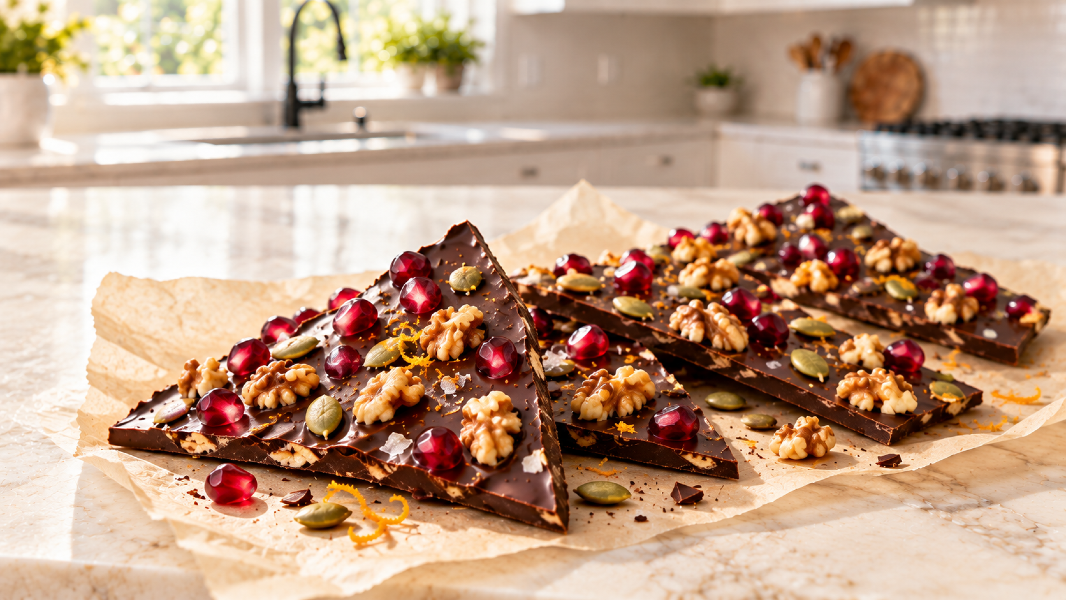
Dark Chocolate Pomegranate Walnut Bark
Makes: Approximately 12–16 small pieces
Prep: About 10 minutes
Chill: 30–45 minutes
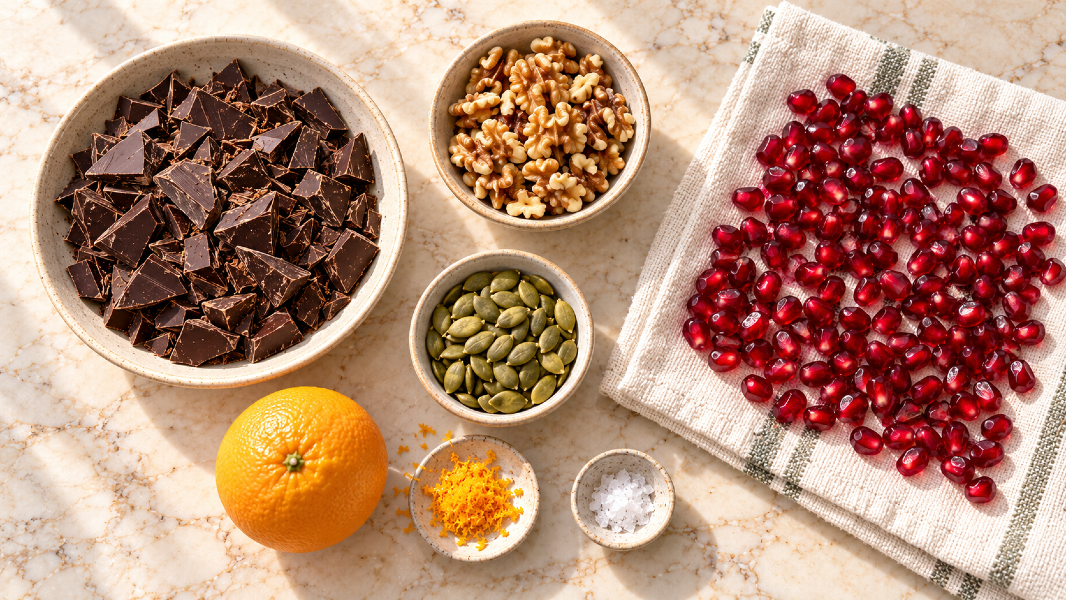
Ingredients
- 8 ounces dark chocolate, chopped
- ⅓ cup fresh pomegranate arils
- ⅓ cup walnut halves or pieces
- 2 tablespoons unsalted pumpkin seeds
- ½ teaspoon finely grated orange zest
- Small pinch flaky salt
First: Dry the Pomegranate
This step matters more than it looks.
Remove the pomegranate arils and spread them over a clean kitchen towel or paper towel.
Gently blot.
Then let them sit while you prepare everything else.
You want the surfaces as dry as reasonably possible.
Why?
Chocolate and water aren't particularly good friends.
Excess moisture can interfere with melted chocolate, and wet fruit sitting on top of bark can also shorten its storage life and affect the texture.
We're using fresh pomegranate because those tart juicy bursts are wonderful.
We just don't want excess water coming along with them.
Toast the Walnuts
Place the walnuts in a dry skillet over medium-low heat.
Toast for several minutes, stirring frequently, until they smell nutty.
Don't walk away.
Nuts can move from toasted to burned remarkably quickly.
Transfer them to a plate and let them cool.
Roughly chop if you're using large halves.
Melt the Chocolate
Line a small baking sheet or flat plate with parchment paper.
Melt the dark chocolate gently.
You can use a double boiler, or microwave it in short intervals, stirring between each one.
Once smooth, pour the chocolate onto the parchment.
Use a spatula to spread it into an irregular layer about ¼ inch thick.
It doesn't need to form a perfect rectangle.
It's bark.
Rustic is part of the job description.
Add the Toppings
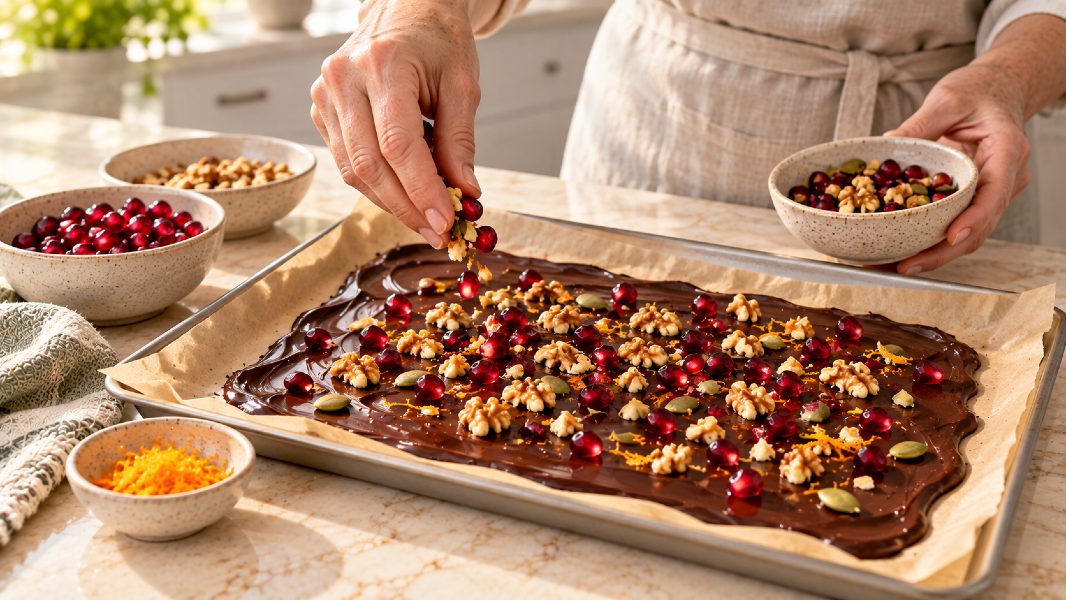
Working while the chocolate is still melted, scatter over:
The thoroughly dried pomegranate arils.
Toasted walnuts.
Pumpkin seeds.
Orange zest.
And finally, a very small pinch of flaky salt.
Gently press the larger toppings into the chocolate so they're anchored without being completely submerged.
Chill
Transfer the bark to the refrigerator.
Chill for approximately 30–45 minutes, or until completely firm.
Once set, break it into small irregular pieces.
No ruler required.
Actually, please don't bring a ruler into this.
Why This Bark Belongs in the Refrigerator
This version contains fresh fruit.
That changes how we store it.
Traditional chocolate-and-nut bark can often be stored differently, but fresh pomegranate introduces moisture.
Keep this bark in a covered container in the refrigerator.
I would make a small batch and enjoy it within about 2–3 days for the best texture and freshness.
This isn't the bark I'd make three weeks before the holidays and leave in a tin.
It's meant to be fresh.
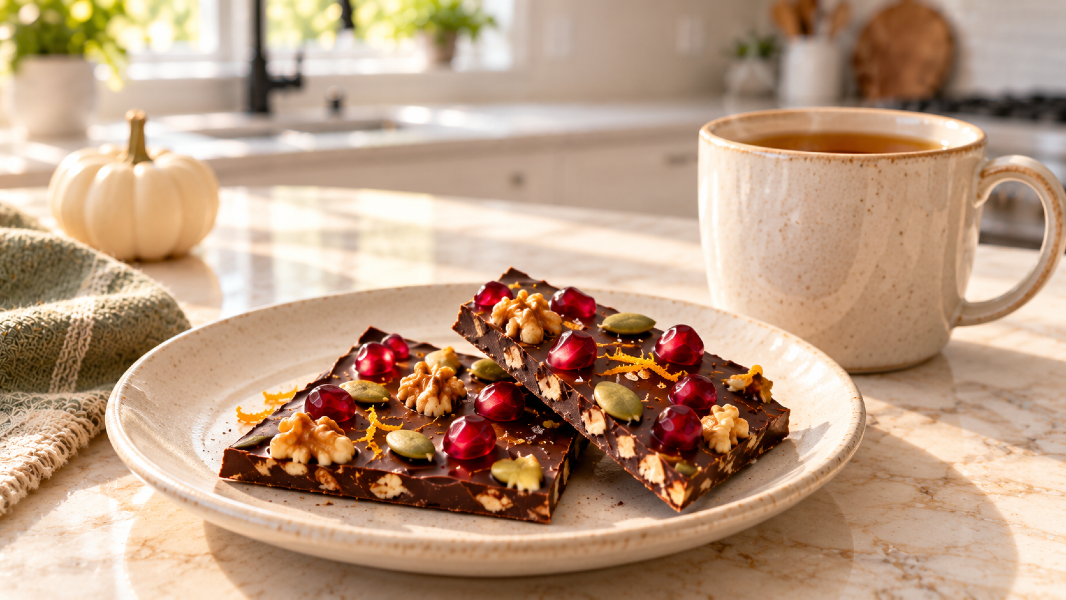
Portion It Before You Put It Away
Once the bark is firm, break the entire batch.
Then put the pieces into the container.
That sounds insignificant, but I like having the portions already established.
You can take out one or two pieces without standing in front of the refrigerator breaking chunks off a giant slab of chocolate.
Simple environment design works with treats too.
Want a Cranberry Version?
You can take the same flavor idea in another direction using dried cranberries instead of fresh pomegranate.
Use a modest amount of chopped dried cranberries with the walnuts, pumpkin seeds, and orange zest.
Because dried fruit doesn't introduce the same amount of moisture as fresh pomegranate, the texture and storage considerations will be different.
And the flavor changes too.
Pomegranate gives you juicy, tart bursts.
Dried cranberry gives you something chewier and sweeter.
Both work.
They're just not the same bark.
A Treat Can Just Be a Treat
One thing I don't want Plant Based Flex to become is a place where every dessert has to be disguised as something else.
Sometimes I want oatmeal.
Sometimes I want Brussels sprouts.
Sometimes I want chocolate.
Those things can coexist.
That's what flex means to me.
Healthy eating isn't one perfect meal repeated forever.
It's the pattern we create over time.
So make a small batch.
Break it into pieces.
Share a few.
Have a couple yourself.
And enjoy the fact that October's Focus Foods somehow managed to lead us to chocolate.
I'd call that a successful month.
Save this recipe for your next fall treat, and join Plant Based Flex free for new seasonal recipes and Thrive Beyond 60 stories delivered to you.
And if you want to continue the Focus Foods approach through the entire year, my Thrive Beyond 60 — The 12-Month Focus Foods Cookbook includes 144 seasonal recipes.
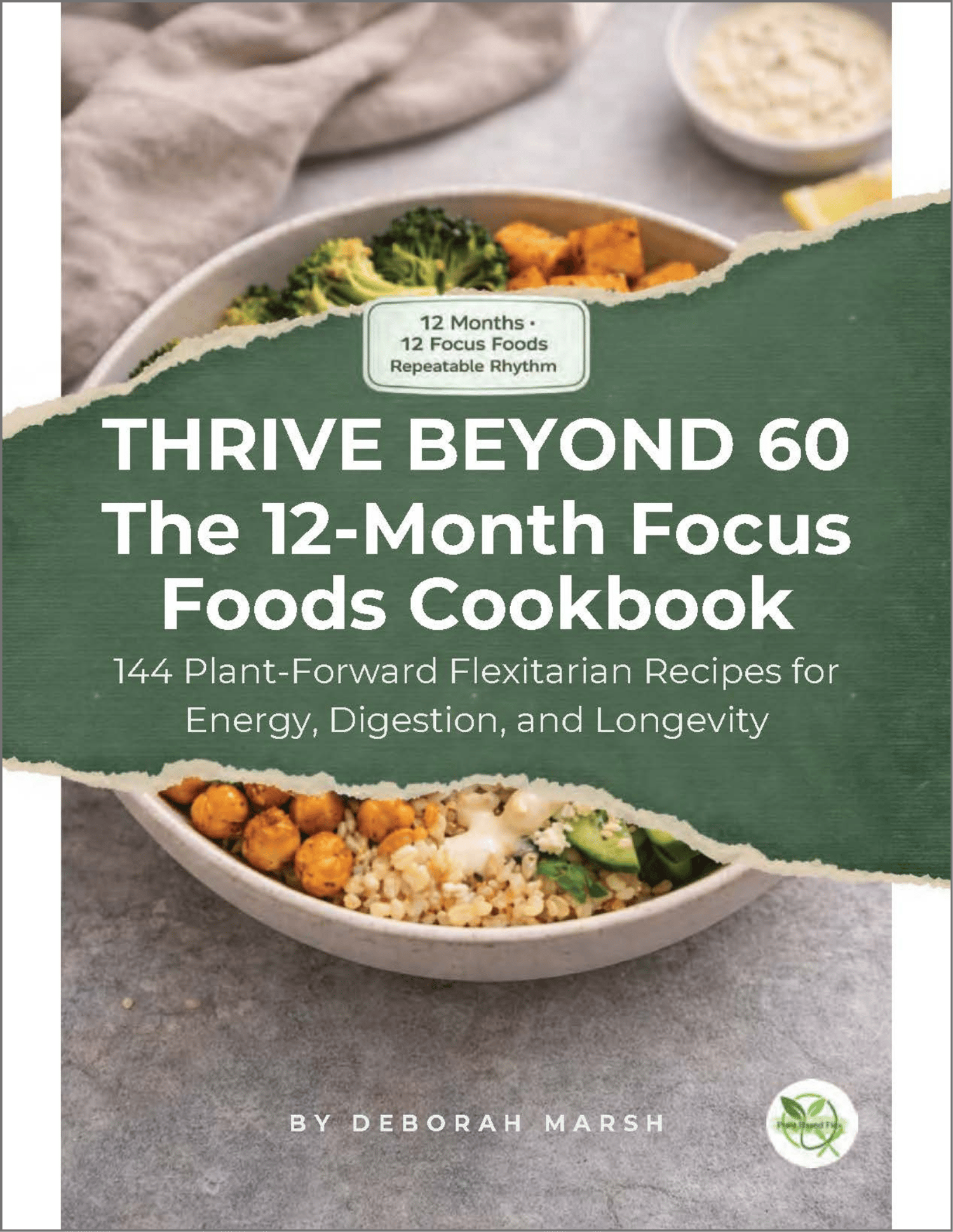
Featured Cookbook
Thrive Beyond 60 Cookbook
Simple, practical plant-based flexitarian recipes built for energy, digestion, and healthy aging after 60.
- Easy, real-life recipes you'll actually use
- Focus foods framework to simplify your meals
- Built for energy, digestion & healthy aging
Disclaimer:
This content is for informational purposes only and is not medical advice. Always consult your healthcare provider before making changes to your diet, supplements, or lifestyle, especially if you have existing conditions or take medication.
💌Want plant-based tips each week
Join the Plant Based Flex newsletter. It’s free, and when you confirm your email I’ll send you a 7-Day Kickstart Wellness Bundle to help you thrive beyond 60.