Three Jewel-Toned Fall Fruits and What to Do With Them
Learn how to buy, store, and use cranberries, persimmons, and pomegranate in practical sweet and savory fall meals.

Some of fall's most beautiful foods also happen to be the ones we may be least sure what to do with.
Fresh cranberries show up in bags around the holidays.
Persimmons appear in the produce section looking beautiful — but mysterious.
And pomegranates?
They can feel like entirely too much work when you aren't sure how to get the seeds out without turning your kitchen red.
But these three jewel-toned fruits are part of my October Focus Foods for a reason.
Cranberries, persimmons, and pomegranate can bring completely different flavors and textures to fall meals — and none of them needs to be buried in sugar or saved for a holiday table.
Let's make them a little less mysterious.
Cranberries: Tart, Bright, and Not Just for Sauce
Fresh cranberries are very tart.
That's important to know before you pop one into your mouth expecting something like a blueberry.
Their tartness is also exactly what makes them useful.
They can cut through richer fall flavors and pair beautifully with naturally sweeter fruit.
Buying and storing cranberries
Look for cranberries that are:
- Firm
- Plump
- Bright red to deep crimson
- Free from soft or shriveled spots
Fresh cranberries keep well in the refrigerator, but they're also incredibly easy to freeze.
You can put the entire bag in the freezer and take out what you need later.
Do cranberries need lots of sugar?
No.
But they usually benefit from something that balances their tartness.
Instead of simply pouring in more sugar, combine cranberries with naturally sweeter ingredients such as pears, apples, oranges, or dates.
Cooking also softens their sharpness.
Easy ways to use them
Breakfast: Simmer chopped cranberries with pear and cinnamon and spoon over oatmeal or yogurt.
Savory: Add a small amount of chopped cranberry to a grain dish with roasted vegetables and walnuts.
Beverage: Simmer cranberries with orange peel and cinnamon in water, then strain for a naturally flavored warm or chilled drink.
Persimmons: First, Know Which One You Bought
This is probably the most important thing to understand about persimmons:
Fuyu and Hachiya persimmons are not interchangeable when they're firm.
Fuyu persimmons
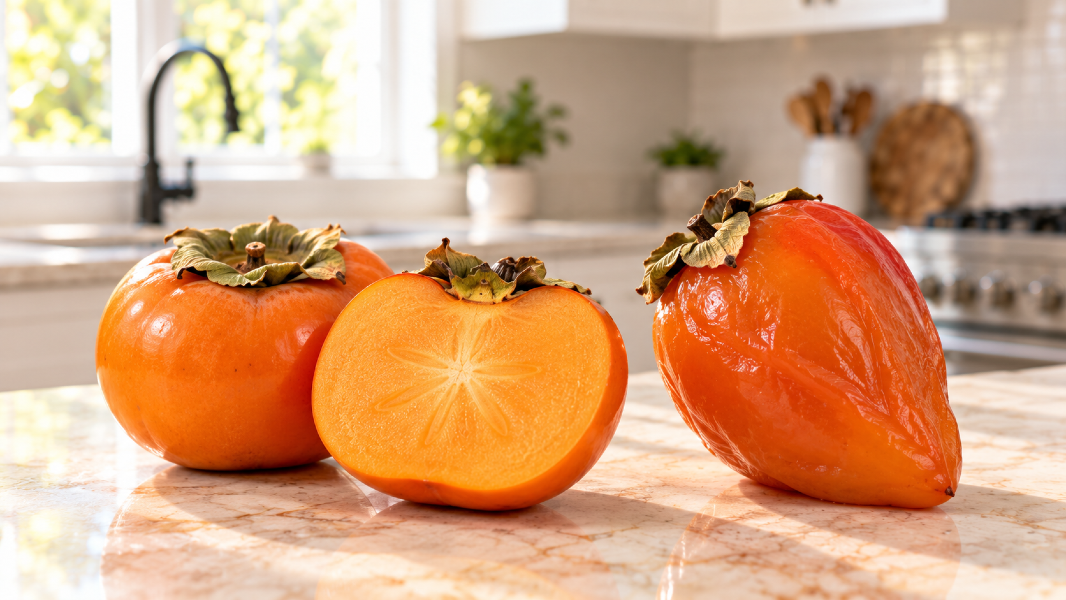
Fuyu persimmons are usually squat and round, somewhat like a flattened tomato.
They can be eaten while still firm.
The texture can be crisp-tender, and the flavor is mildly sweet.
They're ideal when you want slices or diced fruit that holds its shape.
Hachiya persimmons
Hachiya persimmons are more elongated, often with a pointed or acorn-like bottom.
And this is the important part:
Don't eat a firm Hachiya.
Unripe Hachiyas are extremely astringent.
Let them ripen until they're very soft — almost jelly-like inside.
That's when their sweetness develops and they're ready for spooning, blending, or baking.
Storing persimmons
Allow firm persimmons to ripen at room temperature.
Once they're ripe, refrigerating them can give you a little more time before using them.
Easy ways to use them
Breakfast: Dice a firm Fuyu into yogurt with walnuts and cinnamon.
Savory: Add sliced Fuyu to a fall salad with greens, white beans, and toasted seeds.
Snack: Slice a Fuyu and pair it with yogurt or a small amount of cheese.
A ripe Hachiya works better stirred into oatmeal or yogurt than sliced.
Pomegranate: Worth Learning Once
A pomegranate looks intimidating until you've opened a few.
Inside are hundreds of ruby-red arils — the juicy seed coverings we eat.
And you have two options:
Buy the whole fruit or buy the arils already removed.
There is absolutely no healthy-living prize for choosing the harder option.
If buying prepared arils means you'll actually eat them, buy the arils.
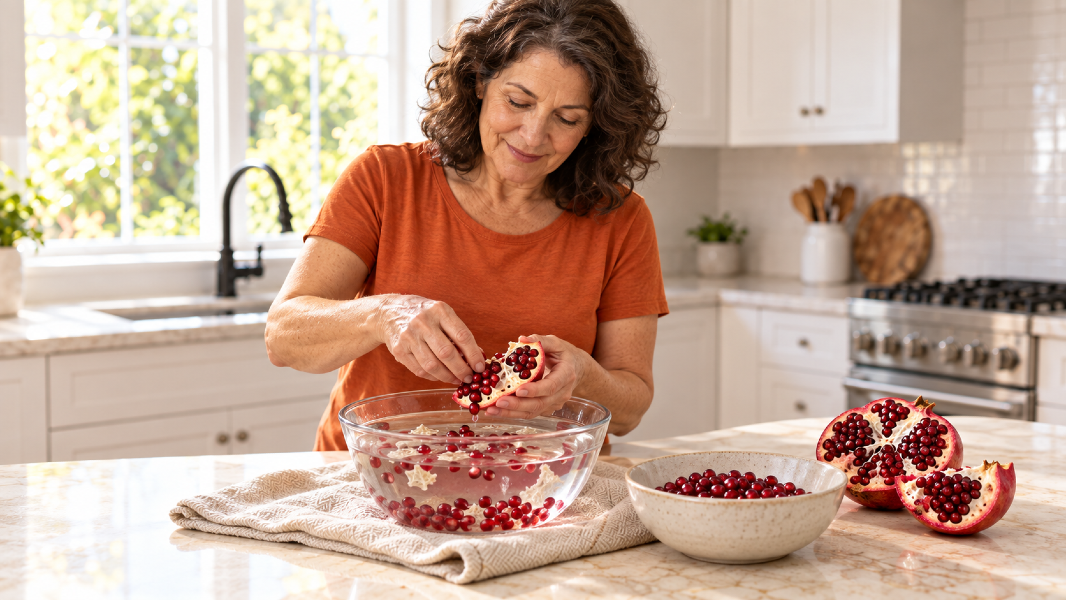
How to remove pomegranate arils with less mess
Wear something you don't mind splashing.
Pomegranate juice can stain clothing, towels, cutting boards, and porous surfaces.
Cut the fruit carefully.
Then break it into sections and separate the arils in a bowl of water.
The water helps contain some of the juice and makes separating the pieces easier.
Keep a kitchen towel nearby.
Easy ways to use pomegranate
Breakfast: Scatter arils over yogurt or warm oats.
Savory: Add them to roasted Brussels sprouts, grain bowls, or leafy salads.
Snack: Combine a small handful with walnuts and plain yogurt.
Beverage: Add a spoonful of arils to sparkling water with orange slices for a simple fall drink.
You Don't Need a Giant Portion
One of the easiest ways to bring more plant variety into our diets is to stop thinking that every food needs to become the centerpiece of the meal.
Pomegranate arils can be a topping.
Cranberries can be an accent.
Persimmon can be half the fruit alongside breakfast.
We're adding variety, not trying to win a produce-eating contest.
That makes unfamiliar foods much easier to work into real life.
Sweet Fruit Can Work in Savory Food
This may be my favorite October challenge.
We automatically think:
Fruit = breakfast or dessert.
But these fall fruits can be especially interesting when we move them into savory meals.
Try:
Persimmon + greens + white beans
Pomegranate + roasted Brussels sprouts + walnuts
Cranberry + farro + roasted root vegetables
Sweet, tart, bitter, earthy, crunchy, creamy.
Those contrasts make simple food more interesting without requiring complicated sauces.
Your October Challenge
Choose one jewel-toned fruit you don't normally buy.
Then instead of turning it into dessert, use it in something savory.
Maybe that's a handful of pomegranate arils over roasted vegetables.
Maybe Fuyu persimmon goes into your lunch salad.
Maybe cranberries find their way into a warm grain bowl.
You don't have to completely change the way you eat.
Just give yourself another ingredient to play with.
That's what the Focus Foods approach is really about.
Join Plant Based Flex free to have new Thrive Beyond 60 recipes, movement, Focus Foods, and practical healthy-living posts delivered to you.
Featured Cookbook
Thrive Beyond 60 Cookbook
Simple, practical plant-based flexitarian recipes built for energy, digestion, and healthy aging after 60.
- Easy, real-life recipes you'll actually use
- Focus foods framework to simplify your meals
- Built for energy, digestion & healthy aging
Disclaimer:
This content is for informational purposes only and is not medical advice. Always consult your healthcare provider before making changes to your diet, supplements, or lifestyle, especially if you have existing conditions or take medication.
💌Want plant-based tips each week
Join the Plant Based Flex newsletter. It’s free, and when you confirm your email I’ll send you a 7-Day Kickstart Wellness Bundle to help you thrive beyond 60.