Three Fall Vegetables Worth Trying Again After 60
Learn how Brussels sprouts, parsnips, and turnips can add fiber, variety, and practical fall flavor to meals after 60.
There are foods we decide we don't like somewhere along the way.
Maybe we tried them as kids.
Maybe someone boiled them until they were gray and mushy.
Or maybe we simply never learned what to do with them.
Three of my October Focus Foods fall squarely into that category:
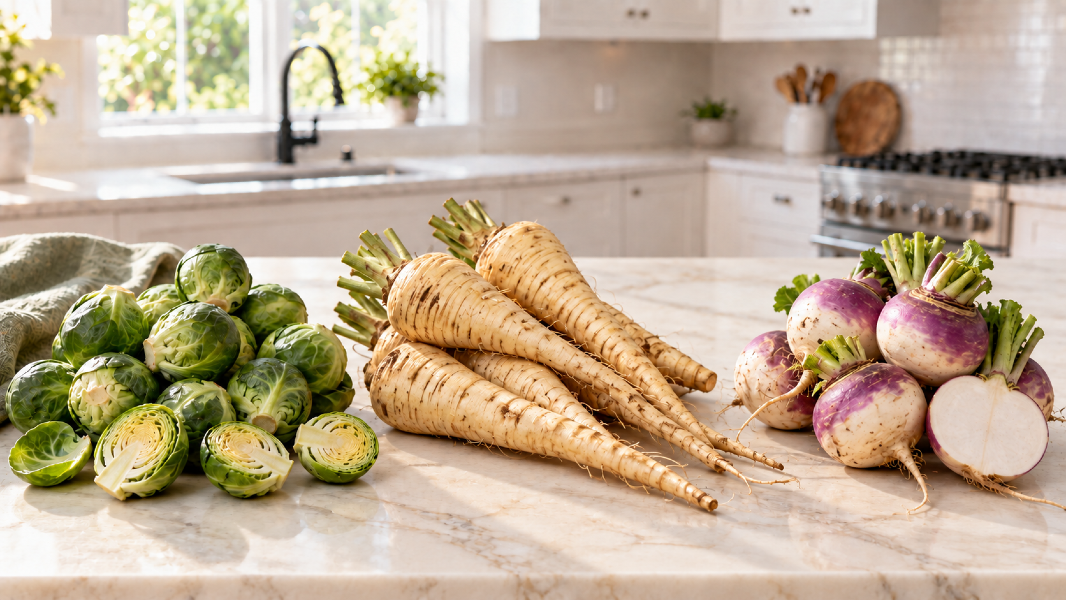
Brussels sprouts, parsnips, and turnips.
If you've already decided you don't like one of them, I'm not going to tell you that you have to.
But I am going to suggest that the vegetable you remember may taste very different when you change how it's prepared.
Because with all three of these vegetables, how you cut them, cook them, and pair them matters.
Brussels Sprouts: If You Remember Them as Bitter
I understand this one.
Overcooked Brussels sprouts can become soft, strong-smelling, and bitter.
But high heat and browning give us something completely different.
Instead of boiling them, I prefer to halve, quarter, or thinly shave them and let dry heat do the work.
Roasting and sautéing allow the edges to brown and bring out more of their natural sweetness.
What to look for
Choose sprouts that feel firm and compact with relatively tight green leaves.
Smaller sprouts are often a little more tender.
Keep them refrigerated and wait to wash them until you're ready to cook.
Three easy ways to try them
Shaved and sautéed: Thinly slice and cook in a wide skillet with a little olive oil until the edges begin to brown. Finish with balsamic vinegar and walnuts.
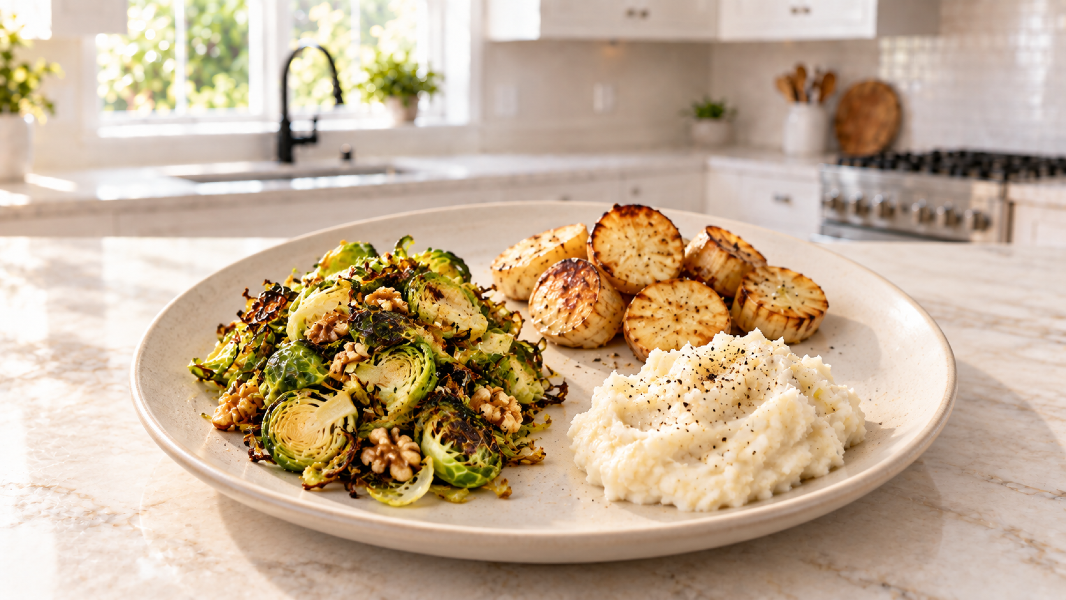
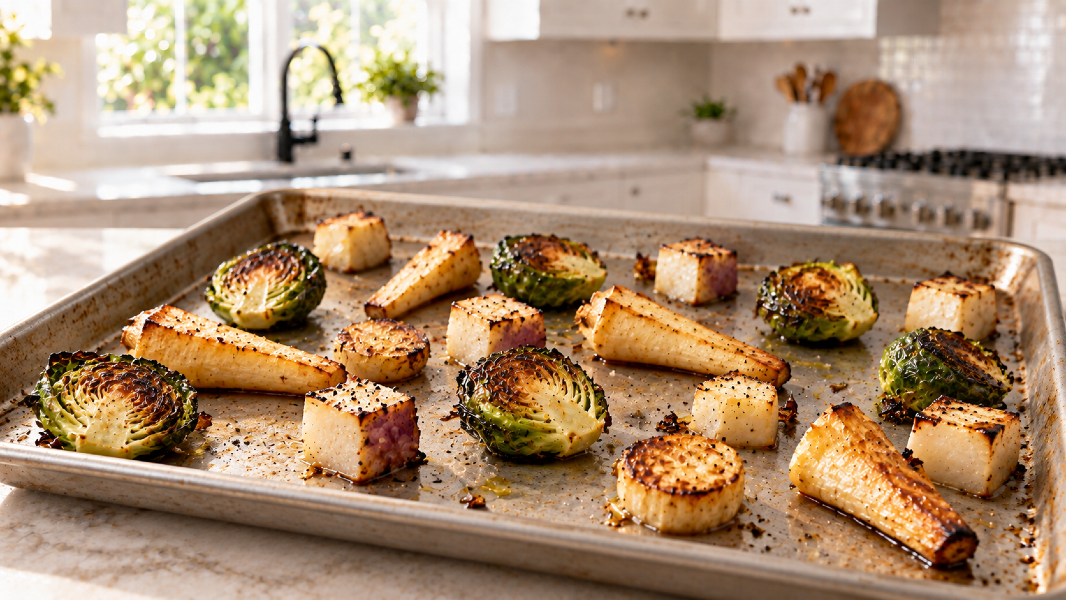
Roasted: Halve them, toss lightly with olive oil and black pepper, and roast cut-side down until deeply browned.
Warm grain bowl: Add roasted Brussels sprouts to brown rice or farro with white beans, cranberries, and a simple dressing.
Parsnips: If You Don't Know What to Do With Them
Parsnips look a little like pale carrots, but their flavor is different.
They're earthy, slightly sweet, and become especially good when roasted.
If you've walked past them at the grocery store because you had no idea what you'd do with them, start simple.
What to look for
Choose smaller to medium parsnips that are firm and relatively smooth.
Very large parsnips can sometimes have tougher, woody centers.
Store them in the refrigerator produce drawer.
Three easy ways to try them
Roasted coins: Slice into thick coins, toss with a little olive oil, pepper, and thyme, and roast until browned.
Mixed root vegetables: Combine parsnips with carrots, sweet potatoes, or turnips instead of making an entire dish from parsnips alone.
Mash: Cook parsnips until tender and mash them with potatoes or white beans for a slightly sweeter variation on traditional mashed potatoes.
Turnips: If You Remember Them as Sharp
Turnips can have a slightly peppery bite, particularly when raw or undercooked.
Cooking mellows that flavor.
And combining turnips with sweeter vegetables can make them much more approachable if you're trying them again.
What to look for
Choose firm turnips with smooth skin.
Smaller turnips generally have a milder flavor than very large ones.
If the greens are attached, remove them before storing the roots in the refrigerator.
And don't automatically throw those greens away — they're edible too.
Three easy ways to try them
Roasted cubes: Combine turnips with sweet potato or carrots and roast until browned around the edges.
Simple mash: Cook until tender and mash with potatoes, olive oil, and black pepper.
Skillet vegetables: Dice them relatively small and sauté with carrots and white beans until tender.
Browning Changes Everything
There's a common thread running through all three vegetables:
Don't crowd the pan.
When vegetables are packed tightly together, they release moisture and begin steaming.
Give them room and more of their surfaces can actually make contact with the hot pan.
That's where browning happens.
And browning creates flavor.
For roasting, spread vegetables in a single layer rather than piling them on top of one another.
For sautéing, use a wide skillet and work in batches if necessary.
Sometimes the difference between I hate this vegetable and wait, this is actually good is simply giving it enough room to brown.
What If These Vegetables Bother Your Digestion?
More plant variety can be beneficial, but more isn't automatically better if your digestive system isn't used to it.
Brussels sprouts in particular can produce more gas for some people because they're a cruciferous vegetable.
You don't need to eat a giant bowl to get the benefit of adding another plant to your diet.
Try a smaller portion alongside foods you already tolerate well.
Cook the vegetable thoroughly.
See how you feel.
And build from there.
Healthy eating after 60 doesn't require forcing yourself through foods or portions that make you miserable.
Try the Vegetable, Not the Memory
That's my challenge for this week.
Think of a vegetable you dismissed years ago.
Maybe it was Brussels sprouts.
Maybe turnips.
Maybe something completely different.
Try it again using a different cooking method.
You might still dislike it.
That's fine.
But you may also discover that what you disliked wasn't necessarily the vegetable.
It was the way someone cooked it.
Throughout October, we're exploring practical ways to use seasonal foods without making healthy eating complicated.
Join Plant Based Flex free to have new Thrive Beyond 60 posts delivered to your inbox, and explore my October Focus Foods for even more seasonal ideas.
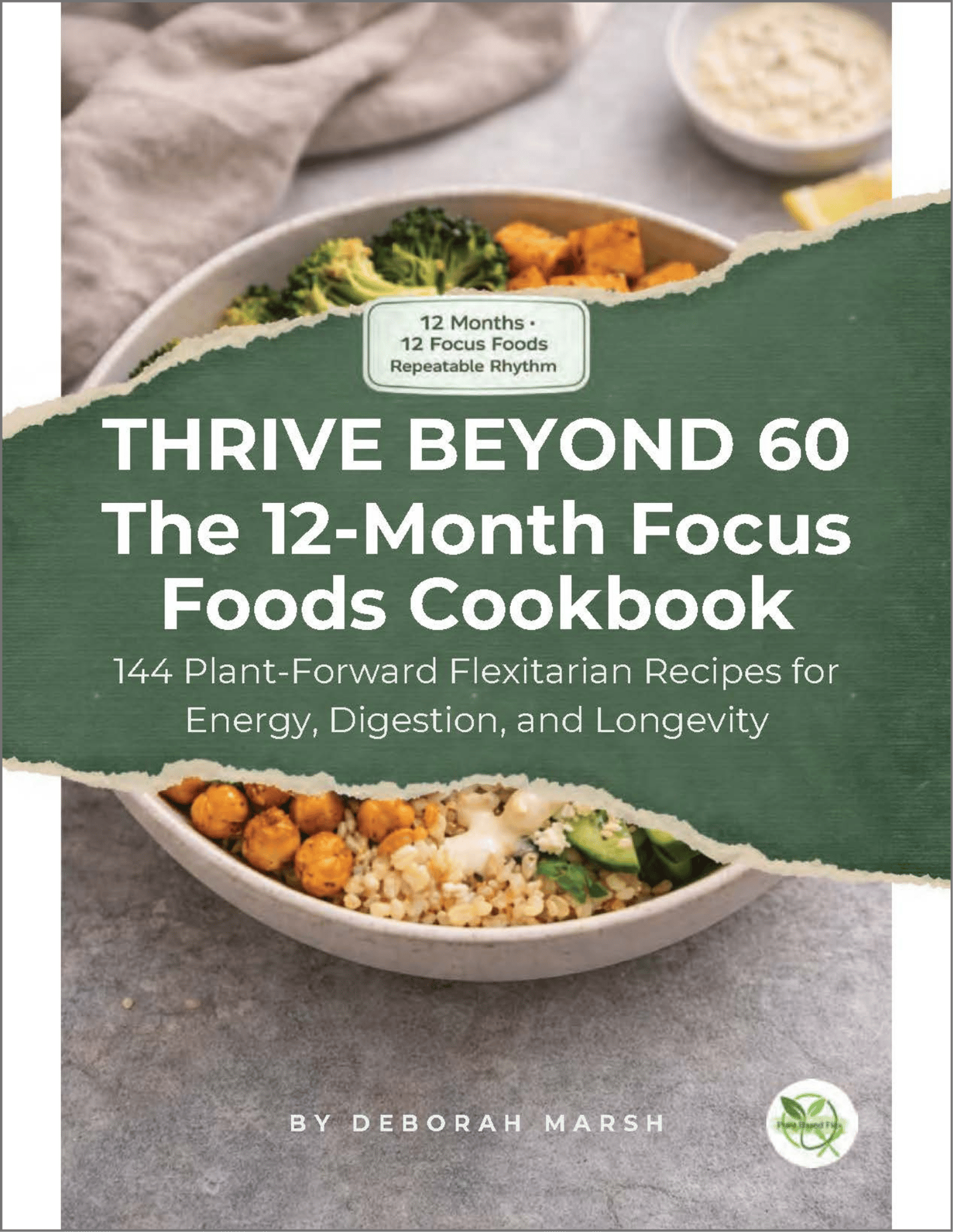
Featured Cookbook
Thrive Beyond 60 Cookbook
Simple, practical plant-based flexitarian recipes built for energy, digestion, and healthy aging after 60.
- Easy, real-life recipes you'll actually use
- Focus foods framework to simplify your meals
- Built for energy, digestion & healthy aging
Disclaimer:
This content is for informational purposes only and is not medical advice. Always consult your healthcare provider before making changes to your diet, supplements, or lifestyle, especially if you have existing conditions or take medication.
💌Want plant-based tips each week
Join the Plant Based Flex newsletter. It’s free, and when you confirm your email I’ll send you a 7-Day Kickstart Wellness Bundle to help you thrive beyond 60.