What August’s 10 Focus Foods Taught Us About Eating Well After 60
After a month of basil, zucchini, bell peppers, corn, cucumbers, eggplant, blueberries, watermelon, peaches, and purslane, here are the healthy-aging lessons worth keeping.
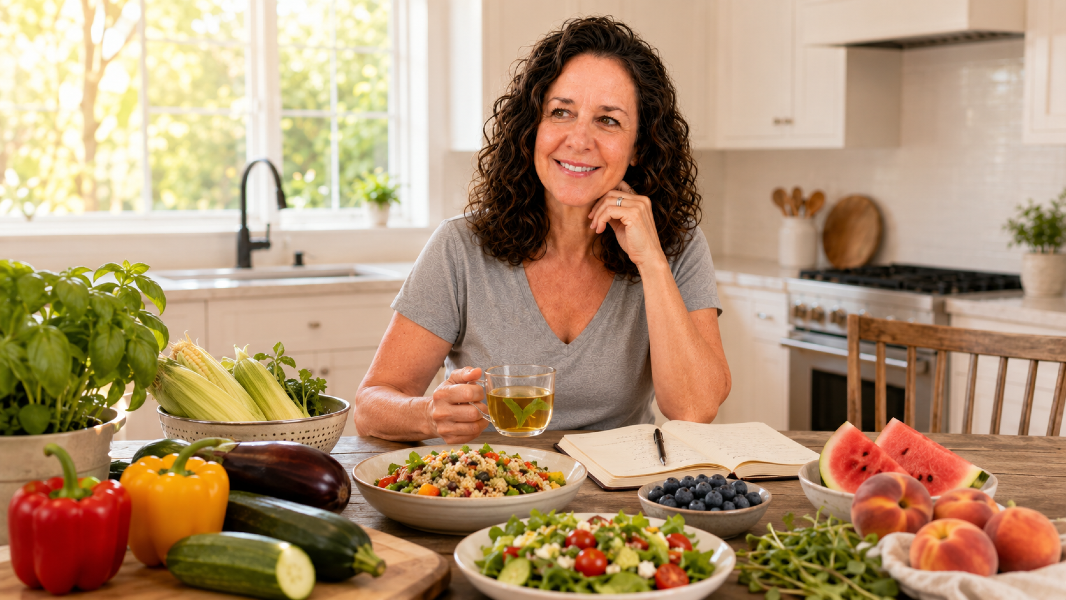
At the beginning of August, we introduced 10 focus foods:
Basil, zucchini, bell peppers, corn, cucumbers, eggplant, blueberries, watermelon, peaches, and purslane.
The idea was never to create another list of foods you had to eat perfectly.
That is not how I want healthy eating to feel.
The point was to make eating well a little easier by narrowing the focus.
Instead of walking into the grocery store and trying to make decisions from hundreds of possibilities, we chose a short list of seasonal foods and found different ways to use them throughout the month.
Some showed up in salads.
Some became breakfast.
Some were roasted.
Some were blended.
Some were used in bowls, snacks, drinks, and simple skillet meals.
And that is really the lesson I want to carry forward.
Healthy eating after 60 does not have to mean constantly searching for something new.
Sometimes the smartest thing we can do is get better at using the foods we already know how to buy.
Lesson 1: Healthy Eating Does Not Require Exotic Ingredients
There is a tendency in wellness culture to make healthy eating sound more complicated than it is.
There is always a new powder.
A new supplement.
A new superfood.
A new ingredient we suddenly feel like we are supposed to find.
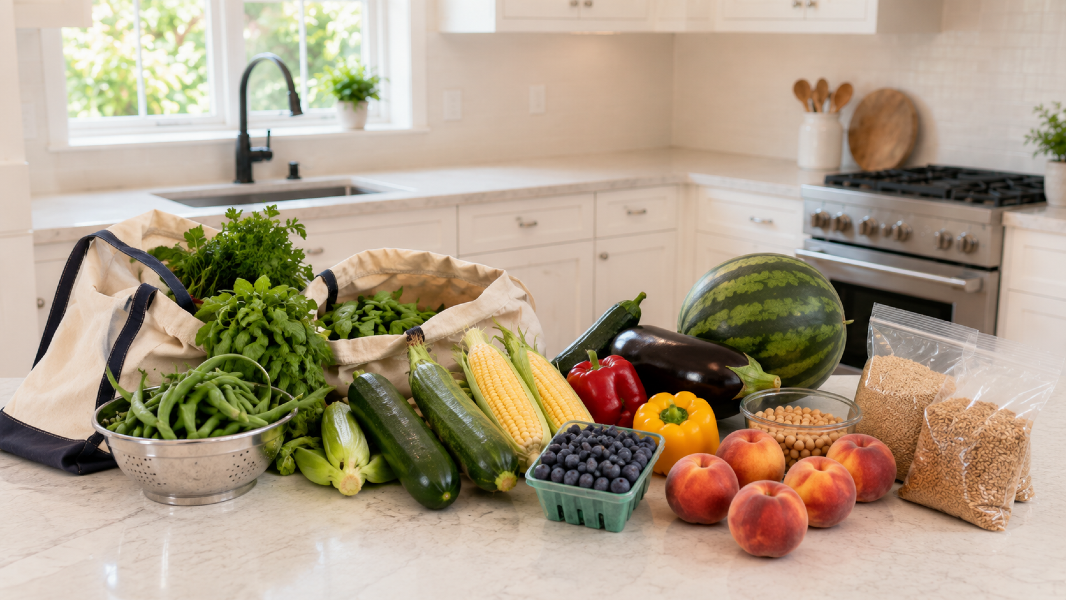
But look at our August list.
Zucchini.
Corn.
Cucumbers.
Peaches.
Blueberries.
Bell peppers.
These are ordinary foods.
That is exactly why they work.
The healthiest eating pattern in the world will not help much if the ingredients are too expensive, too difficult to find, or so unfamiliar that we never actually use them.
Healthy food needs to fit real life.
It needs to fit:
- Your budget
- Your grocery store
- Your cooking skills
- Your schedule
- Your digestion
- Your preferences
There is value in exploring new foods.
Purslane was our less familiar August ingredient.
But most of the month was built around foods we can find without turning grocery shopping into a scavenger hunt.
That is a strategy I believe in.
Lesson 2: Hydration Does Not Only Come From a Water Bottle
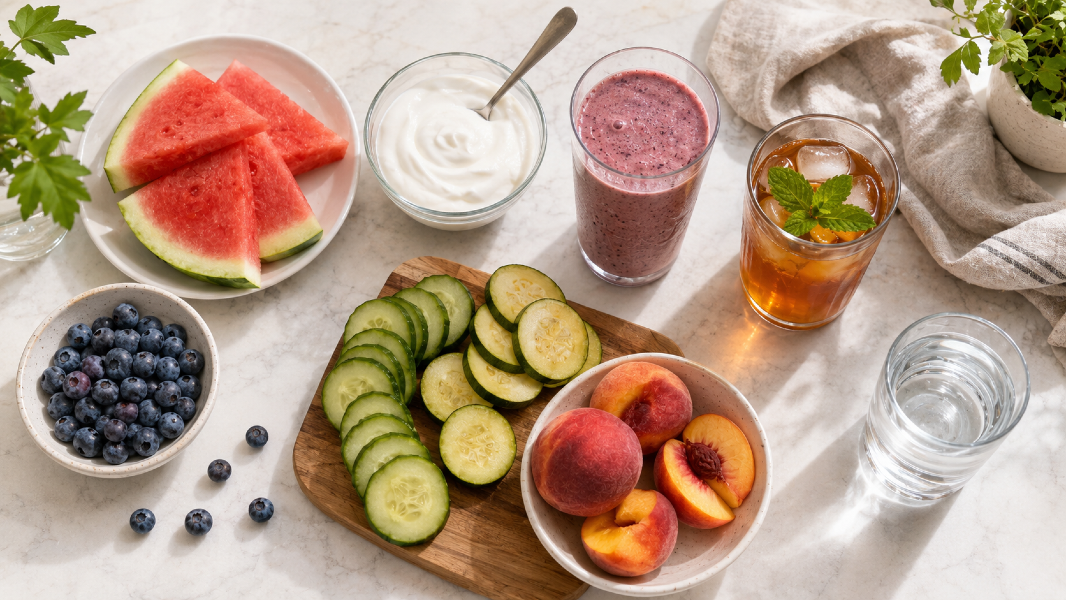
One of the strongest themes that naturally emerged this month was hydration.
August foods make that easy.
Watermelon.
Cucumbers.
Zucchini.
Peaches.
Blueberries.
These foods all contain water in addition to fiber, vitamins, minerals, and plant compounds.
That does not mean we stop drinking water.
It means we stop thinking about hydration as something completely separate from food.
A bowl of watermelon matters.
A cucumber salad matters.
A smoothie contributes fluid.
Soup contributes fluid.
Yogurt contributes fluid.
Our total hydration comes from the combination of what we drink and what we eat.
For me, that is a much more practical way to think about it.
Healthy living should not become another competition where we are trying to carry the largest water bottle.
It should be about paying attention to our bodies and building hydration into the rhythm of the day.
Lesson 3: Color Gives Us an Easy Way to Build Variety
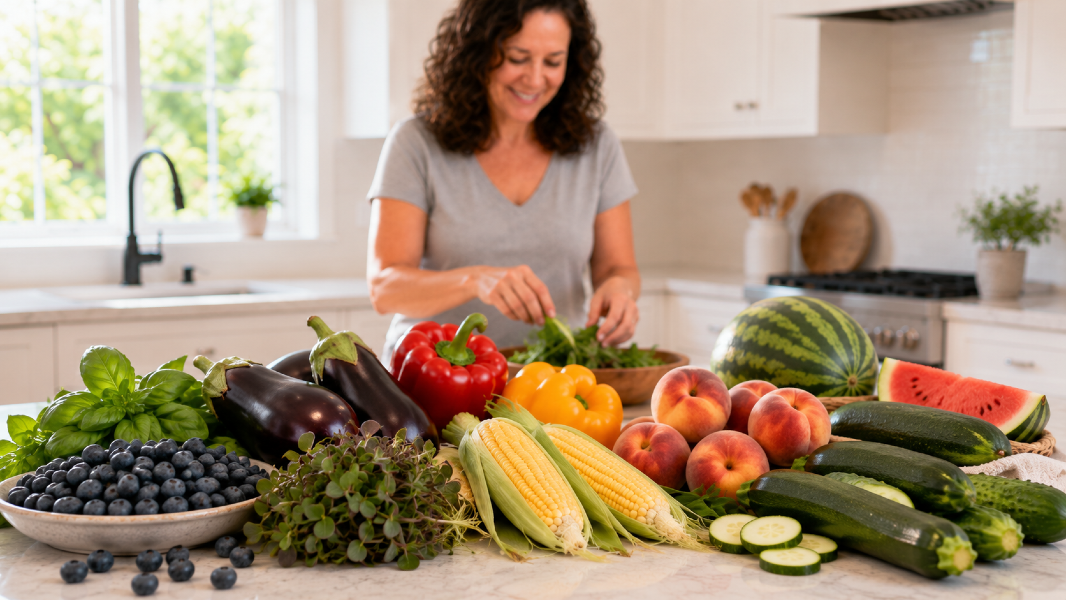
August was colorful.
We had:
- Blue and purple from blueberries and eggplant
- Red and orange from bell peppers, watermelon, and peaches
- Green from basil, zucchini, cucumbers, and purslane
- Yellow from corn
You do not need to memorize every antioxidant or plant compound to benefit from variety.
Color is not a perfect nutrition system.
But it is a helpful visual reminder.
When our meals look the same every day, we may be relying on the same foods over and over.
Adding more colors naturally encourages us to rotate different fruits, vegetables, herbs, and plant foods.
That is a much easier strategy than trying to track dozens of individual nutrients.
Lesson 4: Repeating Meals Is Not Failing
This may be my favorite lesson of the month.
We have been taught to think that healthy eating requires constant variety.
A new breakfast every day.
A new dinner every night.
A Pinterest-worthy recipe every weekend.
That sounds exhausting.
Repetition is one of the most useful tools we have.
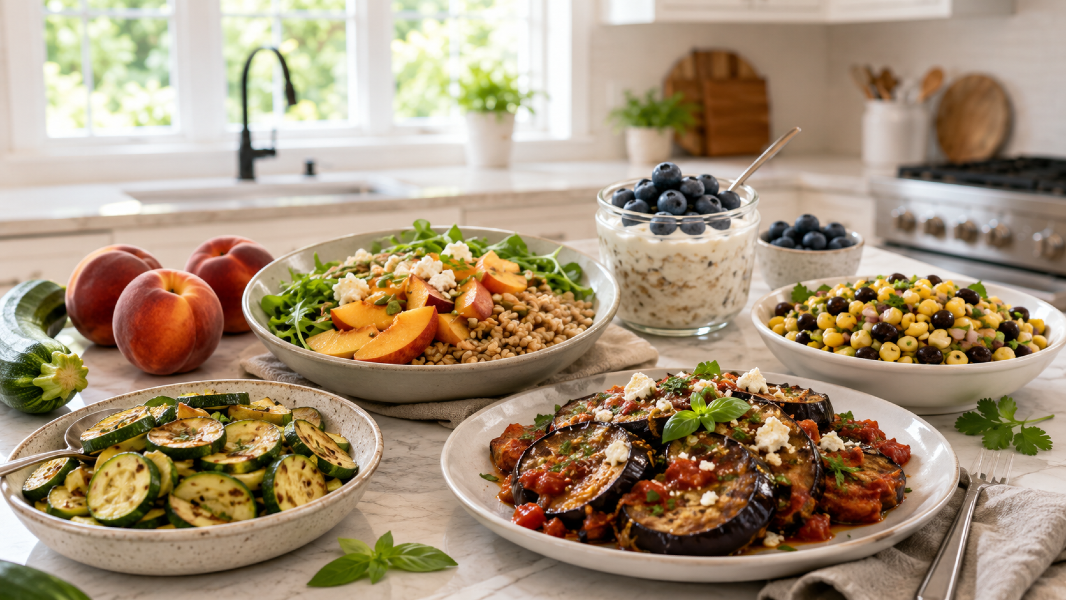
You can use the same ingredients in completely different ways.
Zucchini can become:
- A skillet side
- Fritters
- A grain bowl ingredient
- A ribbon salad
- A roasted vegetable
Peaches can become:
- Breakfast
- Smoothies
- Grain bowls
- Flatbread
- Dessert
The ingredient repeats.
The experience changes.
That is the difference.
You do not need endless new ingredients.
You need a few flexible ingredients you know how to use.
Lesson 5: Seasonal Eating Can Reduce Decision Fatigue
One of the hardest parts of eating well is not cooking.
It is deciding.
What are we eating?
What do I need to buy?
What should I make?
What is healthy?
What do I feel like?
We make these decisions every day.
A monthly focus-food system removes some of that noise.
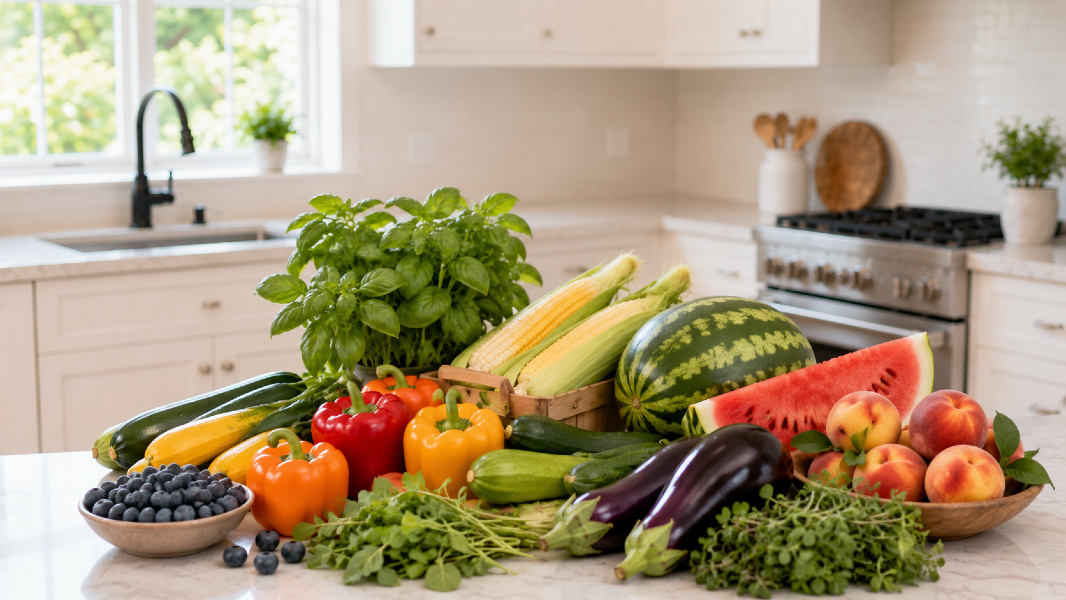
You already know what foods you are rotating.
You shop around them.
You prep around them.
You build recipes around them.
You do not have to reinvent your kitchen every Monday.
That is what makes this approach scalable.
It reduces the number of decisions required to stay consistent.
The Real Goal Was Never to Eat All 10 Foods
Did you eat every August focus food?
Maybe.
Maybe not.
It does not matter.
The better question is:
Did you find a few foods and meals you want to keep?
Maybe you discovered purslane.
Maybe you started using peaches in savory meals.
Maybe you remembered how easy cucumbers and watermelon make summer eating.
Maybe zucchini became something other than a vegetable sitting forgotten in the refrigerator.
That is success.
Healthy aging is built through what we repeat.
Not through what we do perfectly for one month.
Your August Action
Before the week ends, write down three things:
One August food you want to keep buying.
One August meal you want to keep making.
One August habit that made healthy eating easier.
Those become your keepers.
September does not need to start from zero.
Keep what worked. Let go of what did not. Flex your plant power and keep moving forward.
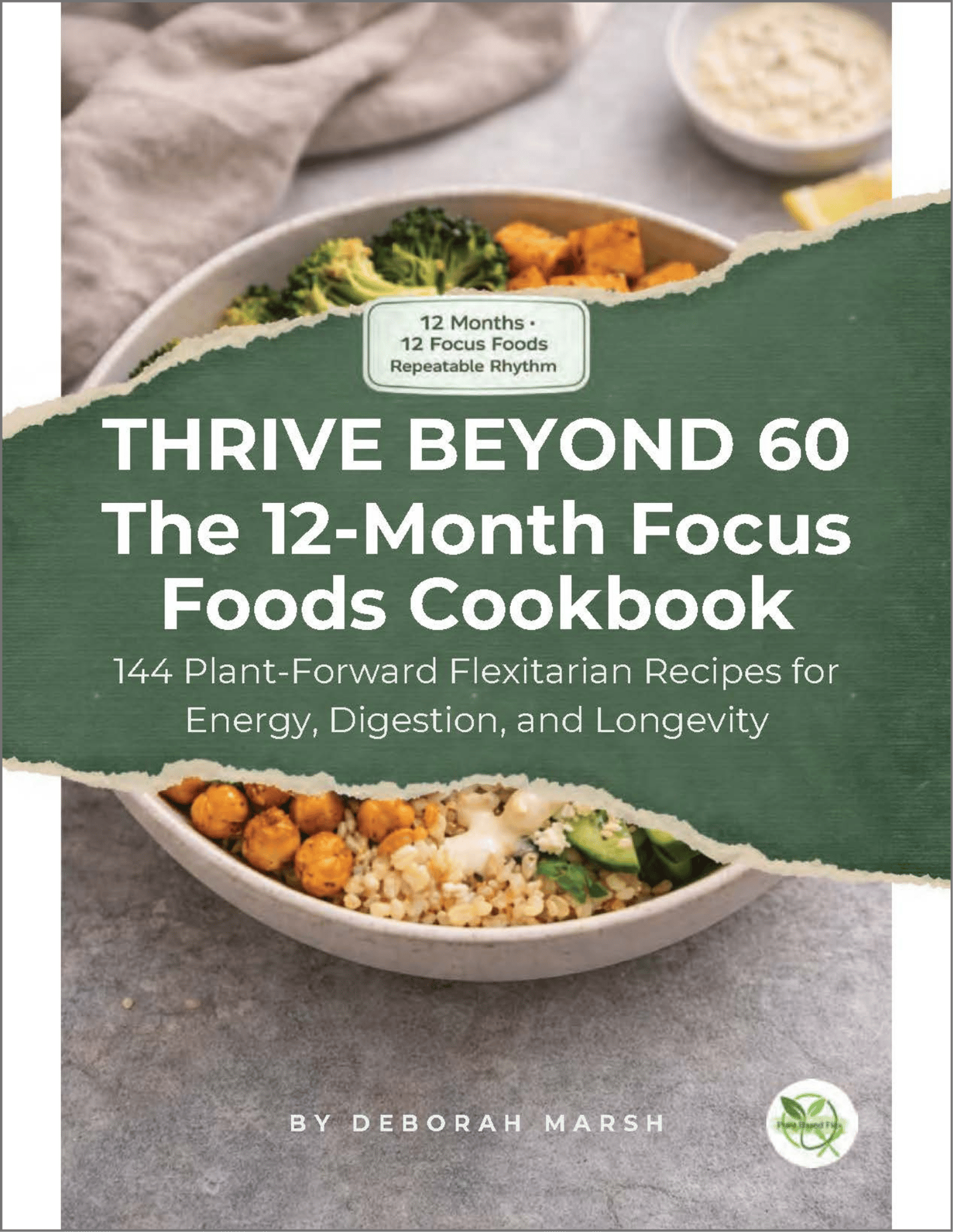
Featured Cookbook
Thrive Beyond 60 Cookbook
Simple, practical plant-based flexitarian recipes built for energy, digestion, and healthy aging after 60.
- Easy, real-life recipes you'll actually use
- Focus foods framework to simplify your meals
- Built for energy, digestion & healthy aging
Disclaimer:
This content is for informational purposes only and is not medical advice. Always consult your healthcare provider before making changes to your diet, supplements, or lifestyle, especially if you have existing conditions or take medication.
💌Want plant-based tips each week
Join the Plant Based Flex newsletter. It’s free, and when you confirm your email I’ll send you a 7-Day Kickstart Wellness Bundle to help you thrive beyond 60.