
Our 2026 Arizona Hiking Strategy
Our 2026 Arizona hiking plan: smarter recovery (8–10 days), joint-friendly strength training, hydration, mobility, and gear tips to hike strong all season.
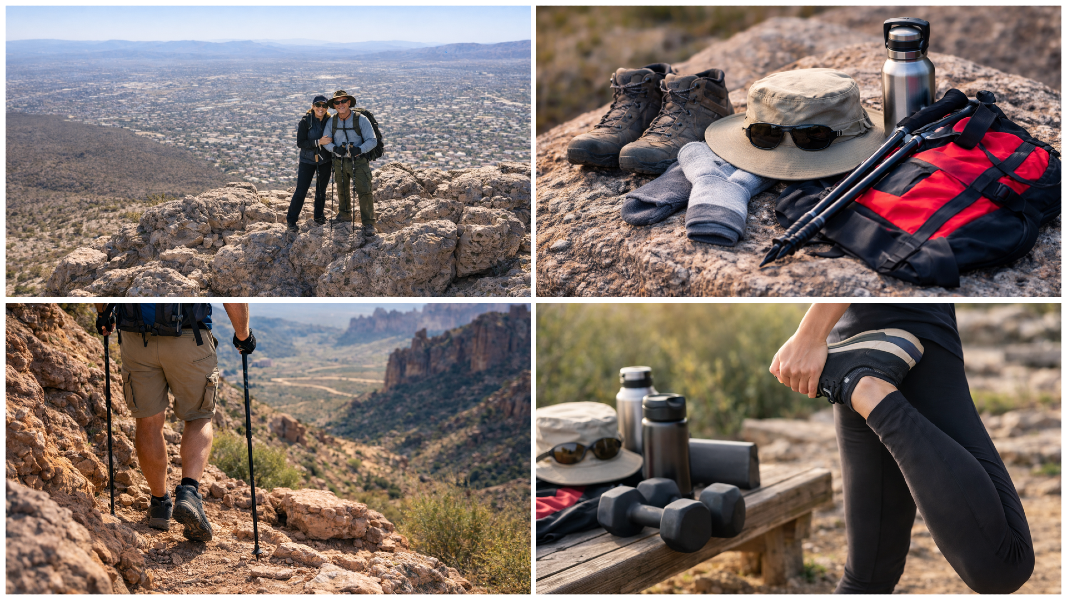
How we’re keeping the adventure while honoring recovery, joints, and the little warning signs (hello, bruised toes).
The season is back, and so is the temptation to go hard
If you hike in Arizona, you know the feeling. The first cool mornings hit and suddenly the Superstitions are calling your name like a dare.
Last season, starting November 2024, we were hiking every two to three weeks. Not little strolls either. We were chasing big, difficult, long hikes and we were proud of it. It was exhilarating. It was satisfying. It was “look at us go.”
And then our bodies started leaving notes.
- Knees that used to be fine were suddenly talking back
- Toe bruises that would not heal
- Toenails that stayed angry longer than they should
- Wrists and hips feeling cranky
- Weight lifting and regular exercise started feeling harder, not easier
Have you ever had that moment where you think, “Welp… maybe we’re done”?
We honestly had that thought.
But here’s what we realized: we were not done. We were just under recovered.
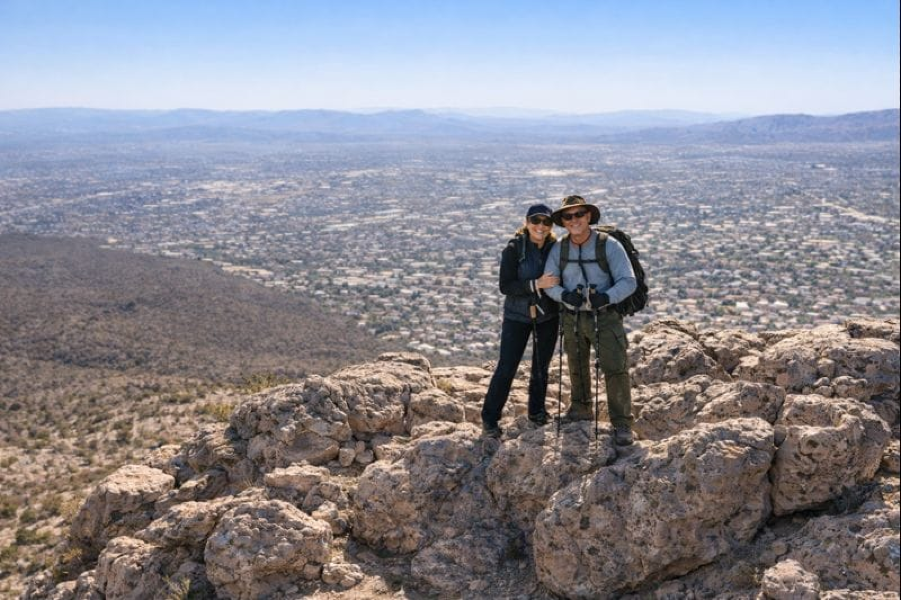
The lesson we are taking into 2026
The goal for 2026 is simple.
Keep the adventure. Keep the challenge. Keep the fun.
But do it with a smarter rhythm so we can keep hiking for years and thrive beyond 60, not just survive one season.
This matters even more now because my husband just turned 63 this December, and we both want strength, energy, and joint support to be part of our hiking story for the long haul.
So instead of asking, “Can we push through?” we are asking better questions.
Questions we are using as our new hiking filter
Use these as journaling prompts, or just a quick mental check before committing to the next hard hike.
- Do we feel fully recovered, or just excited?
- Are our toes actually healed, or did we just stop noticing them?
- Are our knees calm on stairs and downhills this week?
- Is our strength training supporting hiking, or competing with it?
- If we hike this weekend, what has to be lighter next week to balance it out?
- What do we want to feel the day after the hike: proud, or wrecked?
- What is the real win here: the summit photo, or being able to hike again next month with no setbacks?
What changed our mind: pain is not always “age”
It was easy to assume aches meant aging. But the pattern was too clear. We were stacking:
- big hikes
- not enough recovery
- not enough mobility work
- not enough consistent hydration
- then trying to lift heavy like we did before hiking became our main thing
That combo can make anyone feel like they hit a wall.
So for 2026, we are treating recovery like part of training, not an afterthought.
Our 2026 plan: Recovery windows we are testing
We are going to test 8 days vs 10 days of recovery between average hikes, depending on difficulty, distance, and how much downhill punishment is involved.
Here’s the simple system we are using.
1) Label the hike before we do it
Easy: low mileage, minimal steep climbs, not much downhill pounding
Moderate: solid mileage or climbing, but not a full body beatdown
Hard: steep climbs, long mileage, big descents, scrambling, or both
2) Match the recovery window to the hike
- Easy hike: 5 to 7 days before the next big effort
- Moderate hike: 8 days
- Hard hike: 10 days (sometimes more if toes or knees flare)
If you are thinking, “That sounds like a lot of rest,” we get it. But recovery does not mean sitting still. It means shifting the focus.
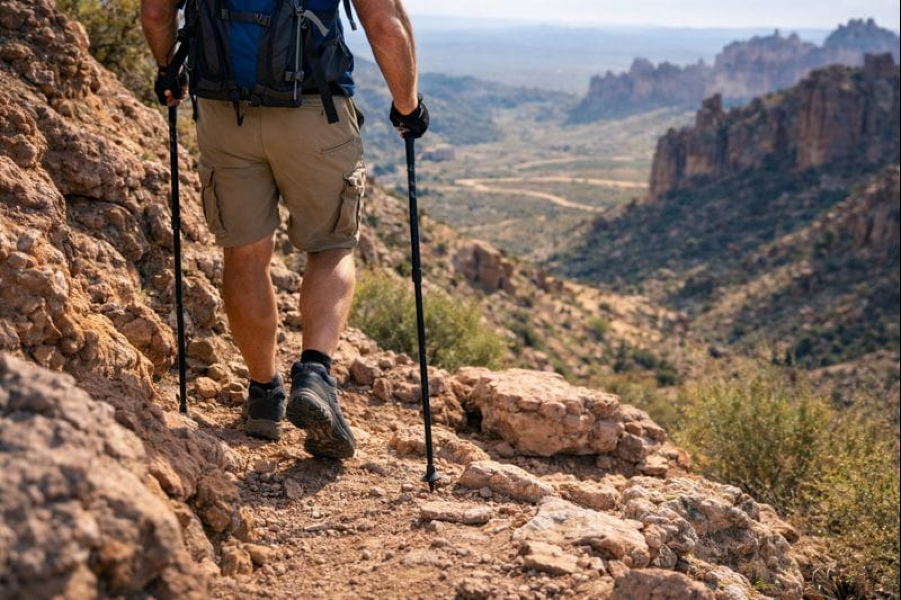
What we are doing between hikes instead of “pushing through”
Recovery is active, not lazy
Here is what our in between days will look like.
Daily non negotiables
- Hydration every day, not just hike day
- 10 minutes of mobility (hips, calves, ankles, feet, and upper back)
- Light walking even on rest days, just to keep blood moving
Two strength sessions per week, with consciousness
In 2026, strength training is staying in our life, but it is changing.
New rule: we stop training sets when form slows down or joints complain.
Not because we are weak. Because we are smart.
Think: strength for hiking longevity, not gym bragging rights.
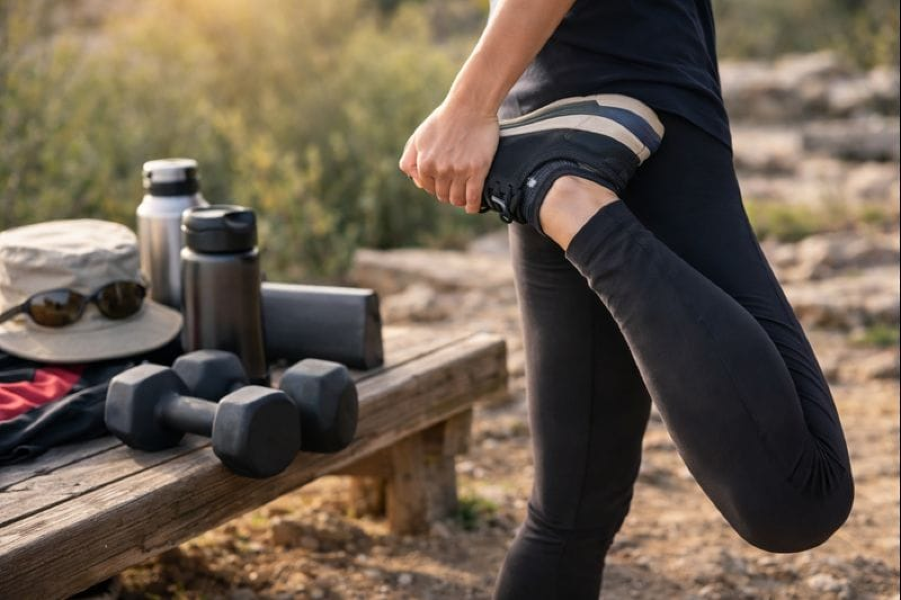
Our strength training focus for Arizona hikes
A lot of our Superstitions hikes involve steep climbs and rough descents. That means we need strength that protects knees, hips, ankles, and feet.
For steep climbs
Focus areas: glutes, quads, calves, core
Good options:
- Step ups (controlled, steady)
- Split squats or reverse lunges
- Calf raises
- Glute bridges or hip thrusts
- Farmer carries for core and grip
Question: Can we climb strong without feeling like our knees are doing all the work?
For big descents
Descents demand eccentric control, meaning muscles lengthen under load. This is where people get sore and where knees can get irritated.
Good options:
- Slow step downs
- Wall sits
- Slow tempo squats with light to moderate weight
- Hamstring work like deadlift variations with light weight and perfect form
Question: Can we go downhill with control, or do we “drop” into each step?
For uneven terrain and balance
Good options:
- Single leg balance work
- Side steps with a band
- Single leg Romanian deadlifts (very light, slow, stable)
- Anti rotation core work (band press outs are great)
Question: Do our ankles and hips feel stable when the trail gets sketchy?
For wrists and upper body support
If wrists have been bothering us, we do not ignore it. A lot of people grip too hard, brace weird, or carry tension.
Good options:
- Row variations with controlled form
- Light overhead work only if it feels good
- Gentle wrist mobility
- If using trekking poles, practice a relaxed grip
Question: Are we hiking tense, or hiking smooth?
Foot and toe care, because bruised toes are not a badge of honor
If big toes bruise on the tips, it is often downhill impact, shoes that let the foot slide forward, or toenails that are getting hit repeatedly.
Things we are paying attention to this season:
- Toenails trimmed and filed, not just clipped
- Lacing technique that locks the heel in place
- Thin liner socks if friction is an issue
- Checking shoe fit specifically for downhill
- Being honest about when a toe needs time to heal
And yes, if one of us has a toe that rubs (or a toe that does not sit straight), we address it early, not after it turns into a full problem.
Question: What would happen if we treated our feet like important equipment instead of something to ignore?
Our 2026 hiking rhythm: a simple template
Here is the kind of flow we are aiming for.
Week of a hard hike
- 2 short mobility sessions before the hike
- 1 light strength session early in the week
- Hike day
- Next day: easy walk, hydration, mobility
Recovery week after a hard hike
- 2 strength sessions (moderate, not heavy)
- 2 to 4 easy walks
- Mobility daily
- No intense leg burnout workouts
Then we decide
At day 8: do we feel ready for an average hike?
At day 10: do we feel ready for a hard hike?
No ego. Just data.
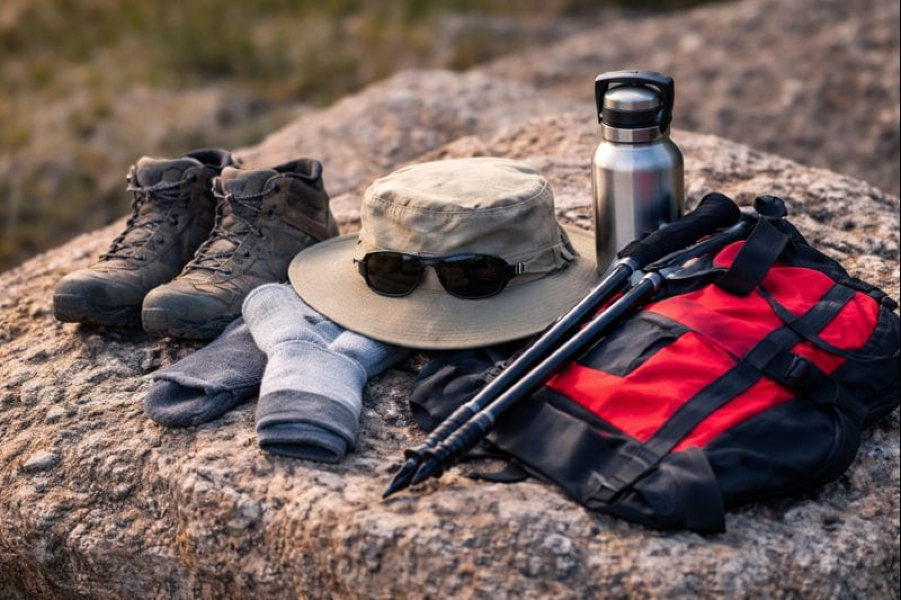
Our 2026 Gear Strategy: The Right Gear = Less Pain, More Fun
One of the biggest lessons we learned last season is that recovery is not just about rest days and stretching. Gear matters. The right gear reduces friction, protects joints, prevents hot spots and bruising, and keeps us comfortable long enough to actually enjoy the hike, not just finish it.
Instead of buying random new things, we are doing a simple gear check before each hike:
Does this gear protect our body… or quietly beat it up?
Questions we ask before we hit the trail
- Are our toes sliding forward on downhills, even a little?
- Do our socks prevent friction or trap sweat?
- Is our pack fit helping posture or pulling on shoulders, neck, and hips?
- Are we dressing for temperature swings so we do not overheat or freeze?
- Do we have sun protection even when it is “cool” outside?
- Are our hands protected if the wind picks up or we scramble?
Socks and Foot Protection
This is a big one for us, especially with bruised toes and toenails that took too long to recover.
Our goal for 2026: reduce friction and reduce toe impact.
What helps most:
- Proper sock thickness for the shoe fit (too thick can crowd toes, too thin can increase friction depending on the shoe)
- Moisture wicking hiking socks (they manage sweat and help prevent blisters)
- A thin liner sock under a hiking sock if we are prone to rubbing
- Heel lock lacing so the foot stays back and does not slide forward on descents
- Toenail care (trim and smooth edges) so nails do not take repeated impact
Quick check: If our toes feel “tapped” on descents, we do not ignore it. We fix fit or lacing before the next hike.
Shoes and Fit
Shoes can feel perfect in the parking lot and still punish toes on the downhill.
What we pay attention to now:
- Enough toe room (especially on downhill)
- A secure heel hold so the foot does not slide forward
- Lacing adjustments based on terrain (tighten for downhills, relax slightly on flats if needed)
Simple test we use: If we can feel toes contacting the front of the shoe on downhill, the fit or lacing needs work.
Backpacks and Pack Fit
A pack can either support us or slowly fatigue our shoulders, upper back, and hips.
Our 2026 goal: carry what we need without wrecking posture.
What we focus on:
- Pack size matches the hike (bigger is not always better)
- Hip belt sits on the hips and carries weight there when possible
- Shoulder straps snug but not digging
- Chest strap (sternum strap) helps keep shoulder straps stable
- Keeping heavy items close to the spine to reduce sway
Quick check: If our shoulders feel smoked early, the pack probably needs adjusting or we packed heavier than necessary.
Shirts, Layers, and Staying Comfortable in Arizona
Arizona can be chilly at the start, hot by midday, and windy at the top.
Our system:
- Base layer: breathable and sweat-friendly
- Mid layer: light warmth (easy to take on and off)
- Outer layer: wind protection for ridges and exposed areas
We are also choosing tops that help with:
- Sun protection even in winter
- Temperature regulation so we are not drenched and then cold
Quick check: If we are sweating heavily early, we adjust layers sooner, not later.
Pants, Shorts, and Chafing Prevention
When we are hiking longer distances, comfort becomes a performance factor.
What we prioritize:
- Pants or shorts that allow full range of motion
- Fabric that dries fast and does not trap heat
- Chafe prevention on longer hikes (especially if we sweat more)
Quick check: If something rubs during the first mile, it will not magically stop on mile seven.
Hats, Sun Protection, and Why Winter Sun Still Counts
Even in cooler months, the Arizona sun can wear us down.
Our non negotiables:
- A comfortable hat we actually keep on
- Sunglasses that reduce glare and eye strain
- SPF on face, neck, and hands
- A light neck covering or buff when we know we will be exposed for hours
Quick check: If we finish a hike feeling “drained” more than “tired,” it might be sun exposure dehydration, not just exertion.
Gloves and Hand Protection
We do not always need gloves in Arizona, but when we do, we really do.
We bring gloves when:
- It is windy or cold at elevation
- We expect scrambling, rock use, or poles
- Our hands tend to get cold fast
Bonus: Gloves can also help prevent overgripping trekking poles, which can irritate wrists.
Optional but Powerful: Trekking Poles
Trekking poles can be a game changer on steep descents.
Why we like them for certain hikes:
- They reduce load on knees during downhills
- They help balance on uneven terrain
- They can reduce fatigue when used correctly
Quick check: If knees are sore after big descents, poles go in the plan next time.
Our simple gear checklist before a hike
We are keeping it simple:
- Socks that match our shoes and prevent friction
- Heel locked in, toes not slamming forward
- Pack adjusted properly and not overloaded
- Layers ready for temperature swings
- Sun protection even in winter
- Gloves and poles when the trail demands it
Because the goal is not just finishing.
The goal is finishing strong, recovering well, and being excited for the next hike.
A few fun reminders from our Arizona adventures
One thing we love about hiking here is that the desert does not need to be loud to be powerful.
Some days it is the big icons.
Steep climbs. Big views. That “we really did it” feeling.
Other days it is the quiet wins:
moving without pain, finishing strong, and waking up the next day feeling capable.
That is the 2026 version of success for us.
Quick tips we are living by this season
- Do not stack hard hike after hard hike
- Train for the downhill, not just the uphill
- Recovery is part of the plan, not a delay
- Hydration is a daily habit
- Mobility keeps hiking fun
- Lift to support hiking, not to destroy ourselves
- If something hurts repeatedly, that is feedback, not weakness
And yes, we are still going to chase the good stuff. We are just doing it in a way that lets us keep doing it.
Because we want to flex our plant power and thrive beyond 60 on the trail, not limp through it.
Closing: Our 2026 promise
This season, we are not hiking to prove anything.
We are hiking to keep our bodies strong, our minds happy, and our adventures alive.
Are you testing an 8 day recovery rhythm or a 10 day one this season?
And what is your biggest “we learned this the hard way” hiking lesson?
We keep all our hiking trips, scenic adventures, and travel notes organized right here in our Travel and Adventure tag: https://www.plantbasedflex.com/tag/travel-adventure/
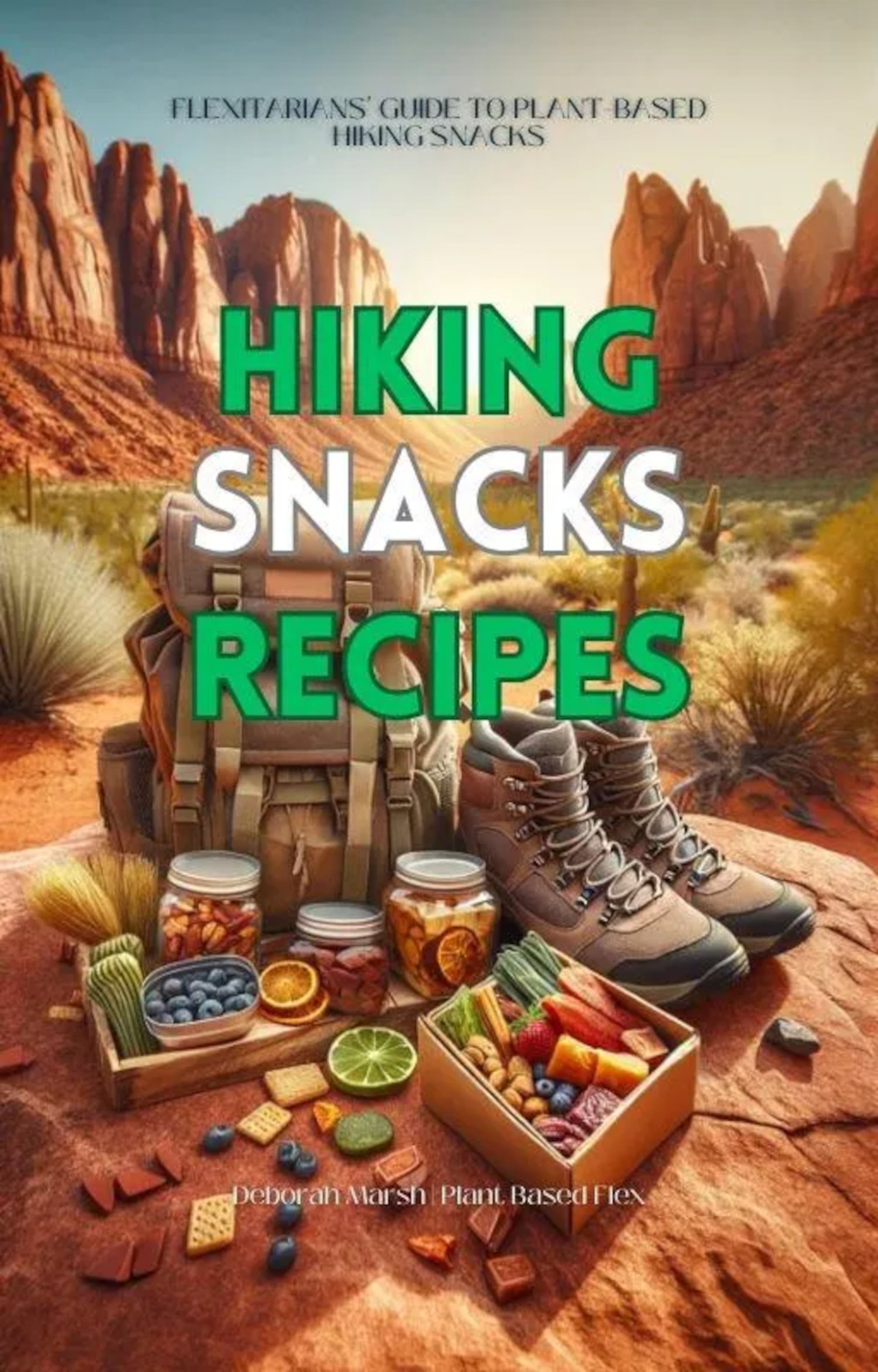
Plant Based Hiking Snacks
Quick, packable snacks made with whole foods to fuel trail days and busy weeks.
Buy Now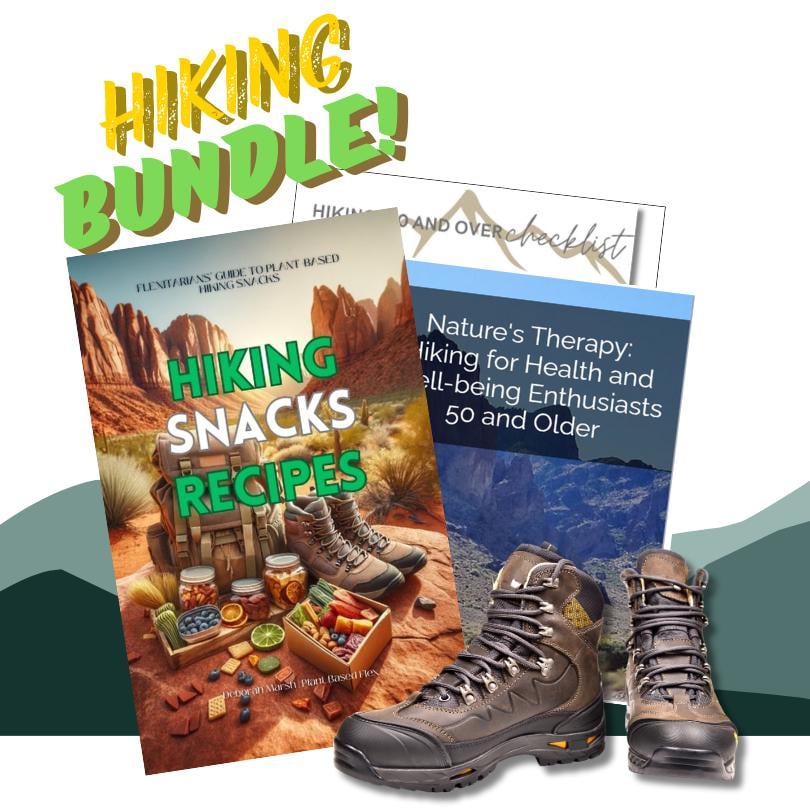
Ultimate Hiking Wellness Bundle
Includes the Plant Based Hiking Snacks eBook plus a simple hiking guide and printable checklist.
Buy NowDisclaimer:
This content is for informational purposes only and is not medical advice. Always consult your healthcare provider before making changes to your diet, supplements, or lifestyle, especially if you have existing conditions or take medication.
💌Want plant-based tips each week
Join the Plant Based Flex newsletter. It’s free, and when you confirm your email I’ll send you a 7-Day Kickstart Wellness Bundle to help you thrive beyond 60.