10 Gentle Energy Moves for Every Age (Especially 60+)
Discover 10 gentle full-body movements inspired by Mike Holland that boost mobility, balance, and energy—perfect for seniors and anyone over 50.
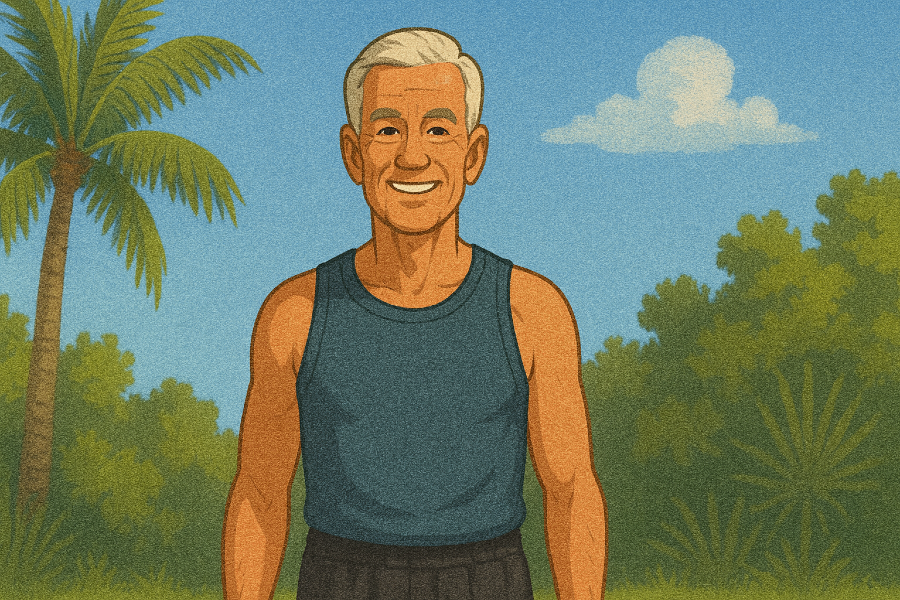
A simple mind–body warm-up I discovered from Instagram creator Mike Holland and adapted for seniors who want strength, balance, and better daily energy.
I was scrolling Instagram one evening, tired from the day and half-slumped on the couch, when a short video stopped my thumb in its tracks.
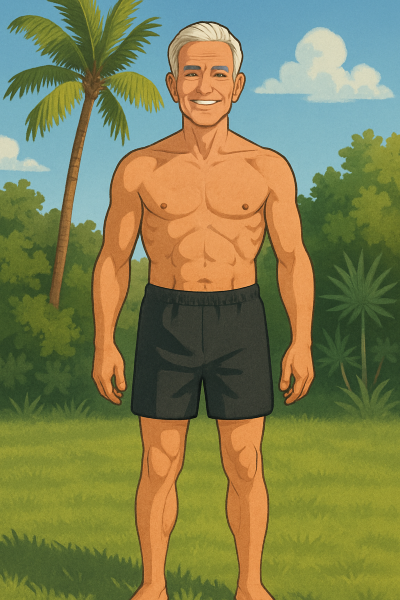
A guy was moving in this slow, powerful rhythm out on his lawn—arms waving, hips swinging, feet grounded in the grass. It wasn’t traditional “exercise.” It looked more like a moving meditation. Fluid. Strong. Calm.
That guy was fitness creator Mike R Holland and he was teaching a simple Mind–Body–Energy warm-up. Ten playful movements. No equipment. Barefoot in the grass.
I watched once.
Then I watched again and thought, This is exactly what my body needs.
As someone in my 60s who still loves hiking, plant-powered meals, and feeling strong, I’m always looking for movement that protects my joints, wakes up my nervous system, and keeps me flexible for the long haul. These movements do all of that—and they’re accessible for almost every age and ability with a little modification.
Today I want to walk you through the sequence, share why it’s so powerful (especially for seniors), and give you ideas to try it safely at home.
Why These Movements Work So Well for Aging Bodies
Before we break down each move, here’s why I’ve fallen in love with this little routine:
- It’s gentle on joints.
No jumping. No heavy impact. Just flowing rotations, swings, and bends. - It wakes up circulation and lymph.
All that swinging, twisting, and shifting helps move blood and lymph, which is huge for energy and recovery as we age. - It calms the nervous system.
The movements are rhythmic and almost dance-like. When you sync them with your breath, they help switch you out of “stress mode.” - It’s balance training in disguise.
Lunges, marches, and the horse stance ask your feet, ankles, and core to work together—exactly what we want for fall prevention. - It’s short and doable.
You can complete the whole series in 5–10 minutes. Perfect as a morning wake-up, a midday reset, or a warm-up before walking or hiking.
You don’t need to move like a 20-year-old athlete to benefit. You just meet your body where it is today and let the rhythm do its job.
Important Safety Notes Before You Start
Especially for my over-50 and over-60 friends:
- Check with your doctor if you have serious heart, balance, or joint issues.
- Go at your own pace. Pain is a red flag. Gentle stretching or mild muscle fatigue is fine; sharp pain is not.
- Use support if needed. A chair, wall, or countertop can help with balance.
- Breathe. In through the nose, out through the mouth. Never hold your breath.
Alright—let’s walk through the ten movements I pulled from Mike’s routine and adapted for all ages.
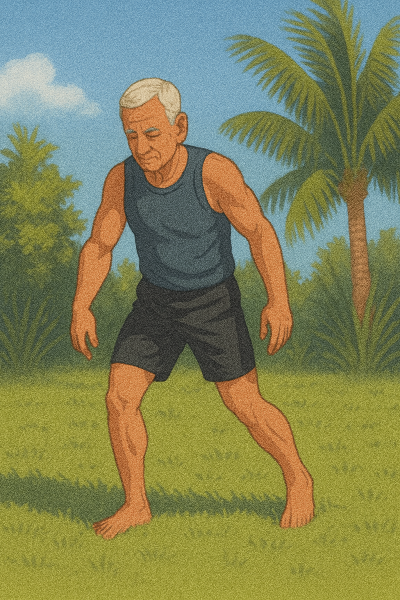
1. Shakes – Wake Up the Body
Think of this as pressing the reset button.
How to do it:
- Stand tall with feet about hip-width apart.
- Soften your knees.
- Gently shake out your hands, then your arms.
- Let that looseness travel into your shoulders, chest, and legs.
- Keep breathing as everything “jiggles” a little.
Why it helps:
Shaking helps release tension from muscles and fascia, and can calm the nervous system. It’s a great way to tell your body, We’re safe. We can move now.
Chair option:
Sit tall and shake out hands, arms, and feet one at a time.
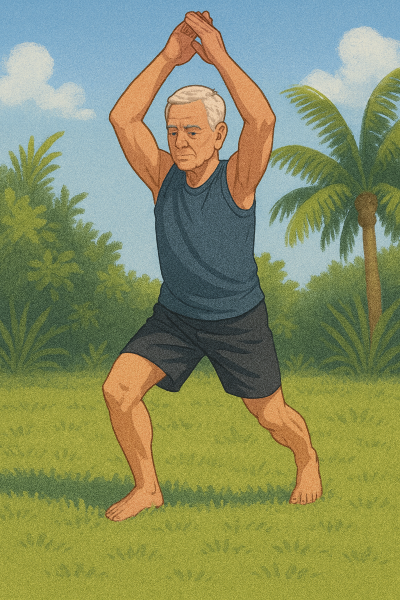
2. Waves – Reach and Flow
This move feels a little like drawing a wave above your head.
How to do it:
- Stand with feet slightly wider than hips.
- Lift your arms overhead, palms facing each other.
- Gently “wave” your hands and arms from side to side, letting your ribs and upper body sway with the motion.
- Keep your core gently engaged and knees soft.
Why it helps:
Waves open the shoulders, ribs, and upper back—areas that get stiff from screens and slouching. Great for posture and deep breathing.
Make it easier:
Keep the arms a little lower if reaching straight overhead feels tight.
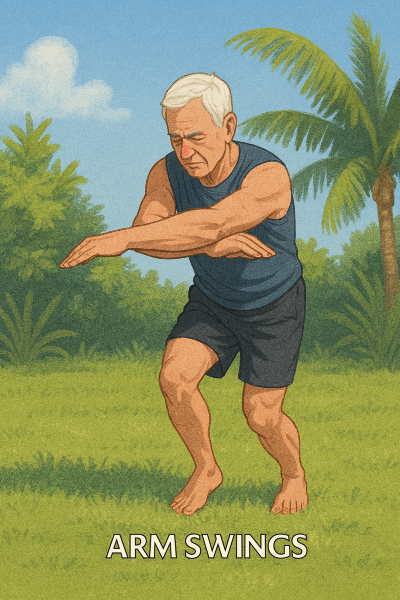
3. Arm Swings – Cross-Body Reset
This one feels a little like a gentle, slow-motion “ski” movement.
How to do it:
- Step one foot slightly forward, heel down.
- Hinge just a bit at the hips.
- Swing one arm across your body while the other arm sweeps behind you.
- Let your torso rotate gently with the swing.
- Switch sides after several swings.
Why it helps:
Arm swings cross the midline of the body, which is wonderful for coordination and brain health. They also mobilize the shoulders and upper spine.
Use a chair if needed:
Place one hand on the back of a sturdy chair and swing the opposite arm.
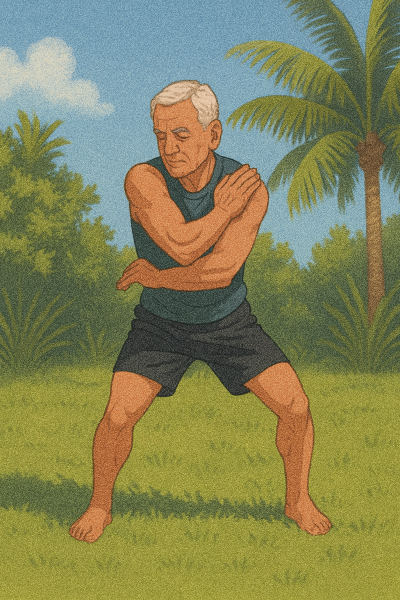
4. Trunk Twists – Hug and Turn
This movement looks like a gentle, standing hug with rotation.
How to do it:
- Stand tall, feet hip-width apart.
- Wrap one arm across your chest as if giving yourself a hug.
- Let your upper body rotate slightly toward that side.
- Switch arms and twist gently the other way.
- Move slowly and keep your hips mostly facing forward.
Why it helps:
Twisting mobilizes the spine and ribs, which can reduce stiffness and support digestion. The “self-hug” feeling can also be surprisingly grounding.
If your back is sensitive:
Make the twist smaller and think more about lengthening than cranking around.
5. Dead Arms – Let It All Go
The name sounds funny, but the idea is softness.
How to do it:
- Stand with your arms hanging by your sides.
- Soften your knees.
- Gently sway your body from side to side or forward and back.
- Let your arms swing freely like heavy ropes.
Why it helps:
We hold so much tension in the shoulders. Letting the arms be completely relaxed teaches the body how “soft” actually feels.
6. Wave Lunge – Strength with Flow
Now we add a little more lower-body work while keeping that wave feeling in the arms.
How to do it:
- Step one foot forward into a gentle lunge (both knees bent, back heel lifted or lowered—whatever feels stable).
- Lift your arms overhead and form a soft “wave” with the hands, just like before.
- Bend and straighten the front knee slightly as you move the arms.
- Switch legs after several reps.
Why it helps:
This move builds leg strength and improves stability while keeping the upper body loose and relaxed—exactly the combination we want for aging strong.
Easier version:
Keep the lunge shallow or shorten your stance. You can also hold a chair with one hand and wave the other arm.
7. Bowlers – Diagonal Reach
Picture yourself bowling in slow motion.
How to do it:
- Step one foot slightly behind you on the diagonal.
- Hinge forward just a bit at the hips.
- Reach one arm down and across the body, as if rolling a bowling ball.
- Let the other arm counterbalance behind you.
- Return to standing and repeat, then switch sides.
Why it helps:
Bowlers train balance, hip mobility, and functional strength—the kind you use when reaching down to pick something up safely.
Support idea:
Hold onto a wall or chair with your non-reaching hand for extra stability.
8. Hip Swings – Loosen the Hips and Lower Back
This move feels playful and is wonderful for stiff hips.
How to do it:
- Stand tall with feet a little wider than hips.
- Place your hands lightly on your thighs or let them float in front of you.
- Shift your weight from side to side, letting your hips swing in a relaxed arc.
- You can add small circles or figure-eights with the pelvis if that feels good.
Why it helps:
Hip mobility is key for walking, climbing stairs, and preventing lower-back pain. Gentle hip swings help keep everything lubricated and moving.
Chair option:
Sit near the edge of a chair and gently swivel your hips and torso side to side.
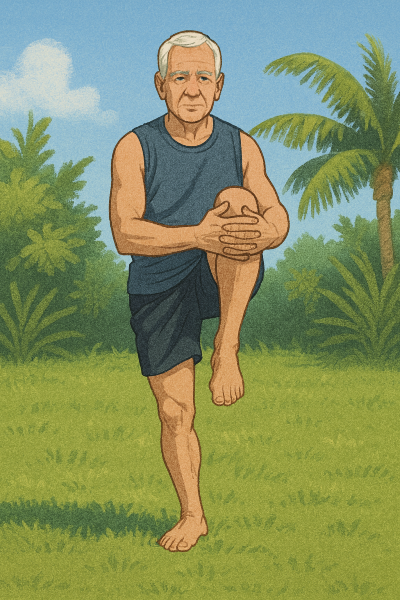
9. Marches – Balance and Coordination
Mike’s version is more dynamic, but we can dial it down and still get big benefits.
How to do it:
- Stand tall with your feet under your hips.
- Lift one knee toward your chest as your opposite hand taps or gently holds it.
- Lower and repeat on the other side, like a slow standing march.
- Focus on a point in front of you to help with balance.
Why it helps:
Marches build single-leg strength, core control, and balance—all vital for fall prevention as we age.
Make it safer:
Hold a wall, counter, or the back of a chair with one hand while you lift the opposite knee.
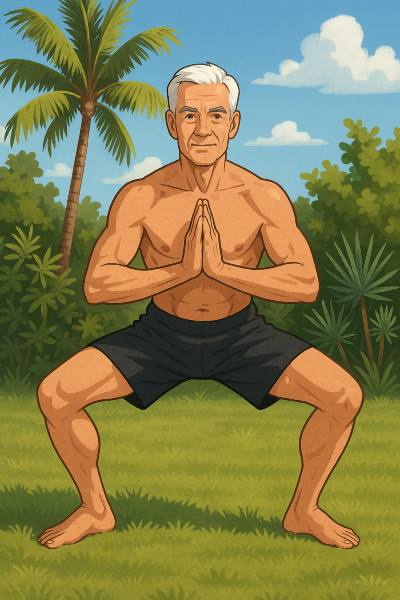
10. Horse Stance – Strong and Grounded
This is the “I am rooted” position of the sequence.
How to do it:
- Step your feet wide, toes turned slightly out.
- Bend your knees and sink your hips into a comfortable squat (not too low).
- Bring your hands together at your chest, as if in prayer.
- Lift your chest, relax your shoulders, and breathe.
- Hold for a few breaths, then straighten the legs and rest.
Why it helps:
Horse stance builds leg strength, opens the hips, and teaches your body how to feel stable and powerful. It’s a wonderful pose for confidence and grounding.
Easier version:
Don’t sink as low. You can also stand with a narrower stance or rest your hands lightly on a chair in front of you.
How to Turn This Into Your Daily 5–10 Minute Reset
Here’s a simple flow you can try:
- Shakes – 30–60 seconds
- Waves – 8–10 gentle reps
- Arm Swings – 8–10 reps each side
- Trunk Twists – 6–8 slow twists
- Dead Arms – 30–60 seconds
- Wave Lunge – 6–8 reps each leg
- Bowlers – 6–8 reps each side
- Hip Swings – 30–60 seconds
- Marches – 8–10 reps each leg
- Horse Stance – hold 3–5 breaths
You can shorten or lengthen it depending on how you feel. Some days I only do the first five. Other days I use the whole sequence as a warm-up before hiking.
Final Thoughts: Movement as Daily Medicine
I originally found this routine because I was curious about how people my age and older stay strong without beating up their joints. Watching that short clip from Mike Holland reminded me that we don’t always need fancy equipment or hour-long workouts.
Sometimes it’s as simple as:
- Standing barefoot on the grass (or in your living room).
- Letting your arms swing and your hips loosen.
- Breathing a little deeper.
- Reminding your body that it’s still very much alive and capable.
If you try these movements, I’d encourage you to treat them less like “exercise homework” and more like a short movement ritual. Put on music you love. Move at a pace that feels kind. Smile when your arms feel a little silly. That playfulness is part of the medicine.
And of course, when you pair gentle daily movement with a mostly plant-based flexitarian way of eating, you are really giving your future self a gift—strong joints, better balance, calmer energy, and the freedom to keep enjoying life well into your 60s, 70s, and beyond.
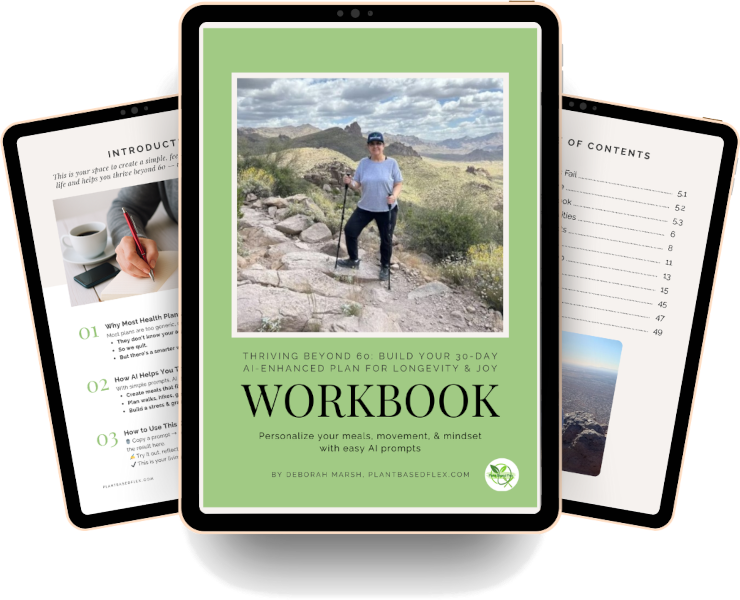
Thriving Beyond 60 — 30-Day AI-Enhanced Plan
Interactive workbook with simple AI prompts for meals, movement, stress, and hydration.
Buy Now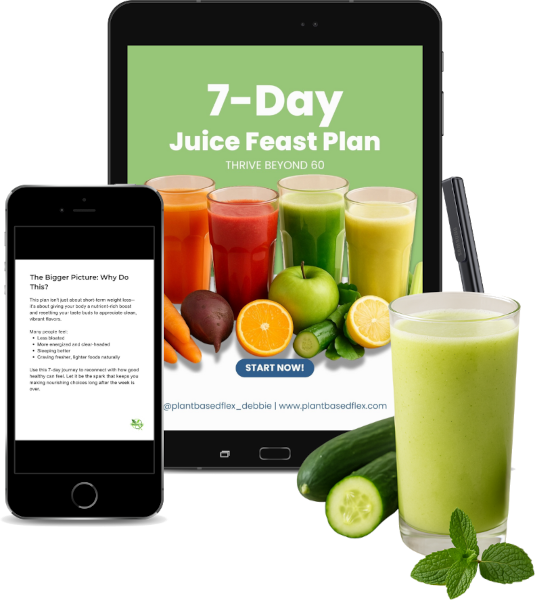
7-Day Juice Feast Plan & Recipes
A gentle seasonal reset with a full 7-day schedule, simple juices, and hydration tips.
Buy NowPersonal note: I am not a medical professional. I share what works in real life for a mostly plant based flexitarian lifestyle. Use this guide to support a conversation with your care team.
Disclaimer:
This content is for informational purposes only and is not medical advice. Always consult your healthcare provider before making changes to your diet, supplements, or lifestyle, especially if you have existing conditions or take medication.
💌Want plant-based tips each week
Join the Plant Based Flex newsletter. It’s free, and when you confirm your email I’ll send you a 7-Day Kickstart Wellness Bundle to help you thrive beyond 60.